City guide

    Bangkok

    Explore Bangkok, Thailand

    Overview

    Southeast Asia's city that never sleeps — gleaming temples, bustling floating markets, world-class street food, and a legendary nightlife all packed into one electric capital.
    At a glanceBangkok · City guide
    Country
    Thailand
    Region
    Central Thailand
    Recommended stay
    3-4 days
    Daily cost
    ≈ $50 / day
    Best time to visit
    Nov - Feb
    bangkok · Guide
    Good to know

    Before you go to Bangkok

    When to go

    Climate through the year

    Rainfall mm/inchesTemperature °C/°F0/0.020/68100/3.924/75200/7.928/82300/11.832/90400/15.736/97500/19.740/104JFMAMJJASOND
    Monthly temperature and rainfall
    MonthMin °CMax °CRainfall mm
    J223215
    F233320
    M253530
    A273670
    M2734185
    J2733155
    J2632165
    A2632185
    S2532295
    O2531215
    N233055
    D223015

    Cool & Dry Season (November – February)

    Best time to visit — lower humidity, little rain, comfortable temperatures for temple hopping, markets, and street food exploration

    Temperatures 24–32°C with low humidity, blue skies, ideal for outdoor sightseeing and walking, peak festival season (Loy Krathong, New Year)
    Peak tourist season — higher prices, larger crowds at major temples (Wat Phra Kaew, Wat Arun), popular hotels book out fast. Book accommodation 1–2 months ahead.

    Ideal for: First-time visitors, culture seekers, temple visits, street food tours, families, couples

    Pack: Light breathable clothing, comfortable walking shoes, sunscreen. A light cardigan for heavily air-conditioned restaurants and malls.

    Hot Season (March – May)

    Songkran water festival (mid-April) is Bangkok's most famous celebration; otherwise the city is very hot and humid

    Songkran (Thai New Year, April 13–15) is a must-experience festival with massive water fights city-wide; lower accommodation prices outside the Songkran dates
    Extremely hot and humid 33–40°C, walking outdoors is uncomfortable; April is the hottest month and can feel overwhelming for unacclimatised visitors

    Ideal for: Travelers wanting to experience Songkran festival, party travelers, budget travelers who can handle heat

    Pack: Ultra-light breathable clothing, SPF 50+ sunscreen, hat, sunglasses, cooling towels, water bottle. Extra waterproof protection during Songkran.

    Wet Season (June – October)

    Heavy afternoon rains, lush green parks, fewer tourists, and best budget deals of the year

    Lowest accommodation prices (30–50% cheaper than peak), fewer tourists at attractions, lush greenery, still many dry morning hours for sightseeing
    Heavy daily rain typically in the afternoon and evening, occasional flooding in low-lying areas, heat and humidity are high (28–35°C), some outdoor activities disrupted

    Ideal for: Budget travelers, repeat visitors, those more interested in rooftop bars and indoor attractions like malls and museums

    Pack: Lightweight rain poncho or compact umbrella (essential), quick-dry clothing, waterproof sandals or shoes

    Daily budget

    Low season / day
    Budget: $25–45/day (hostel dorm $8–15, street food meals $2–5, BTS/MRT unlimited day pass $5, temple entry $2–8). Mid-range: $60–100/day. Wet season prices are significantly lower than peak.
    Peak season / day
    Budget: $35–60/day. Mid-range: $80–150/day. Luxury: $200–500+/day. Prices spike during Songkran (April) and New Year. Book accommodation well in advance.
    Cash
    Thai Baht (THB). Cash preferred for street food, tuk-tuks, markets, and small shops. Cards accepted at hotels, malls, and chain restaurants. Always carry some cash for daily expenses.
    Exchange
    Best rates at SuperRich exchange booths (green or orange; distinct brands) which are the benchmark exchange rate in Bangkok. Found throughout the city — Ratchaprasong, Victory Monument, Silom areas. Avoid exchanging at hotels and airports (poor rates).
    ATMs
    Bangkok ATMs charge a fixed fee of 220 THB (~$6 USD) per withdrawal regardless of amount — withdraw larger amounts to minimize fees. ATMs widely available throughout the city including BTS stations.
    Cards
    Widely accepted at hotels, malls (Siam Paragon, CentralWorld, Terminal 21), chain restaurants, and 7-Eleven. Not accepted at street food vendors, local markets, and most tuk-tuk drivers.

    Events & festivals

    • Songkran (Thai New Year Water Festival)April 13–15 (and up to a week around it in Bangkok)

      Bangkok's most famous festival — massive city-wide water fights on Silom Road, Khao San Road, and RCA. Water guns, pickup trucks with water tanks, street parties. Temples hold merit-making ceremonies in the mornings.

      Tip: Protect all electronics with waterproof bags or cases — everything will get completely soaked. Celebrate the morning temple activities first, then join the water fights from noon onwards.

    • Loy Krathong & Yi PengNovember full moon (usually November)

      Thousands of lotus-shaped krathong (floating offerings) are released on the Chao Phraya River at night. Beautiful light displays and candle-lit ceremonies along the river.

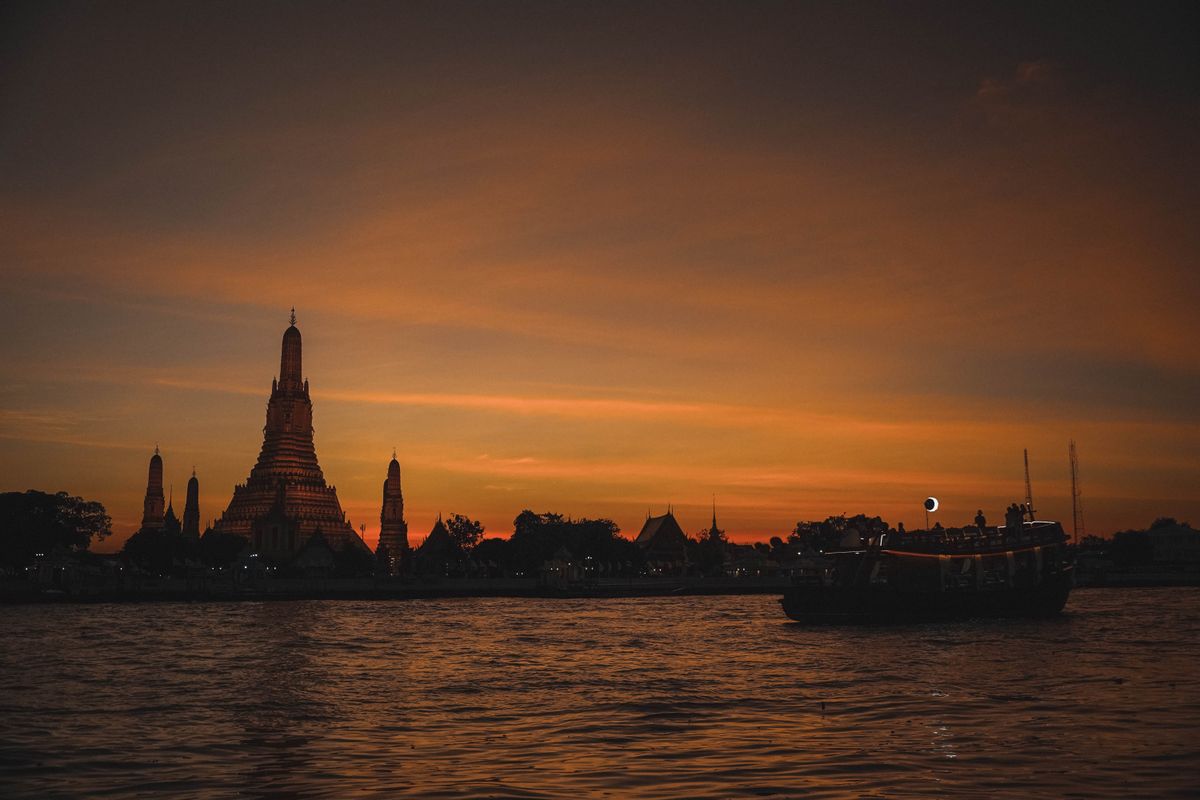
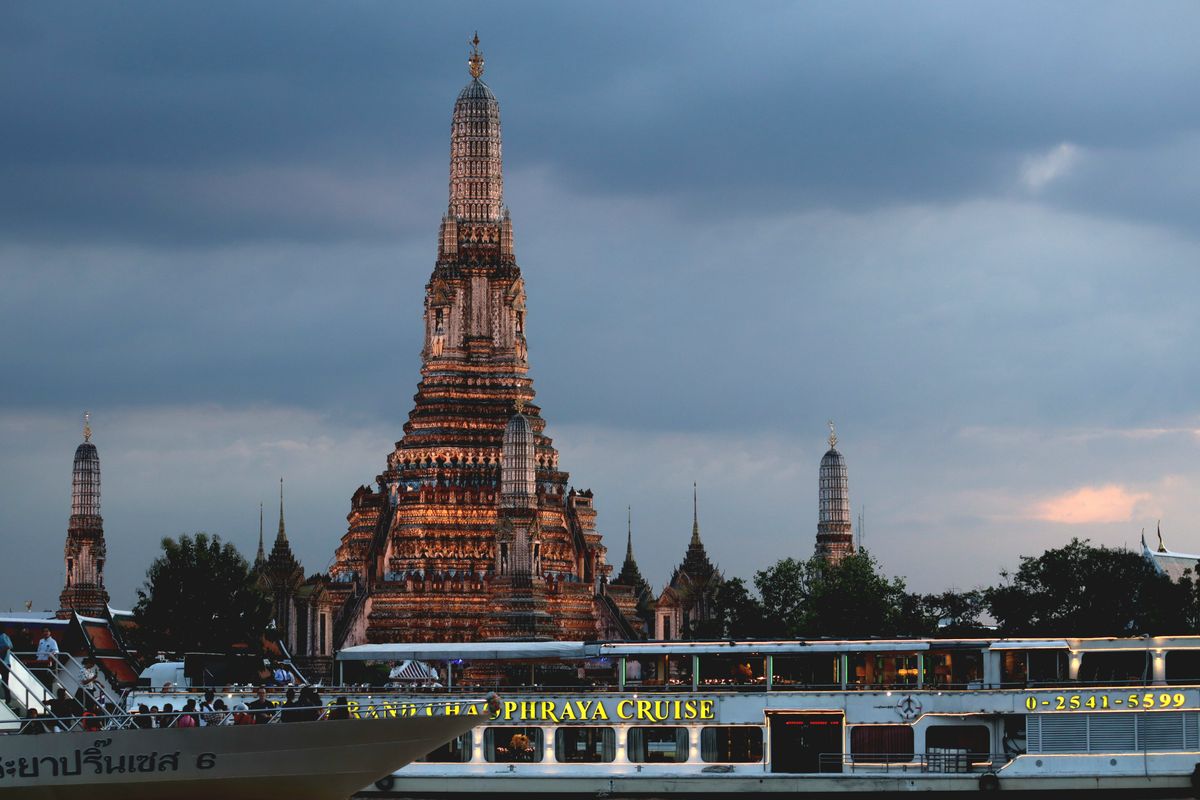
      Tip: Head to Wat Arun (Temple of Dawn) riverside or Asiatique for the best views. Book riverside dinner tables well in advance for this magical evening.

    • King's Birthday / National DayDecember 5 (Father's Day)

      Grand Palace and Ratchadamnoen Avenue illuminated with lights and decorations. Military and civilian ceremonies in the royal districts.

      Tip: The Royal Palace area is extremely crowded on this day — visit major temples a few days before or after.

    • Chinese New YearLate January or February (lunar calendar)

      Bangkok's Yaowarat (Chinatown) explodes with lanterns, dragon dances, firecrackers, and street food stalls running through the night

      Tip: Book a tuk-tuk or take the MRT to Wat Mangkon station for the best Chinatown New Year experience — road closures make this area pedestrian-only during the festival

    Getting there

    Getting to Bangkok

    Arriving internationally

    • Suvarnabhumi International Airport (BKK) is Southeast Asia's major hub with direct connections to over 100 countries. Airlines including Thai Airways, EVA Air, Emirates, Singapore Airlines, Cathay Pacific, and all major carriers operate long-haul routes.
    • Don Mueang Airport (DMK) handles AirAsia routes from Kuala Lumpur, Singapore, Bali, and many regional destinations — cheaper fares but further from city center.
    • Airport Rail Link (ARL) from Suvarnabhumi to Phaya Thai BTS station: 30 minutes, 45 THB (~$1.30). Fastest airport connection. Taxis available from designated taxi queue on Level 1: ~300–450 THB to city center + expressway tolls.
    • From Don Mueang: No rail link — take A1 bus to Mo Chit BTS (40–60 min, 30 THB) or taxi (200–400 THB + tolls).

    From within the country

    • By plane (domestic): Bangkok has two airports — Suvarnabhumi (BKK, main international hub, 30km east) and Don Mueang (DMK, budget airlines hub, 24km north). Domestic routes connect to Chiang Mai, Phuket, Krabi, Ko Samui, and all major Thai cities. Thai AirAsia, Thai Lion Air, and Nok Air operate from Don Mueang; Thai Airways, Bangkok Airways, and some budget carriers use Suvarnabhumi.
    • By train: Hua Lamphong Station (central Bangkok, MRT accessible) connects to Chiang Mai (overnight 11–13 hours), Ayutthaya (1.5 hours), and southern Thailand. Bang Sue Grand Station (new main terminal, opened 2021) operates high-speed and regional services.
    • By bus: Bangkok's Mo Chit Bus Terminal (Northern), Ekkamai Bus Terminal (Eastern), and Sai Tai Mai (Southern) connect to all major Thai cities and international destinations (Siem Reap, Vientiane, Penang). Intercity bus services are comfortable and affordable.
    • By river/road from Cambodia: Poipet–Aranyaprathet border crossing (then bus to Bangkok) is the main overland route from Phnom Penh and Siem Reap. Several bus companies operate direct Phnom Penh–Bangkok routes (~9 hours total).

    Booking & arrival tips

    • Always use the official metered taxi queue at Suvarnabhumi (Level 1, clearly marked) — ignore touts approaching inside the terminal offering fixed-price rides which are always more expensive
    • The Airport Rail Link is the fastest option to central Bangkok during rush hour (7–10am, 4–7pm) when taxis can take 60–90 minutes
    • If arriving at Don Mueang on a budget flight and continuing to Suvarnabhumi for a connecting flight, allow at least 3.5–4 hours for the inter-airport transfer

    Getting around

    BTS Skytrain

    16–59 THB per trip. 1-day pass: 150 THB, 3-day pass: 440 THB

    Fastest way to travel across central Bangkok. Covers Sukhumvit corridor (Silom, Siam, Mo Chit) and riverside (Saphan Taksin for Chao Phraya boats). Use the Rabbit Card for faster boarding and tap-in/tap-out convenience.

    MRT (Metro)

    17–42 THB per trip

    Underground metro covering Chatuchak/Mo Chit interchange with BTS, Silom/Lumphini Park area, and connecting to the new Blue Line (Bang Sue, Chinatown/Wat Mangkon, Hua Lamphong). Complements BTS coverage.

    Chao Phraya Express Boat

    15–40 THB per trip depending on service color

    Scenic and traffic-free river transport connecting Nonthaburi to the south. Key stops: Tha Chang (Grand Palace, Wat Pho), Tha Tien (Wat Arun), Asiatique (Saphan Taksin), Banglamphu (Khao San Road). Tourist Boat (Blue Flag) 60 THB per trip or 180 THB/day pass.

    Grab

    80–300 THB per ride depending on distance and traffic

    Thailand's dominant ride-hailing app. More transparent pricing than street taxis and drivers cannot refuse routes. Available in both GrabCar and GrabBike options. GrabBike excellent for short hops avoiding traffic.

    Metered Taxi

    35 THB flag fall + meter (~8–12 THB/km). Expressway tolls (25–65 THB) paid by passenger

    Abundant and affordable when using the meter. Always insist the driver uses the meter ('meter, na krap/ka'). Best for late night when Grab surges.

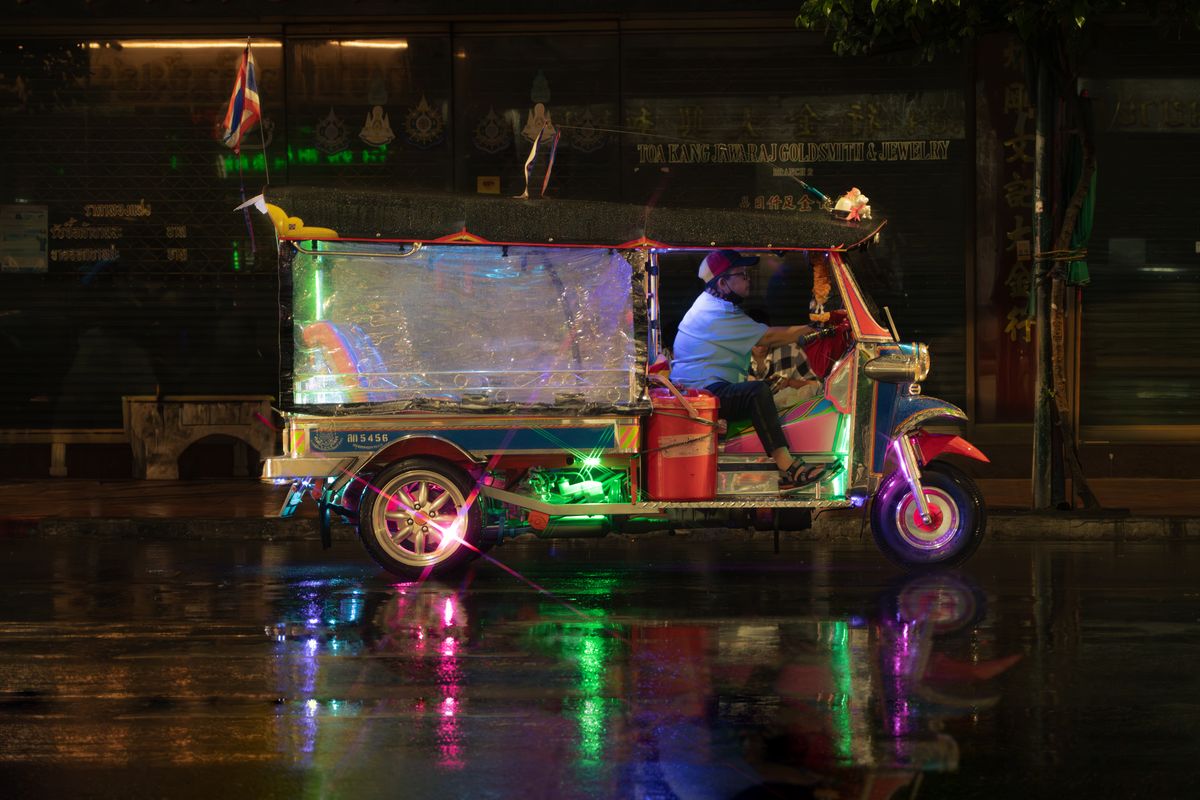
    Tuk-tuk

    100–300 THB negotiated (not metered)

    Iconic but not recommended for efficiency or honest pricing. Good for short hops in old town area near Khao San or Grand Palace. Always negotiate price firmly before getting in and ignore drivers who offer tours.

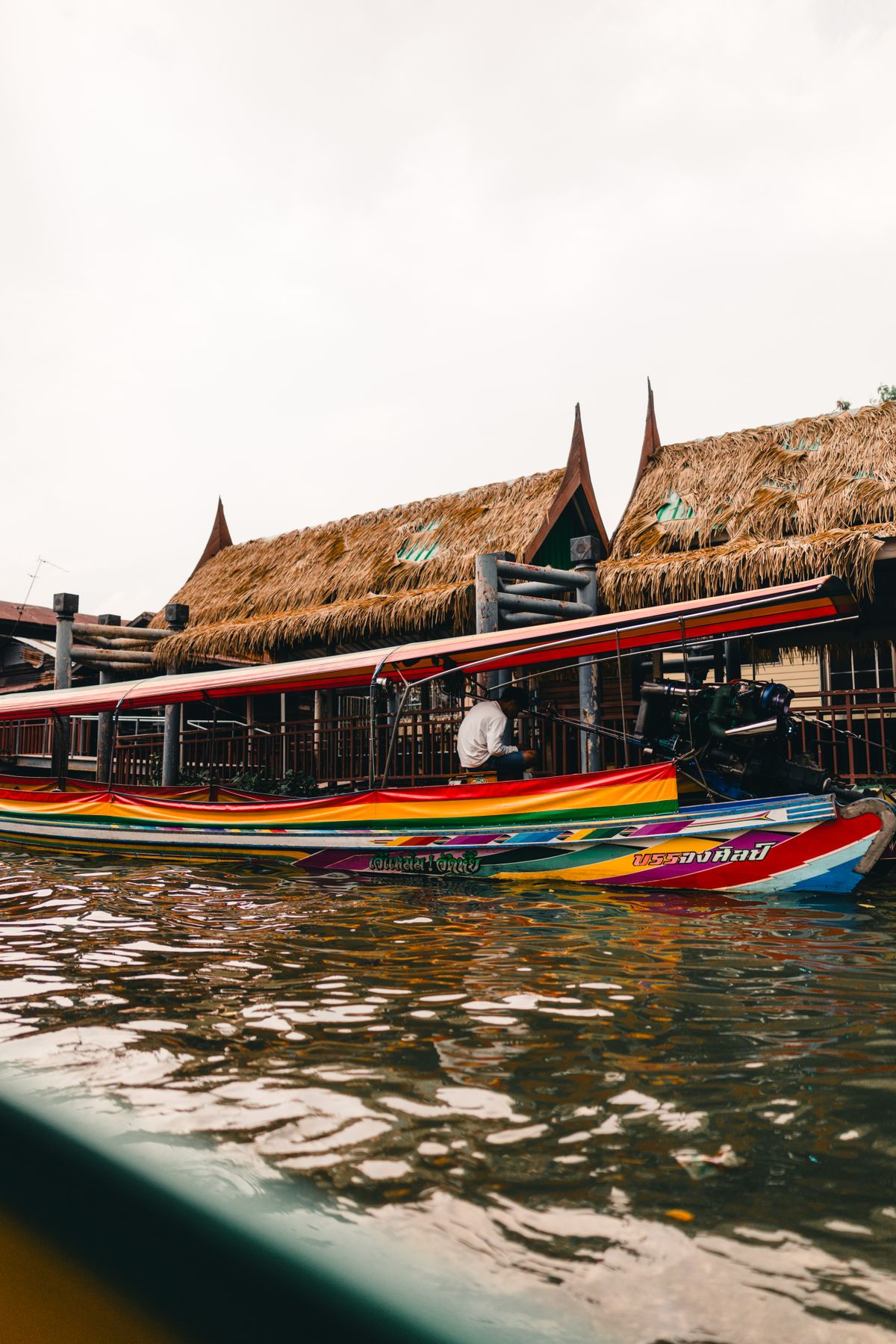
    Canal boats (khlong taxi)

    10–15 THB per trip

    Boats along Khlong Saen Saep canal — fast east-west connection from Banglamphu/Democracy Monument to Pratunam and On Nut. A local Bangkok experience, often faster than road during rush hour.

    Good to know. Plan your Bangkok days around BTS/MRT stations to save hours in traffic. Use Grab for destinations not on rail lines and at night. Avoid taxis during evening rush hour (4–7pm) — even short distances can take 45+ minutes by road.

    Handy apps

    GGrab

    Ride-hailing, food delivery, and express delivery across Bangkok. Most reliable and transparent transport option.

    Set pickup to exact location on map, not street name — Bangkok streets can be confusing. GrabBike is fastest for short hops under 3km.

    GGoogle Maps

    Essential for navigation, BTS/MRT route planning, and finding street food stalls and restaurants. Works well with Bangkok's transit network.

    Download Bangkok map offline before arriving — useful in spotty connectivity areas. Google Maps BTS/MRT route suggestions are accurate and include walking transfer times.

    LLINE

    Thailand's dominant messaging app. Most Thai businesses, hotels, and services communicate via LINE. Essential for booking restaurants, communicating with guesthouses, and local contacts.

    Install LINE and create an account before arriving — many Bangkok restaurants and hotels prefer LINE over SMS or email for bookings and communication.

    AAgoda / Booking.com

    Hotel and accommodation booking. Agoda has particularly strong inventory and competitive prices for Bangkok hotels.

    Agoda is headquartered in Bangkok and often has better rates for Thai hotels than international platforms. Compare before booking.

    Backup. Buy a Thai SIM card at Suvarnabhumi or Don Mueang airport immediately on arrival (True Move H, AIS, or DTAC) — tourist SIMs with 15–30GB data are available for $5–15 USD. Free WiFi available at BTS stations, malls, and most cafes. AIS and True Move H offer the best coverage nationwide.

    Where to stay

    Nightly rates: Hostel dorm: $8–18/night. Budget guesthouse: $20–40/night. Mid-range hotel: $50–120/night. Boutique hotel: $80–200/night. Luxury 5-star: $150–500+/night. Prices spike 30–50% during peak season (Nov–Feb) and Songkran (April).

    Sukhumvit (BTS On Nut, Ekkamai, Thong Lo, Asok)

    Mid-range to luxury travelersnightliferestaurantsexpat area

    Bangkok's most international and well-connected district with excellent BTS access, restaurants of every cuisine, rooftop bars, and nightlife. Lower Sukhumvit (On Nut, Ekkamai) offers better value than upper Sukhumvit. Terminal 21 mall at Asok station is a local favourite for budget shopping and food.

    Silom / Sathon

    Business travelerscouplesaccess to Chao Phraya riverboats

    Business district by day, lively entertainment area by night (Patpong Night Market area). Good BTS/MRT access. Excellent mid-range and business hotels. Close to the Chao Phraya river and express boat access to temples.

    Khao San Road / Banglamphu

    Backpackersbudget travelersparty seekerseasy temple access

    The original Bangkok backpacker hub. Cheap guesthouses and hostels, budget street food, travel agencies, and lively bar scene. Walking distance to Wat Phra Kaew, Wat Pho, and the Grand Palace. Gets noisy at night — pick accommodation away from the main street if you want to sleep.

    Siam / Ratchaprasong

    Shopping loverscentral locationfamilies

    Bangkok's premium shopping district centered around Siam BTS station. Siam Paragon, CentralWorld, and MBK Center are within walking distance. Higher prices but unbeatable central location with BTS interchange access.

    Booking tip: Stay near a BTS Skytrain or MRT station to avoid Bangkok's legendary traffic jams. The difference between a hotel on the BTS line vs off it can easily be 1–1.5 hours of daily commute time saved.

    Health & safety

    Emergency numbers

    Police / Tourist Police
    191 or 1155 (Tourist Police)
    Fire Department
    199
    Ambulance / Medical Emergency
    1669
    Tourist Police Hotline
    1155
    Bumrungrad Hospital Emergency
    +66 2 066 8888
    Samitivej Hospital Emergency
    +66 2 022 2222
    Bangkok Hospital Emergency
    +66 2 310 3000

    Medical facilities

    • Bumrungrad International Hospital+66 2 066 8888

      33 Sukhumvit Soi 3, Wattana, Bangkok

      World-renowned international hospital, consistently ranked as one of Asia's best. Over 30 international accreditations. English-speaking staff across all departments. Serves over 1 million patients from 190+ countries annually. Expensive by Bangkok standards but world-class care.

    • Bangkok Hospital (Main Branch)+66 2 310 3000

      2 Soi Soonvijai 7, New Petchaburi Road, Bangkok

      Leading Thai hospital group with multiple branches across Bangkok. International patient services, English-speaking staff, modern facilities. Bangkokdusit Medical Services (BDMS) group. Emergency walk-ins accepted.

    • Samitivej Sukhumvit Hospital+66 2 022 2222

      133 Sukhumvit Soi 49, Bangkok

      Popular choice for tourists staying in the Sukhumvit area. International-standard care, multilingual staff, modern emergency department. Part of the Bangkok Dusit Medical Services group.

    • BNH Hospital (Bangkok Nursing Home)+66 2 686 2700

      9/1 Convent Road, Silom, Bangkok

      Well-established international hospital in the Silom business district. Excellent for travelers staying in the Silom/Sathorn area. English-speaking medical staff.

    • Government public hospitals (Siriraj, Chulalongkorn)See websites

      Various locations central Bangkok

      High-quality government hospitals significantly cheaper than private international hospitals. Siriraj Hospital (near Wang Lang pier, river access) is one of Thailand's best-known teaching hospitals. Longer wait times and English may be limited to specific departments.

    Staying safe

    General safety
    Moderate safety with specific scams to avoid — Bangkok is generally safe for tourists but scams targeting tourists are very common; violent crime against tourists is rare
    Notes
    Bangkok is relatively safe for tourists. Violent crime targeting foreigners is uncommon. The main risks are: tourist scams (gem scam, tuk-tuk scam, card games, massage scam — very prevalent near Grand Palace and Khao San area), pickpocketing in crowded areas (Chatuchak Market, BTS stations during rush hour), traffic accidents, and bar/nightclub drink spiking in entertainment districts. Political demonstrations occasionally occur but rarely affect tourist areas directly.
    What to carry
    Light clothing for the heat. Money belt or hidden wallet for crowded areas. Waterproof bag for Songkran. Comfortable shoes for temple visits. Sunscreen SPF 50+ for outdoor sightseeing.
    Lost items
    Report theft to the Tourist Police (1155, available 24/7 in English, Thai, and other languages) for a police report required for insurance claims. Tourist Police offices are located near major tourist areas including Khao San Road and Silom. For lost passports, contact your embassy in Bangkok — all major countries maintain embassies in Bangkok and most have emergency services. The Tourist Police are significantly more helpful for tourists than regular city police.
    • Be very skeptical of any friendly stranger who approaches you near major tourist sites (Grand Palace, Wat Pho, Democracy Monument) and tells you the attraction is 'closed today' — this is the classic setup for the gem scam or a redirect to a tuk-tuk tour; the Grand Palace is almost never actually closed
    • Never go to a gem shop with a tuk-tuk driver offering cheap tours — the 'gem scam' is Bangkok's most notorious and expensive tourist con; stones sold are virtually worthless
    • Cover and secure your bag in crowded BTS stations, Chatuchak Market, and tourist areas; pickpocketing occurs but is less prevalent than in many European cities
    • Avoid unlicensed 'massage' parlors in Patpong and Nana areas that operate as prostitution services — these can lead to scams, overcharging, and in rare cases dangerous situations
    • Use official metered taxis or Grab — getting in an un-metered taxi and agreeing to a 'flat rate' (always higher) is a common tourist overcharge
    • In nightlife areas (Khao San, RCA, Nana), be cautious about leaving drinks unattended — drink spiking has been reported; never accept drinks from strangers
    • Respect Buddhist temples and royal institutions — disrespecting the monarchy or religious sites can result in serious legal consequences under Thailand's strict lese-majeste laws
    • Bangkok has some of the best medical facilities in Southeast Asia — international hospitals here are genuinely world-class and significantly cheaper than equivalent care in Western countries
    • Get travel insurance that covers medical expenses — while Bangkok's hospitals are excellent, the private international hospitals are expensive without insurance coverage ($100–500+ for specialist consultations, $2,000+ for surgery)
    • Bangkok is the region's medical tourism hub — planned medical procedures (dental, cosmetic, LASIK, orthopedic) are significantly cheaper than in US/UK/Australia even accounting for travel costs
    • Dengue fever occurs in Bangkok and throughout Thailand — use DEET-based repellent especially during and after rainy season (June–October); seek medical attention immediately if you develop high fever with joint pain after mosquito exposure
    • Drink only bottled or filtered water — tap water in Bangkok is not recommended for drinking; bottled water is widely available and cheap (7–15 THB)
    • Common stomach issues from unfamiliar spicy food — carry anti-diarrheal medication and oral rehydration salts; Bangkok pharmacies (Boots, Watsons, local pharmacies) are well-stocked with common medications
    • Save the Tourist Police hotline (1155) in your phone — they speak English and are specifically trained to assist foreign visitors with scams, theft, and emergencies
    • For medical emergencies, Bumrungrad, Bangkok Hospital, and Samitivej have 24/7 emergency departments with English-speaking staff; no appointment needed
    • Keep a photo of your passport, visa, travel insurance, and accommodation address in your phone's photo album — useful if originals are lost or stolen
    • If you're a victim of a scam or overcharging incident, the Tourist Police (1155) can often help negotiate or recover losses, especially in cases involving licensed establishments

    Local customs

    Etiquette & local habits

    • Dress modestly for all temple visits — shoulders and knees must be covered; sarongs are available for rent at the Grand Palace and Wat Phra Kaew entrance if you forget
    • Never touch a monk's body or hand anything directly to a monk — monks cannot accept things directly from women; place offerings on the mat in front of them
    • Remove shoes before entering any temple, private home, or traditional shop that displays shoes outside the entrance
    • Never disrespect images of Buddha or the Thai royal family — this is deeply offensive and potentially illegal under Thailand's lese-majeste laws; do not climb on Buddha statues for photos
    • The head is considered sacred and feet are considered the lowest part of the body — never touch someone on the head or point your feet toward Buddha images or people
    • Avoid tuk-tuk drivers who offer suspiciously cheap tours (50 baht 'city tour') — these invariably end up at gem shops or tailor shops where you'll be pressured to buy
    • Bargaining is acceptable at markets (Chatuchak, Platinum Fashion Mall) but not at malls, department stores, or restaurants; start at 60–70% of the asking price
    • The 'Thai smile' is a deeply ingrained part of the culture — staying calm, smiling, and being polite will resolve almost any difficult situation faster than showing frustration

    When the city is open

    Major temples (Wat Phra Kaew, Wat Pho, Wat Arun) open 8am–5pm, some later. Grand Palace open 8:30am–3:30pm. Street food vendors typically operate 6am–11am (breakfast) and 5pm–midnight (dinner/late night). Night markets (Rot Fai, Chatuchak Weekend Market on Sat–Sun) open late afternoon to midnight. 7-Eleven and Family Mart convenience stores open 24/7 throughout the city.