City guide

    Ba Be Lake

    Explore Ba Be Lake, Vietnam

    Overview

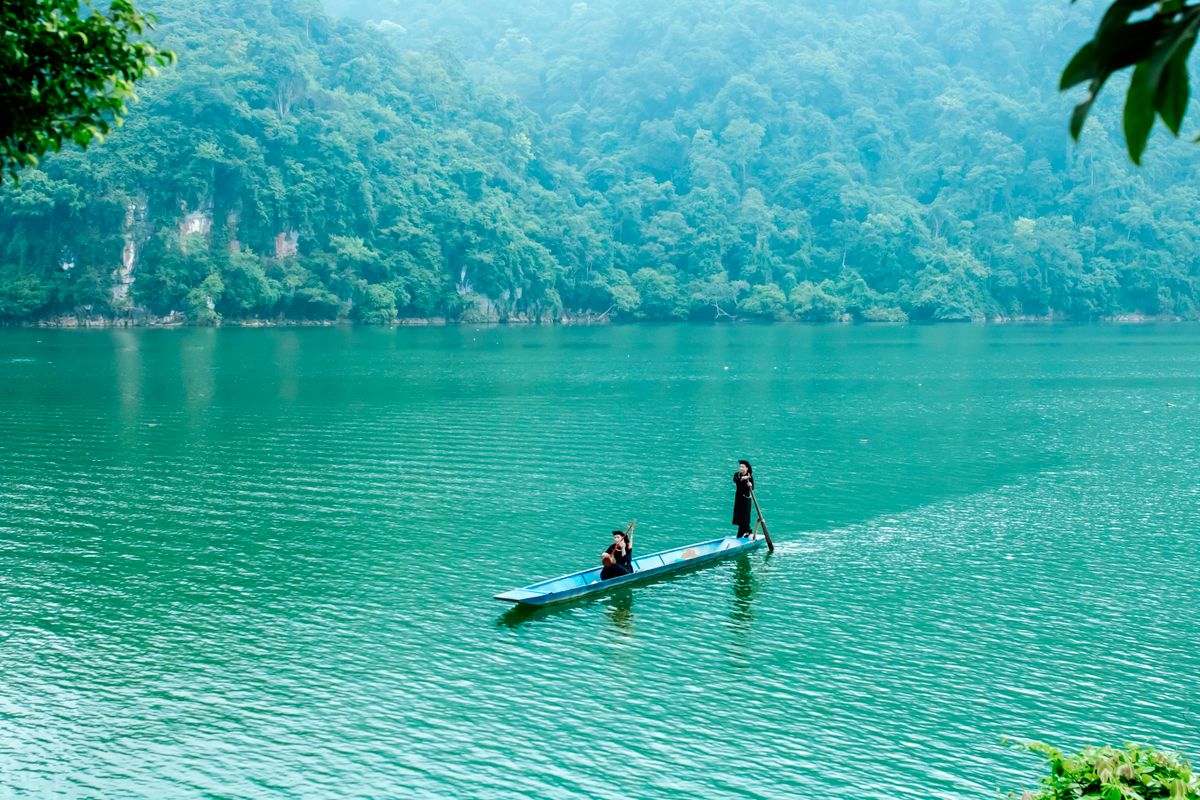
    A scenic freshwater lake in a limestone karst landscape, known for boat trips, ethnic minority villages, and quiet nature escapes.
    At a glanceBa Be Lake · City guide
    Country
    Vietnam
    Region
    Bac Kan Province, Northern Vietnam
    Recommended stay
    2-3 days
    Daily cost
    ≈ $35 / day
    Best time to visit
    Mar - May, Jun - Aug, Sep - Nov
    ba-be-lake · Guide
    Good to know

    Before you go to Ba Be Lake

    When to go

    Climate through the year

    Rainfall mm/inchesTemperature °C/°F0/0.010/50100/3.915/59200/7.920/68300/11.825/77400/15.730/86500/19.735/95JFMAMJJASOND
    Monthly temperature and rainfall
    MonthMin °CMax °CRainfall mm
    J121820
    F132025
    M162440
    A192890
    M2231180
    J2432250
    J2432300
    A2431280
    S2230180
    O192790
    N162335
    D131920

    Spring (Feb-Apr)

    Mild, pleasant weather in northern Vietnam; good visibility for lake and cave scenery. Tet usually falls in late Jan or Feb, depending on the lunar calendar.

    Comfortable for boat trips, trekking, and village visits; festive atmosphere around Tet.
    Some closures and higher demand around Tet; occasional drizzle.

    Ideal for: Boat rides on Ba Be Lake, hiking in Ba Be National Park, Tay village visits.

    Pack: Light jacket, layers, comfortable walking shoes, umbrella.

    Summer (May-Aug)

    Hotter, more humid conditions with the rainy season peaking in northern Vietnam; lush green landscapes and fuller waterfalls.

    Best for dramatic scenery, fewer crowds than peak holiday periods, and lower rates on some stays.
    Frequent rain, slippery trails, humidity, and occasional transport delays.

    Ideal for: Scenic boat trips, photography, indoor downtime in homestays, short flexible itineraries.

    Pack: Breathable clothes, raincoat, quick-dry shoes, dry bag for electronics.

    Autumn (Sep-Nov)

    Generally the best overall window for Ba Be: cooler, drier weather and clearer skies after the summer rains.

    Best balance of comfort, visibility, and outdoor conditions; excellent for hiking and lake cruising.
    Can be busier on weekends and holiday periods; prices may rise slightly.

    Ideal for: Lakeside walks, kayaking/boat tours, cave visits, multi-day nature trips.

    Pack: Light layers, hiking shoes, sun protection, small daypack.

    Winter (Dec-Jan)

    Cool to chilly, often misty or overcast in northern highlands; quieter atmosphere.

    Lower-season feel, peaceful scenery, good for slow travel and homestays.
    Can feel damp and cold, especially on the water or in the evenings.

    Ideal for: Relaxed homestay stays, local food, low-key sightseeing, photography in misty conditions.

    Pack: Warm jacket, scarf, long pants, closed shoes.

    Daily budget

    Low season / day
    20-40 USD (budget homestay, local meals, shared transport, excluding major private tours)
    Peak season / day
    35-70 USD (better rooms, private boat/driver, higher-demand weekends and holidays, excluding luxury stays)
    Cash
    Carry 500,000-1,000,000 VND in small bills for boats, homestays, snacks, and rural services.
    Exchange
    Use banks or licensed exchange counters in larger towns; avoid informal money changers. A practical planning rate is about 25,000 VND per USD, but check the live rate before exchanging.
    ATMs
    Available in larger nearby towns, but not always convenient right at the lake; expect a local ATM fee and bring backup cash.
    Cards
    Limited to moderate - cards may work at some hotels and larger operators, but cash is preferred for homestays, local boats, and small eateries.

    Events & festivals

    • Tet (Lunar New Year)Late Jan or Feb (varies by lunar calendar)

      Family reunions, temple visits, flower markets, and a strong holiday atmosphere across Vietnam.

      Tip: Book transport and accommodation early; expect some businesses to close for several days and carry enough cash.

    • Mid-Autumn FestivalSep or Oct (15th day of the 8th lunar month)

      Lanterns, mooncakes, lion dances, and children’s parades in towns and villages.

      Tip: Best experienced in nearby towns and local communities; evenings are the most festive.

    Getting there

    How to reach Ba Be Lake from abroad or within Vietnam.

    Arriving internationally

    • Fly into Hanoi’s Noi Bai International Airport (HAN), the main international gateway for northern Vietnam, then continue overland to Ba Be Lake in Bac Kan Province.
    • From Hanoi, the trip to Ba Be Lake is typically about 4 to 6 hours by private car or minivan, depending on traffic and road conditions; Vietnam Tourism describes Ba Be National Park as about four hours from Hanoi. ([vietnam.travel](https://www.vietnam.travel/things-to-do/where-go-see-unseen-vietnam?utm_source=openai))
    • There are no direct international flights to Ba Be Lake itself, so the practical route is international flight to Hanoi, then road transfer by bus, shuttle, private car, or motorbike. ([vietnam.travel](https://www.vietnam.travel/things-to-do/where-go-see-unseen-vietnam?utm_source=openai))

    From within the country

    • From Hanoi, the most convenient options are tourist minivans, private transfers, or a combination of intercity bus plus local taxi/motorbike to the lake area.
    • If you are already in northern Vietnam, you can reach Ba Be Lake by road from Bac Kan City and nearby provinces; a new road connection has improved travel time between Bac Kan City and Ba Be Lake. ([2025.vietnam.travel](https://2025.vietnam.travel/cung-duong-moi-dong-luc-lon-cho-phat-trien-du-lich-ho-ba-be-bac-kan/?utm_source=openai))
    • Self-driving is possible, but mountain roads can be narrow and winding, so many solo travelers prefer a driver or organized transfer for safety and simplicity.

    Booking & arrival tips

    • Book the Hanoi-to-Ba Be transfer in advance, especially on weekends and holidays.
    • For solo travelers, a shared minivan or join-in tour is often the cheapest way to avoid a private-car surcharge.
    • Download offline maps before leaving Hanoi because mobile signal can be patchy in rural areas.
    • Carry cash in Vietnamese dong for local boats, homestays, and small transport providers.
    • If arriving late, arrange pickup with your homestay in advance rather than relying on on-the-spot taxis.

    Getting around

    Private car / transfer

    Varies by distance and group size

    Best for door-to-door comfort from Hanoi or Bac Kan City.

    Shared minivan / shuttle

    Budget-friendly

    Good solo-traveler option for direct Hanoi-Ba Be access.

    Local motorbike taxi

    Low to moderate

    Useful for short hops between homestays, boat piers, and viewpoints.

    Boat

    Low to moderate

    Essential for lake sightseeing and reaching scenic spots on the water.

    Good to know. In the Ba Be area, transport is more rural than urban: expect fewer ride-hailing options than in Hanoi, so pre-arranged transfers and homestay pickups are the most reliable.

    Handy apps

    GGoogle Maps

    Navigation and offline route planning.

    Download offline maps for Hanoi, Bac Kan, and Ba Be before departure.

    GGrab

    Ride-hailing in Hanoi and other major Vietnamese cities.

    Useful for airport transfers and city rides before you head north; availability is much better in Hanoi than in Ba Be itself.

    BBe

    Ride-hailing in Vietnam’s larger cities.

    A backup to Grab for getting around Hanoi before your onward transfer.

    XXanh SM

    Electric taxi and ride-hailing service in Vietnam.

    Good for quiet, cashless city transfers in Hanoi.

    112Go

    Intercity transport booking.

    Helpful for comparing buses, vans, and private transfers to northern destinations.

    Backup. Ask your homestay or lodge to arrange a local driver, boat, or motorbike taxi; in rural Ba Be this is often more reliable than waiting for an app-based ride.

    Where to stay

    Nightly rates: 15-40 USD/night for homestays and simple guesthouses, 60+ USD for nicer eco-lodges

    Pác Ngòi Village

    Solo travelersCulture enthusiastsBudget stays

    Best-known lakeside Tay village on Ba Be Lake with homestays, boat access, and easy views over the water.

    Nam Mau Commune

    First-time visitorsNature loversConvenience seekers

    Main gateway area for Ba Be National Park with simple guesthouses, homestays, and access to boat piers and trails.

    Ba Be National Park Core Area

    HikersBirdwatchersSlow travelers

    Quiet forest-and-lake zone inside the park, ideal for travelers who want early starts for boat trips, caves, and hiking.

    Bo Lu Village

    Peace seekersCouplesBudget travelers

    Small rural village near the lake with homestays and a calmer atmosphere than the main tourist hamlets.

    Coc Toc Area

    Solo travelersPhotographersLocal experience

    Lakeside settlement with local homes and boat access, useful for travelers wanting a quieter base near the water.

    Cho Ra Town

    Transit travelersPractical staysLonger trips

    District town with more practical services, food options, and transport connections than the lakeside villages.

    Booking tip: Book ahead for weekends, Vietnamese holidays, and the dry-season peak from October to April.

    Health & safety

    Emergency numbers

    ambulance
    115
    fire
    114
    police
    113
    national emergency/disaster hotline
    112

    Medical facilities

    • Bệnh viện Đa khoa tỉnh Bắc Kạn0966.631.919

      Tổ dân phố số 4, phường Huyền Tụng, TP. Bắc Kạn, tỉnh Bắc Kạn

      Main provincial hospital for serious care; emergency department available.

    • Trung tâm Y tế huyện Ba Bể0966.471.919

      Huyện Ba Bể, tỉnh Bắc Kạn

      Closest district-level medical center for Ba Be area.

    • Bệnh viện Đa khoa Bắc Kạn0966.631.919

      TP. Bắc Kạn, tỉnh Bắc Kạn

      Provincial hospital; best option for urgent evaluation if you can reach Bac Kan city.

    Staying safe

    General safety
    Petty theft is less common than in big cities, but keep valuables secure in markets, bus stations, and on boats. Use licensed boats and life jackets on the lake.
    Notes
    Use bottled or boiled water; avoid untreated tap water. In rural and lakeside areas around Ba Be, watch for slippery paths, uneven terrain, and boat safety. Be extra careful on motorbike roads and when crossing in towns.
    What to carry
    Comfy walking shoes, refillable water bottle, basic meds (painkillers, antidiarrheal, oral rehydration salts), mosquito repellent, sunscreen, and a light rain jacket.
    Lost items
    Nearest local police station or commune police office
    • Carry hand sanitizer for street food and shared surfaces.
    • Use sunscreen, a hat, and insect repellent, especially in the hot/rainy season.
    • Rest and hydrate if you feel overheated, dizzy, or unwell.
    • Carry your travel insurance details and passport copy for faster registration.
    • For serious emergencies, call ahead if possible and go to the nearest district health center first if you cannot reach Bac Kan city quickly.
    • If you have a medical emergency in a remote area, call 115 or 112 and also contact the nearest district health center.
    • Keep your phone charged and save local emergency numbers before heading to the lake or rural villages.
    • Use licensed transport and keep valuables in a crossbody bag or money belt.

    Local customs

    Etiquette & local habits

    • Ba Be is home to Tay communities; greet hosts politely and ask before photographing people or homes.
    • Homestays are common, so bring small cash and be ready for simple, family-run accommodation.
    • Dress modestly when visiting villages, temples, or local homes; cover shoulders and knees when appropriate.
    • Bargaining is normal in markets, but keep it friendly and do not haggle aggressively over food or homestay prices.

    When the city is open

    Boat trips and sightseeing usually start early; many local services wind down by early evening, while homestay dinners are often served on a set schedule.