Cultural HeritageHistoric SiteMuseum
Museum of Cham Sculpture
Bảo Tàng Điêu Khắc Chăm
4.6₫60,000 VND1-2 hours
Chirido Lai
The world's largest collection of Cham artifacts, housing over 2,000 sandstone sculptures from the ancient Champa kingdom dating from the 7th to 15th centuries.
The Museum of Cham Sculpture (Bảo Tàng Điêu Khắc Chăm) in Da Nang is the foremost repository of Cham art and culture in the world. Established in 1915 by the École française d'Extrême-Orient (French School of the Far East), the museum holds over 2,000 original sandstone sculptures, altars, and architectural fragments from the ancient Champa civilization, which dominated central Vietnam from the 2nd to the 15th century. The collection is organized by site of origin, with galleries dedicated to artifacts from My Son, Dong Duong, Tra Kieu, Thap Mam, and other major Cham sanctuaries.
Gallery
Photos

What to know before you go
- The Cham civilization was one of Southeast Asia's most artistically sophisticated cultures, creating an extraordinary sculptural tradition influenced by Hinduism and Buddhism. The museum's collection spans centuries of Cham artistic development, from the earliest Sanskrit-influenced carvings of the 7th century to the distinctive Binh Dinh style of the 11th–13th centuries.
- Key highlights include the Tra Kieu altar (4th–5th century), considered one of the finest examples of early Cham art; the Dong Duong bodhisattva collection from the 9th century; and several monumental linga-yoni altars from the My Son sanctuary complex. Many pieces depict Shiva, Vishnu, Ganesha, and celestial dancing figures (apsaras).
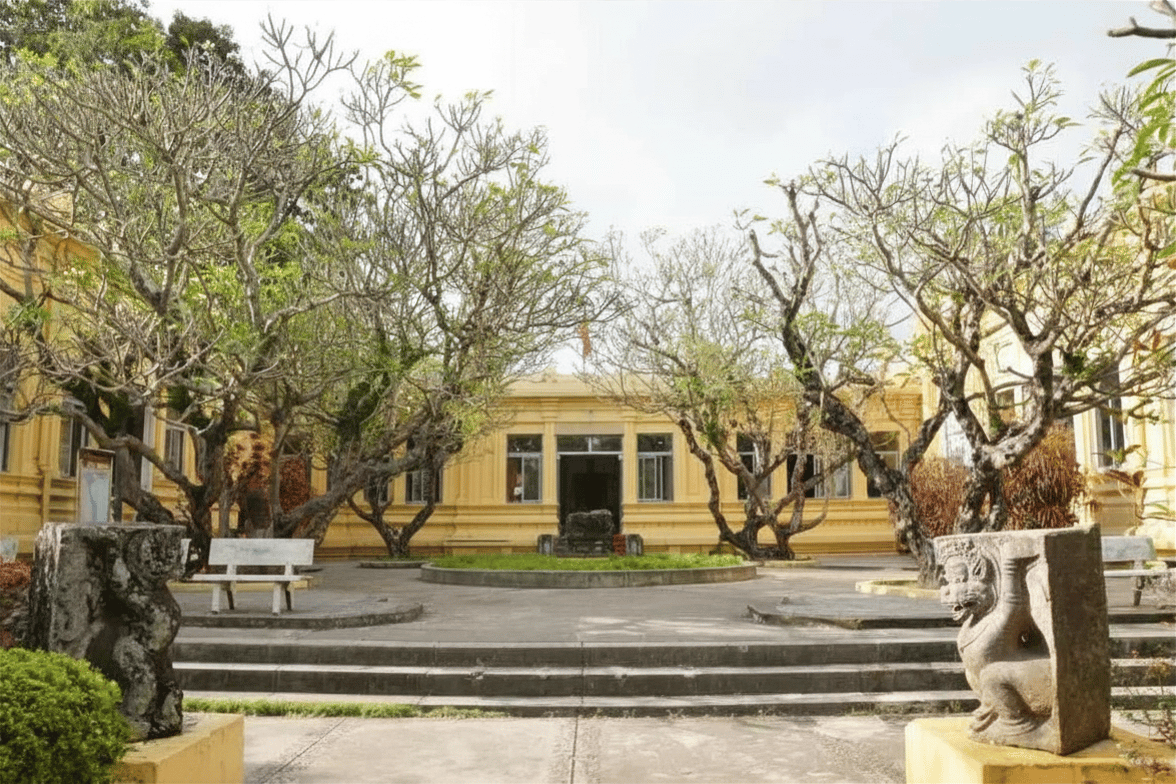
- The museum building itself is architecturally notable — a French colonial structure that has been sensitively expanded over the decades to accommodate the growing collection. The layout allows visitors to trace the geographic and chronological evolution of Cham art across different regions of central Vietnam.
Good to know
Culture, safety & access
Culture & etiquette
Crowd: Rarely overcrowded. One of Da Nang's most rewarding but least visited major attractions.Best season: Year-round. The indoor galleries are comfortable regardless of weather.
Maintain a respectful, quiet demeanor inside. Many of the sculptures are sacred religious objects.
Safety & health
Do not touch the sculptures — they are fragile and irreplaceable.
Weather
Fully air-conditioned galleries make this an ideal hot-day visit.
Audio Guide
Audio guides and English-language brochures are available at the entrance for an additional small fee.
Photography
Photography is permitted without flash. Tripods are generally not allowed inside the galleries.
Wheelchair Access
The museum is largely flat and accessible to wheelchairs, though some older gallery sections have steps.