City guide

    Mai Chau

    Explore Mai Chau, Vietnam

    Overview

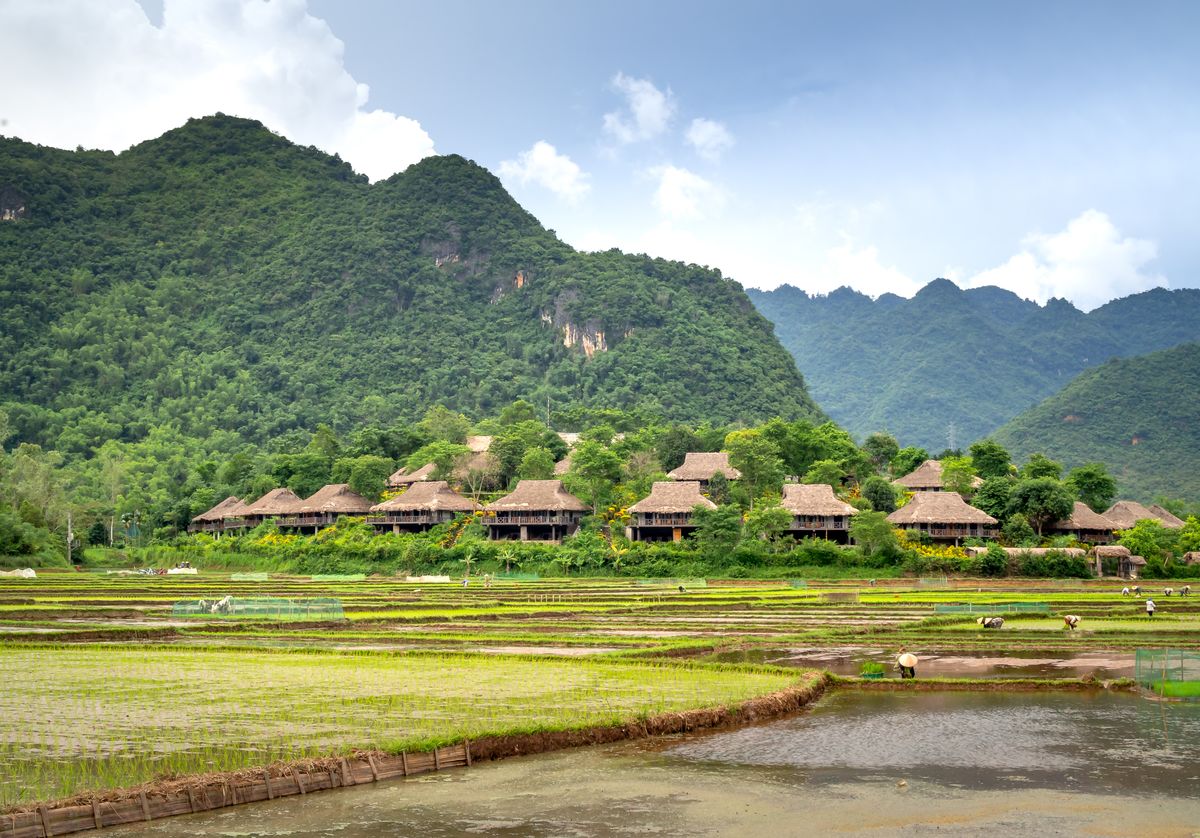
    A peaceful rural valley known for rice terraces, ethnic Thai villages, and scenic mountain landscapes.
    At a glanceMai Chau · City guide
    Country
    Vietnam
    Region
    Northern Vietnam
    Recommended stay
    2-3 days
    Daily cost
    ≈ $45 / day
    Best time to visit
    Mar - May, Sep - Nov
    mai-chau · Guide
    Good to know

    Before you go to Mai Chau

    When to go

    Climate through the year

    Rainfall mm/inchesTemperature °C/°F0/0.010/50100/3.915/59200/7.920/68300/11.825/77400/15.730/86500/19.735/95JFMAMJJASOND
    Monthly temperature and rainfall
    MonthMin °CMax °CRainfall mm
    J142025
    F152230
    M182545
    A212990
    M2432180
    J2533240
    J2533280
    A2532300
    S2431220
    O2128110
    N182545
    D152125

    Spring (Feb-Apr)

    Mild to warm weather, blooming peach/plum blossoms in the hills, and a lively cultural atmosphere around Tet and local Thai/Mong festivals.

    Great for valley walks, cycling, homestays, and festival photography.
    Can be busy around Tet; occasional light drizzle and mist.

    Ideal for: Village walks, cultural experiences, blossom viewing.

    Pack: Light jacket, comfortable walking shoes, compact umbrella, layers for cool mornings.

    Summer (May-Aug)

    Hot, humid, and rainy; rice fields are at their greenest and the valley looks especially lush.

    Lower prices than peak dry-season periods; dramatic scenery after rain.
    Heat, humidity, and frequent afternoon showers can disrupt outdoor plans.

    Ideal for: Short hikes, scenic drives, homestays, indoor cultural activities.

    Pack: Breathable clothes, raincoat, quick-dry footwear, insect repellent.

    Autumn (Sep-Nov)

    Cooler, drier weather with clear views and golden rice harvest scenery in many areas around Mai Chau.

    Best overall weather for cycling, trekking, and photography.
    More visitors and higher prices during the best-weather weeks.

    Ideal for: Rice-field views, bike rides, day trips, outdoor dining.

    Pack: Light layers, sun protection, comfy shoes, camera.

    Winter (Dec-Jan)

    Cool, sometimes foggy mornings and evenings; the valley can feel quiet and atmospheric.

    Fewer crowds and good value on accommodation.
    Can feel chilly, damp, and overcast, especially early and late in the day.

    Ideal for: Relaxed homestays, slow travel, cozy evenings, local food.

    Pack: Warm jacket, scarf, long pants, closed shoes.

    Daily budget

    Low season / day
    25-45 USD (rainy or quiet season, excluding accommodation)
    Peak season / day
    40-70 USD (best-weather season, excluding accommodation)
    Cash
    Carry 500,000-1,000,000 VND in small bills for homestays, local food, and village purchases.
    Exchange
    Use banks or licensed exchange counters; a practical planning rate is about 1 USD ~ 25,000 VND.
    ATMs
    Available in Mai Chau town and nearby hubs, but not always convenient in smaller villages; expect a small withdrawal fee from your bank and/or the local ATM.
    Cards
    Moderate - cards are more likely to work at hotels, larger restaurants, and higher-end resorts; cash is still preferred for homestays, markets, and small vendors.

    Events & festivals

    • Tet (Lunar New Year)Late January or February, depending on the lunar calendar

      Family gatherings, traditional food, blossom season, and local celebrations in Thai and Mong communities.

      Tip: Book transport and accommodation early; many businesses may close for several days, so bring enough cash and snacks.

    • Xen Ban and Xen Muong FestivalUsually in spring, often around the lunar second month or local festival season

      Important Thai cultural festival with rituals, music, dance, and community gatherings in Mai Chau.

      Tip: Check local schedules before you go, since dates can vary by commune and year.

    • Gau Tao FestivalTypically during the early-year festival period, especially in Hmong communities

      Traditional Hmong celebration with cultural performances and community activities.

      Tip: Best experienced with a local guide or homestay host who can explain customs and etiquette.

    • Mid-Autumn FestivalSeptember or October, on the 15th day of the 8th lunar month

      Lanterns, mooncakes, and family-oriented festivities; smaller than in big cities but still visible in local communities.

      Tip: Expect a more local, low-key atmosphere than Hanoi or Ho Chi Minh City.

    Getting there

    How to reach Mai Chau from abroad or within Vietnam.

    Arriving internationally

    • International travelers usually fly into Hanoi’s Noi Bai International Airport (HAN), then continue to Mai Chau by road.
    • Mai Chau is about 140 km from Hanoi, and the overland journey typically takes around 3 hours depending on traffic and road conditions.
    • From Hanoi, you can take a private car, shuttle van, or bus to Mai Chau; many travelers also book a motorbike or self-drive transfer for flexibility.

    From within the country

    • Mai Chau is not served by its own commercial airport or railway station, so road transfer from Hanoi is the standard route.
    • Direct buses run from Hanoi’s My Dinh bus station to Mai Chau town, which is a short walk from Lac and Pom Coong villages.
    • If coming from Son La or Dien Bien Province, ask the driver to stop at the Mai Chau turnoff.
    • For a scenic and efficient trip, many travelers leave Hanoi in the morning to cross Thung Khe Pass in daylight.

    Booking & arrival tips

    • Book transport in advance during weekends, holidays, and rice harvest season.
    • For solo travelers, a shared shuttle van is often the best balance of price, comfort, and safety.
    • If you arrive late, pre-arrange pickup with your homestay or hotel because local transport options thin out at night.
    • Keep cash in Vietnamese dong for buses, small transfers, and village transport.
    • If you want the cheapest option, take a public bus from Hanoi; if you want the easiest option, book a door-to-door transfer.

    Getting around

    Shared shuttle van

    10-20 USD/trip

    Popular budget transfer from Hanoi to Mai Chau.

    Private car

    40-90 USD/trip

    Best for door-to-door comfort and flexible departure times.

    Public bus

    4-8 USD/trip

    Cheapest way to reach Mai Chau from Hanoi.

    Motorbike

    Varies

    For experienced riders wanting a scenic self-drive route.

    Bicycle

    2-5 USD/day

    Best for exploring the valley floor and village paths.

    Electric cart

    Small local fee

    Short hops between villages and homestays.

    Good to know. In Mai Chau itself, bicycles are the best option for the valley floor, while electric carts are useful for moving between villages. Roads can be slippery in the rainy season, so avoid night driving and allow extra time in monsoon months.

    Handy apps

    GGoogle Maps

    Navigation and offline maps.

    Download offline maps before leaving Hanoi because rural signal can be patchy.

    GGrab

    Ride-hailing for cars and motorbikes in Vietnam’s main cities.

    Useful in Hanoi for airport transfers and city rides before heading to Mai Chau.

    XXanh SM

    Electric taxi and ride-hailing in major Vietnamese cities.

    Good backup option in Hanoi if Grab prices surge.

    BBe

    Ride-hailing for cars and motorbikes.

    Compare fares with Grab before booking a transfer from Hanoi.

    SShopeeFood

    Food delivery in larger towns and cities.

    More useful in Hanoi than in Mai Chau, where homestays usually provide meals.

    Backup. Ask your homestay or hotel to arrange a local driver, bicycle rental, or electric cart if mobile data is weak.

    Where to stay

    Nightly rates: 15-35 USD/night for homestays and basic guesthouses, 50+ USD for boutique lodges and upscale resorts

    Lac Village

    Solo travelersCulture enthusiastsBudget stays

    The best-known homestay area in Mai Chau, with traditional stilt houses, rice fields, bike-friendly lanes, and easy access to local craft shops and evening cultural performances.

    Pom Coong Village

    RelaxationCouplesSolo travelers seeking calm

    A quieter village near Lac Village with authentic Thai stilt-house stays, home-cooked meals, and a relaxed rural atmosphere close to the valley floor.

    Mai Chau Town Center

    First-time visitorsConvenience seekersShort stays

    Convenient base for buses, shops, restaurants, and easy day trips to nearby villages, caves, and viewpoints.

    Van Village

    Nature loversRepeat visitorsQuiet stays

    A scenic village area with mountain views and a more local feel, good for travelers who want fewer crowds and a slower pace.

    Thung Khe Pass

    Road trippersPhotographersScenic stopovers

    Best for travelers who want dramatic mountain scenery and a stopover on the Hanoi-Mai Chau route; lodging here is more limited but views are excellent.

    Mai Chau Ecolodge Area

    Comfort seekersCouplesMid-range to luxury travelers

    Upscale valley accommodation zone near the rice fields, offering more privacy, better amenities, and a comfortable base for cycling and trekking.

    Booking tip: Book early for March-May and September-November, when weather is best and rice fields are most scenic.

    Health & safety

    Emergency numbers

    ambulance
    115
    fire
    114
    police
    113
    disaster/emergency hotline
    112

    Medical facilities

    • Mai Chau District Medical Center115

      Mai Chau District, Hoa Binh Province

      Nearest local public medical facility for initial assessment and urgent care.

    • Hoa Binh General Hospital115

      Hoa Binh City, Hoa Binh Province

      Regional hospital for more advanced treatment if needed.

    • Vinmec International Hospital024 3974 3556

      458 Minh Khai, Hai Ba Trung, Hanoi

      Private international hospital in Hanoi; useful for English-speaking care and more complex cases.

    Staying safe

    General safety
    Petty theft is less common than in big cities, but keep valuables secure in markets, bus stops, and homestays. In Mai Chau, the bigger risks are road accidents, heat, dehydration, mosquito-borne illness, and slips on wet or uneven paths.
    Notes
    Use bottled or boiled water; tap water is not considered safe to drink in Vietnam. Be extra careful on roads after dark, as rural traffic can be limited but unpredictable, and watch for motorbikes, livestock, and poor lighting.
    What to carry
    Comfy walking shoes, refillable water bottle, sunscreen, hat, insect repellent, basic meds (painkillers, antidiarrheal, oral rehydration salts), and a small flashlight for rural roads.
    Lost items
    Nearest local police station or commune police office
    • Carry hand sanitizer and choose busy, freshly cooked food stalls when possible.
    • Use mosquito repellent, long sleeves at dusk, and sleep under a net if provided.
    • Drink regularly in hot weather and rest if you feel dizzy, overheated, or unwell.
    • Carry your passport, travel insurance details, and any prescription medicines in original packaging.
    • For serious illness or injury, call 115 immediately and go to the nearest medical center first; transfer to Hanoi may be needed for advanced care.
    • For medical emergencies, call 115; for fire, call 114; for police assistance, call 113.
    • If you lose a passport or valuables, report it to local police as soon as possible and keep a copy of the report for insurance.

    Local customs

    Etiquette & local habits

    • Mai Chau is home to White Thai communities; stay respectful in stilt-house homestays and follow your host's house rules.
    • Dress modestly when visiting villages, temples, or community spaces; cover shoulders and knees when appropriate.
    • Ask before photographing people, especially elders and children, and be polite if someone declines.
    • Bargaining is normal at craft stalls and markets, but keep it friendly and avoid hard bargaining in homestays or family-run places.
    • Bring small cash for village shops, bike rentals, and local meals, since card payment is often limited.
    • For solo travelers, homestays are a good way to meet others; join shared dinners or group bike rides if offered.

    When the city is open

    Village activities and local shops often slow down early in the evening; homestay dinners are usually served around 6-7 PM, and nightlife is minimal compared with big cities.