City guide

    Mu Cang Chai

    Explore Mu Cang Chai, Vietnam

    Overview

    A remote mountain district famous for dramatic terraced rice fields, Hmong culture, and scenic trekking.
    At a glanceMu Cang Chai · City guide
    Country
    Vietnam
    Region
    Northern Vietnam
    Recommended stay
    2-4 days
    Daily cost
    ≈ $35 / day
    Best time to visit
    Sep - Oct, May - Jun
    mu-cang-chai · Guide
    Good to know

    Before you go to Mu Cang Chai

    When to go

    Climate through the year

    Rainfall mm/inchesTemperature °C/°F0/0.05/41100/3.911/52200/7.917/63300/11.823/73400/15.729/84500/19.735/95JFMAMJJASOND
    Monthly temperature and rainfall
    MonthMin °CMax °CRainfall mm
    J101820
    F112025
    M142340
    A172790
    M1929180
    J2130260
    J2130320
    A2130300
    S2028220
    O1725110
    N132240
    D101920

    Spring (Feb-Apr)

    Cool to mild mountain weather, with late-spring greenery and the start of the water-pouring season in late April.

    Good for quieter visits, fresh landscapes, and early rice-terrace photography before peak crowds.
    Weather can be changeable; some days are hazy or drizzly, and the most dramatic scenery is still ahead.

    Ideal for: Scenic drives, village visits, and early terrace photography.

    Pack: Light layers, a windbreaker, and a rain shell.

    Summer (May-Aug)

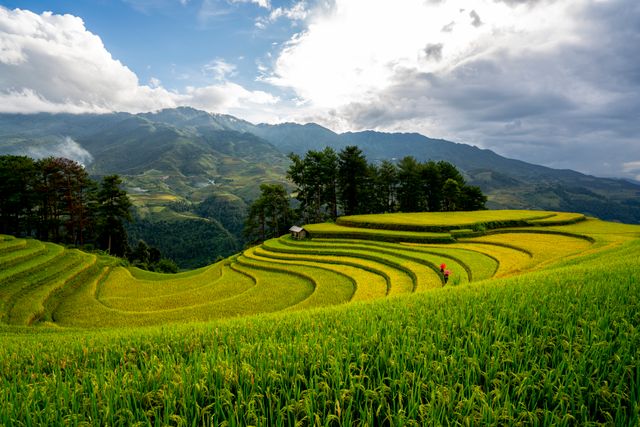
    Warm, wet season with the famous water-pouring season in May to early June, when terraces look like mirror-like pools.

    One of the best times for photography; lush landscapes and fewer visitors than harvest season.
    Frequent rain, slippery roads, and occasional landslide risk on mountain routes.

    Ideal for: Photography, homestays, and terrace trekking when conditions are dry.

    Pack: Quick-dry clothing, waterproof shoes, raincoat, and a dry bag.

    Autumn (Sep-Nov)

    Best time to visit: golden rice harvest from mid-September to early October, with clear views and peak scenery.

    Most iconic landscapes, excellent weather windows, and major festivals/events around harvest time.
    Highest demand for rooms and transport; book early.

    Ideal for: Rice-terrace viewpoints, paragliding, and festival travel.

    Pack: Layers for cool mornings/evenings, sturdy walking shoes, and sun protection.

    Winter (Dec-Jan)

    Cool, dry, and often foggy; terraces are quieter and the hills can feel atmospheric.

    Lower prices, fewer tourists, and a peaceful mountain vibe.
    Cold mornings, limited visibility, and less dramatic rice-field scenery.

    Ideal for: Slow travel, homestays, and local food experiences.

    Pack: Warm jacket, scarf, and closed-toe shoes.

    Daily budget

    Low season / day
    20-35 USD (rainy/shoulder season, excluding accommodation)
    Peak season / day
    30-55 USD (harvest season, excluding accommodation)
    Cash
    Carry 500,000-1,000,000 VND in small bills for homestays, local food, and rural transport.
    Exchange
    Use current bank or licensed exchange rates; the VND/USD rate moves, so check before you go rather than relying on a fixed figure.
    ATMs
    Available in larger towns, but not always convenient in remote villages; expect a small withdrawal fee from your bank and/or the local ATM operator.
    Cards
    Limited to some hotels, larger restaurants, and tour operators; cash is preferred for homestays, markets, and small eateries.

    Events & festivals

    • Water Pouring Season / Flying Over Water FestivalLate April to early June

      Terraces fill with water, creating reflective mountain landscapes; local cultural activities and paragliding may be part of the season.

      Tip: Book transport and homestays early if you want the best viewpoints and dry-weather windows.

    • Mu Cang Chai Paragliding FestivalLate September, during the golden rice harvest

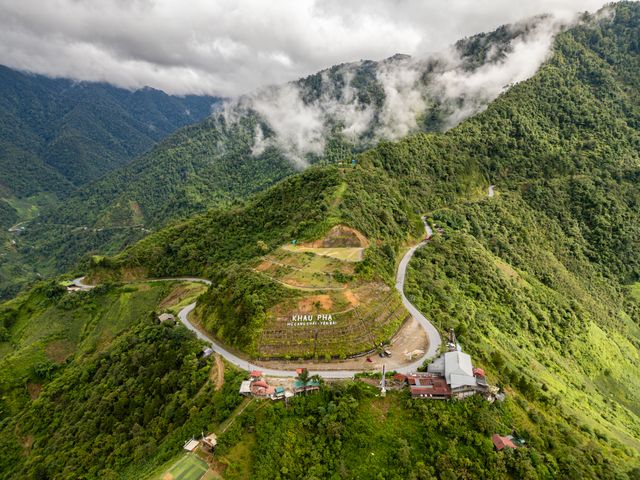
      Paragliding over golden terraces, plus food, music, and cultural performances around Khau Pha Pass.

      Tip: Reserve early; this is one of the busiest and most photogenic periods of the year.

    • Golden Rice Harvest SeasonMid-September to early October

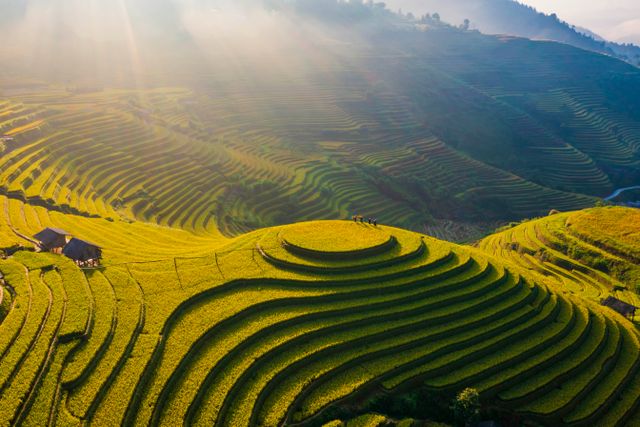
      The terraces turn bright gold and are at their most iconic for photography and scenic travel.

      Tip: Aim for sunrise or late afternoon for the best light and fewer crowds.

    • Mong Khen Festival and To Day Flower FestivalLate December to January

      Traditional Mong khen performances, blooming To Day flowers, folk games, and local fair activities.

      Tip: A good winter option if you want culture and fewer tourists rather than peak terrace scenery.

    Getting there

    How to reach Mu Cang Chai from abroad or within Vietnam.

    Arriving internationally

    • Fly into Hanoi’s Noi Bai International Airport (HAN), then continue overland to Mu Cang Chai; Mu Cang Chai is about 300 km from Hanoi and is usually reached by road rather than direct air service. ([vietnam.travel](https://www.vietnam.travel/things-to-do/mu-cang-chai-spectacle-water-pouring-season?utm_source=openai))
    • From Hanoi, the most practical options are direct sleeper/limousine buses, private car, or a train-plus-road combination via Yen Bai; Vietnam Tourism notes there are no direct trains to Mu Cang Chai, but you can take a train to Yen Bai and continue by bus. ([vietnam.travel](https://www.vietnam.travel/things-to-do/mu-cang-chai-spectacle-water-pouring-season?utm_source=openai))
    • If you are coming from abroad, the fastest route is typically an international flight to Hanoi, then a 6–8 hour road journey to Mu Cang Chai depending on weather and road conditions. ([vietnam.travel](https://vietnam.travel/things-to-do/4-things-youll-love-about-mu-cang-chai?utm_source=openai))

    From within the country

    • From Hanoi, Mu Cang Chai is commonly reached by direct bus or private car; Vietnam Tourism describes it as a six- to eight-hour road journey. ([vietnam.travel](https://vietnam.travel/things-to-do/4-things-youll-love-about-mu-cang-chai?utm_source=openai))
    • A budget-friendly alternative is to take a train or public bus to Yen Bai, then transfer onward by road toward Mu Cang Chai via Nghia Lo. ([vietnam.travel](https://vietnam.travel/things-to-do/4-things-youll-love-about-mu-cang-chai?utm_source=openai))
    • Motorbiking is popular for experienced riders, but the mountain roads can be challenging, especially in wet conditions. ([vietnam.travel](https://www.vietnam.travel/things-to-do/mu-cang-chai-spectacle-water-pouring-season?utm_source=openai))

    Booking & arrival tips

    • Book long-distance transport in advance during harvest season and holiday periods, since seats on sleeper and limousine buses can sell out. ([vietnam.travel](https://www.vietnam.travel/things-to-do/mu-cang-chai-spectacle-water-pouring-season?utm_source=openai))
    • For solo travelers, a shared limousine van or sleeper bus is usually the best balance of cost, comfort, and safety. ([vietnam.travel](https://vietnam.travel/things-to-do/4-things-youll-love-about-mu-cang-chai?utm_source=openai))
    • If arriving after dark, pre-arrange pickup with your homestay or hotel because mountain roads are harder to navigate at night. ([vietnam.travel](https://www.vietnam.travel/things-to-do/mu-cang-chai-spectacle-water-pouring-season?utm_source=openai))
    • Carry cash in Vietnamese dong for local transfers, small shops, and rural transport where card payment is uncommon. ([vietnam.travel](https://www.vietnam.travel/things-to-do/mu-cang-chai-spectacle-water-pouring-season?utm_source=openai))

    Getting around

    Local motorbike taxi / hired motorbike

    Varies locally; usually the cheapest flexible option for short village hops

    Best for solo travelers exploring terraces, viewpoints, and nearby hamlets.

    Private car with driver

    Higher than bus; best for full-day sightseeing or airport/hotel transfers

    Most comfortable option for mountain roads and multi-stop itineraries.

    Intercity bus / sleeper bus

    Budget-friendly long-distance transport from Hanoi and other northern cities

    Main way to reach Mu Cang Chai from Hanoi.

    Walking / hiking

    Free

    Ideal for terraced-field viewpoints and village exploration once you are in the area.

    Good to know. In Mu Cang Chai, local transport is much more limited than in big cities, so plan your day around your accommodation, pre-book drivers when possible, and avoid relying on app-based ride-hailing as your only backup. ([vietnam.travel](https://www.vietnam.travel/things-to-do/mu-cang-chai-spectacle-water-pouring-season?utm_source=openai))

    Handy apps

    GGoogle Maps

    Navigation and route planning.

    Download offline maps before leaving Hanoi because mountain coverage and mobile signal can be patchy in rural areas.

    GGrab

    Ride-hailing and food delivery where available.

    Useful in Hanoi and larger Vietnamese cities before/after your Mu Cang Chai trip; availability in remote mountain areas may be limited.

    XXanh SM

    Ride-hailing in Vietnam’s larger cities.

    Good backup app in Hanoi before heading to the mountains; not a primary transport solution in Mu Cang Chai itself.

    BBe

    Ride-hailing in Vietnam’s larger cities.

    Useful for airport transfers and city rides in Hanoi before your overland transfer.

    GGoogle Translate

    Translation for Vietnamese phrases, menus, and transport coordination.

    Download Vietnamese offline language pack before traveling into rural areas.

    Backup. Keep screenshots of your hotel address, bus tickets, and driver contact details, plus a paper map or offline map in case mobile data drops in the mountains.

    Where to stay

    Nightly rates: 250,000-800,000 VND/night for homestays and simple guesthouses; higher for boutique eco-lodges in peak season

    Mù Cang Chải town center

    SightseeingShort staysSolo travelers

    Best base for first-time visitors: closest to the district market, local eateries, motorbike rentals, and onward transport to La Pán Tẩn, Chế Cu Nha, and Khau Phạ Pass.

    La Pán Tẩn

    Nature loversPhotographersSlow travel

    Rice-terrace area with many homestays and easy access to the famous terraced fields and viewpoints. Good for sunrise and sunset photography.

    Chế Cu Nha

    Peaceful staysHikersBudget travelers

    Quiet hillside commune with scenic terrace walks and fewer crowds than the main viewpoints. Better if you want a calmer homestay experience.

    Dế Xu Phình

    Cultural immersionSolo backpackersVillage stays

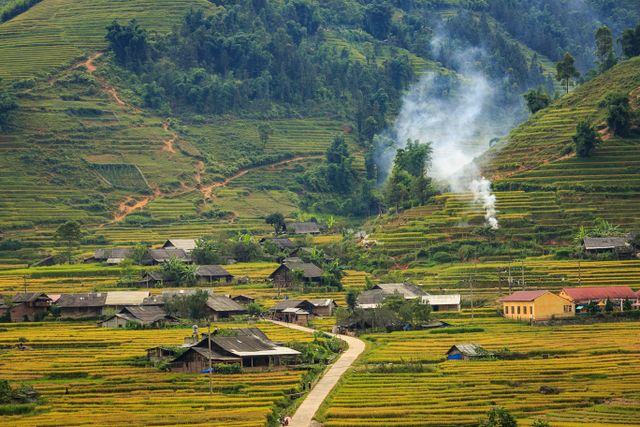
    Rural village area known for mountain scenery and local ethnic culture. A good choice for travelers who want a more immersive homestay stay.

    Khau Phạ Pass area

    Adventure travelersViewpointsRoad trippers

    High-pass area with dramatic views and easy access to paragliding and lookout points in season. Stay here only if you want scenery over convenience.

    Booking tip: Book early for September-October rice harvest season and weekends; solo travelers often save by choosing family-run homestays with shared meals.

    Health & safety

    Emergency numbers

    ambulance
    115
    fire
    114
    police
    113
    national emergency/disaster hotline
    112

    Medical facilities

    • Mù Cang Chải District Medical Center

      Thị trấn Mù Cang Chải, huyện Mù Cang Chải, tỉnh Yên Bái

      Main local facility for urgent care and basic emergency treatment; call ahead if possible.

    • Yên Bái General Hospital

      Đường Nguyễn Tất Thành, TP Yên Bái, tỉnh Yên Bái

      Provincial referral hospital for more serious cases; best option for advanced care.

    • Lào Cai General Hospital

      TP Lào Cai, tỉnh Lào Cai

      Useful backup referral option if traveling toward the northwest; confirm transport before departure.

    Staying safe

    General safety
    Petty theft is less common than in big cities, but keep valuables secure in markets, bus stops, and crowded tourist viewpoints. Be extra cautious on motorbike rides and steep rural roads.
    Notes
    Use bottled or boiled water; avoid untreated tap water. Roads in Mu Cang Chai are mountainous and can be slippery in rain, so watch your footing and traffic closely.
    What to carry
    Comfy shoes, water bottle, basic meds (painkillers, antidiarrheal, mosquito repellent), sunscreen, hat, and a rain layer for mountain weather.
    Lost items
    Nearest local police or commune police station
    • Carry hand sanitizer for street food and shared surfaces.
    • Use sunscreen and a hat during rice-terrace sightseeing, especially midday.
    • Rest and hydrate if you feel heat stress, motion sickness, or altitude-related fatigue on mountain roads.
    • Carry your passport and insurance details for faster registration.
    • For serious emergencies, call ahead or ask your hotel/homestay to help arrange transport to the nearest capable facility.
    • For accidents, disasters, or urgent rescue needs, 112 is the nationwide emergency hotline in Vietnam.
    • Keep your phone charged and save your homestay or driver’s contact in case mountain roads or weather delay help.

    Local customs

    Etiquette & local habits

    • Mù Cang Chải is home to Hmong and other ethnic minority communities; ask before photographing people, homes, or farm work.
    • Dress modestly in villages and at any local religious or ceremonial site; cover shoulders and knees when in doubt.
    • Bring small cash in Vietnamese đồng; many homestays and rural shops do not accept cards.
    • If invited to eat or drink tea with a host, accepting a little is polite and helps build rapport.
    • Stay on marked paths in rice terraces; stepping into planted fields can damage crops and upset locals.

    When the city is open

    Village viewpoints and local services often wind down by early evening; plan transport before dark. Homestay dinners are usually early, while small town eateries may stay open later than rural spots.