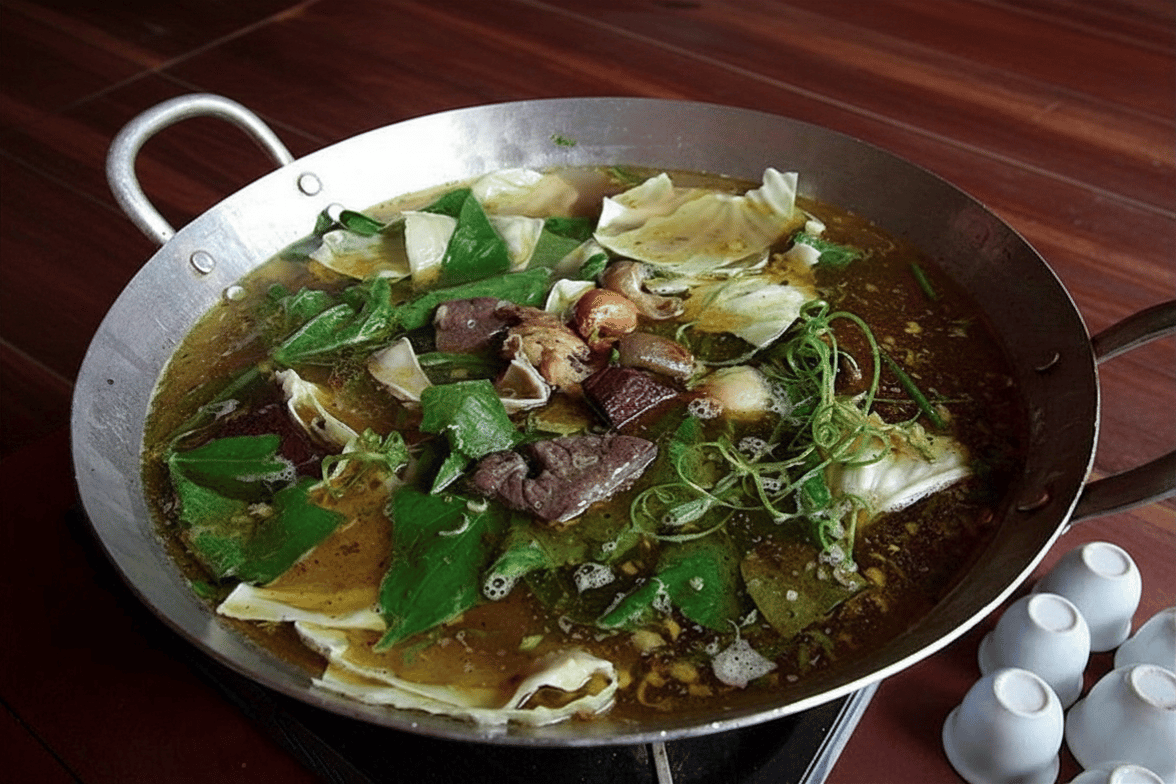
Horse Meat Hotpot
Thắng Cố
A traditional Hmong mountain hotpot from Sapa
Photos
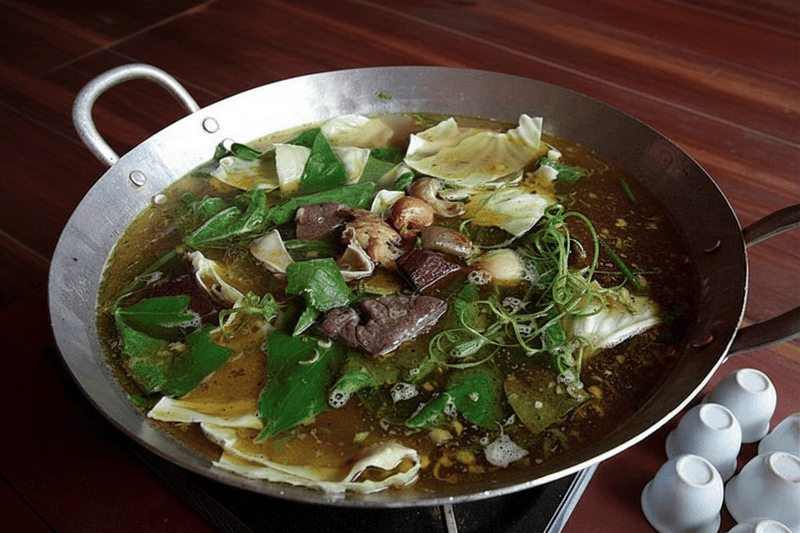

What's in it
- Horse meat or offal
- Local herbs
- Ginger
- Lemongrass
- Cardamom
- Star anise
- Cinnamon
- Chili
- Salt
Best moments to enjoy it
Best enjoyed at lunch or dinner, especially in cool or rainy weather when the hot broth is most comforting
Origin & history
Thắng cố originated among Hmong people in the northern mountains of Vietnam as a communal dish prepared for markets, festivals, and gatherings. Traditionally cooked in large pans or pots over wood fires, it was designed to feed groups and make use of the whole animal. In Sapa, it has become one of the best-known local specialties, though modern versions in tourist restaurants may be adapted for visitors.
How to order & pay
For solo diners, order a small portion or ask for a single-person bowl if available; in Sapa, many places serve it as a shared pot, so check the minimum order before sitting down. Ask 'có thịt ngựa không?' to confirm horse meat, or 'có phần nhỏ không?' if you want a smaller serving. If you prefer a milder taste, ask for less chili and more broth. Tourist restaurants may offer beef or mixed-meat versions, which can be easier for first-timers.
Cash is still the safest option in Sapa's local eateries and market stalls, especially for small orders. Carry small notes like 20,000-100,000 VND, as some places may not accept cards or may add a fee for card payments. If paying by card or QR, confirm the total before ordering to avoid surprises.
Allergens, nutrition & health
Allergens
May contain offal and spices; some versions may be cooked with shared broth or seasonings that include soy or fish sauce
Nutrition & benefits
High in protein and iron, with warming spices that can be satisfying in Sapa's cool mountain weather
Health notes
Because it is rich and fatty, start with a small portion if you are not used to offal or strong herbal flavors. Avoid if you have a sensitive stomach, and be cautious with street-market versions that may sit out in cool weather. Drink warm tea or water afterward, and choose a busy stall with high turnover for better freshness.
How to eat it
Eat it like a hotpot stew: ladle a small amount into your bowl, then use chopsticks to pick up the meat and offal pieces. Add herbs or chili only after tasting the broth. For solo travelers, it is often easier to order at a restaurant than at a market stall, since market versions are usually designed for groups. If you want to make friends, sit at a communal table and ask what others recommend before adding condiments.
Best spots in Sapa
- 4.8
Hmong Restaurant
030 Ng. Cầu Mây, Sa Pa, Lào Cai 330000, Vietnam
- Hours
- 8:00 AM – 10:30 PM