City guide

    Siem Reap

    Explore Siem Reap, Cambodia

    Overview

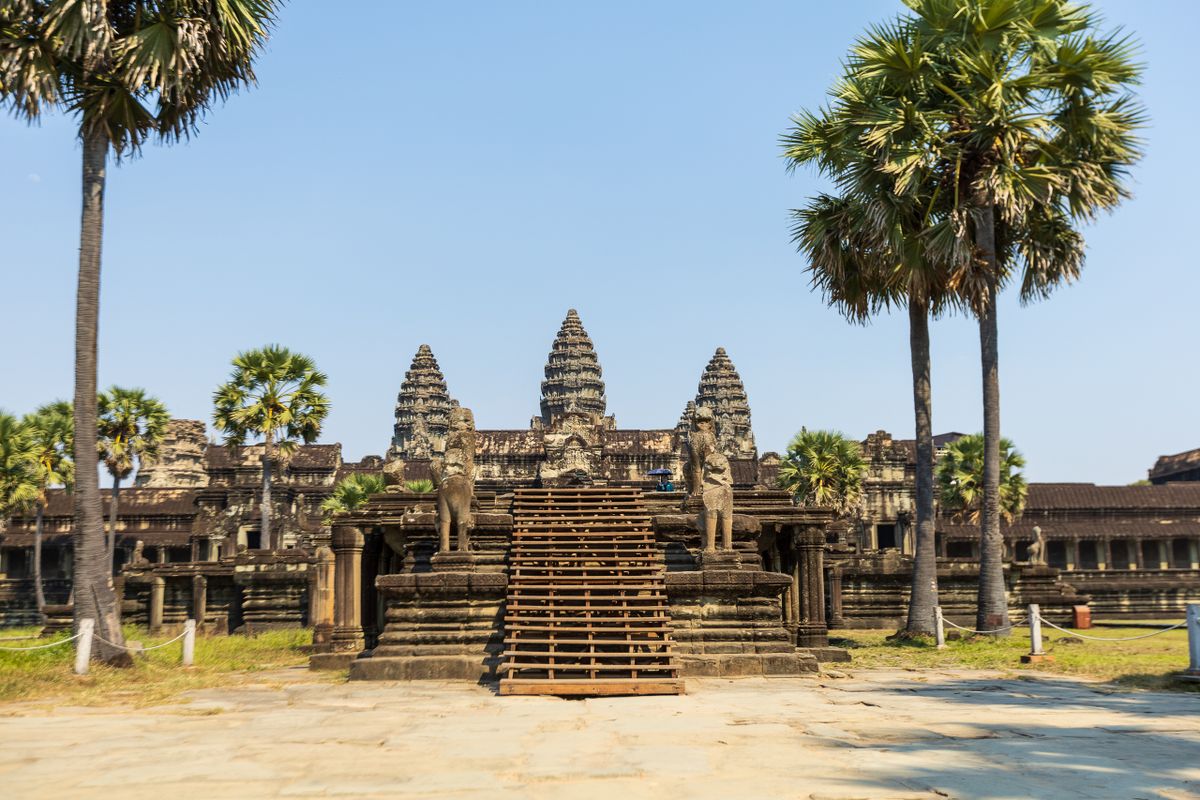
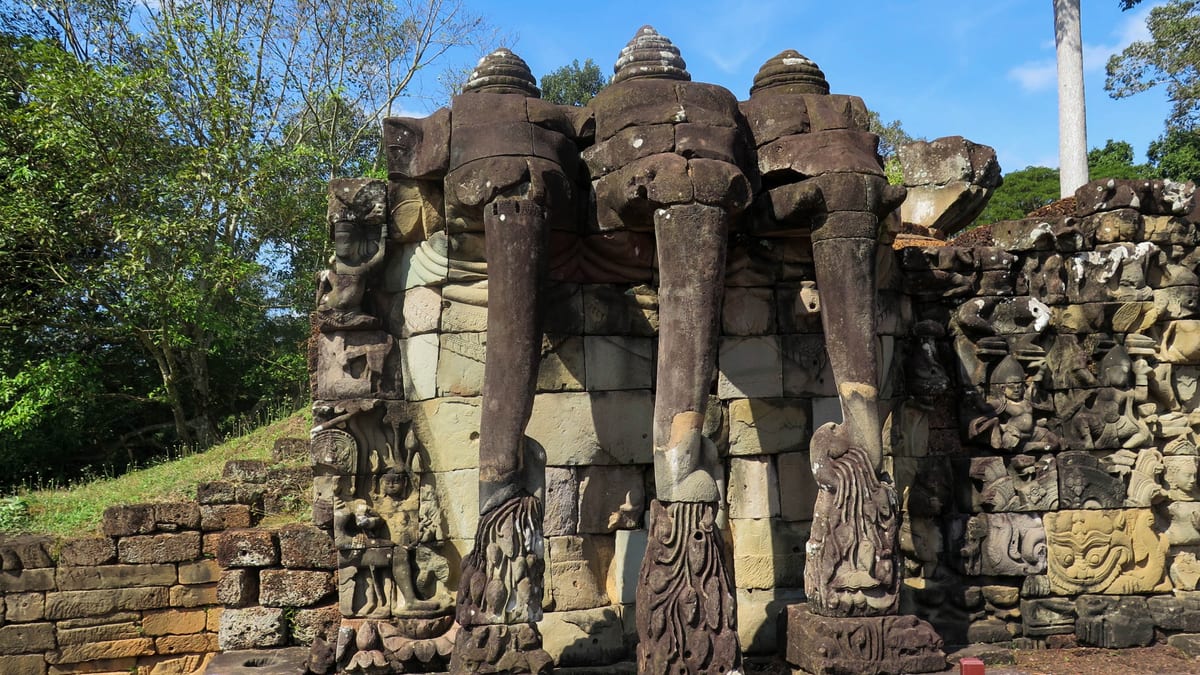
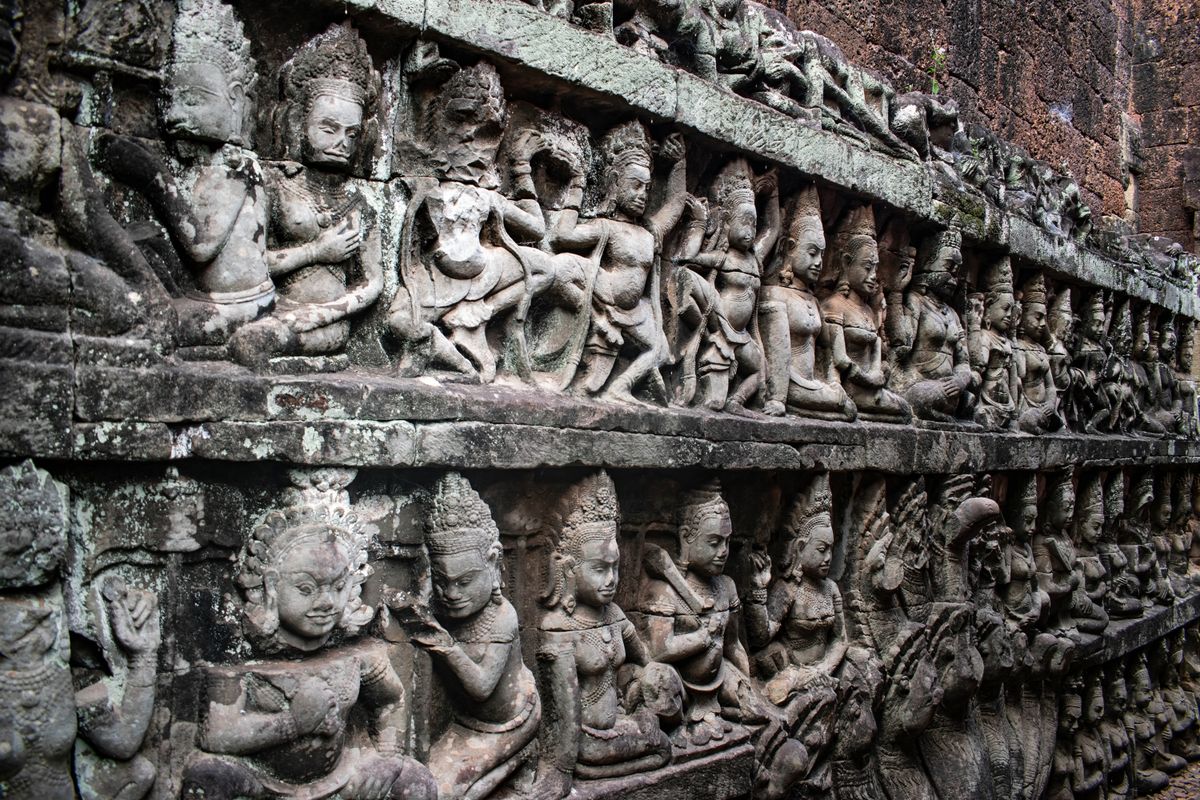
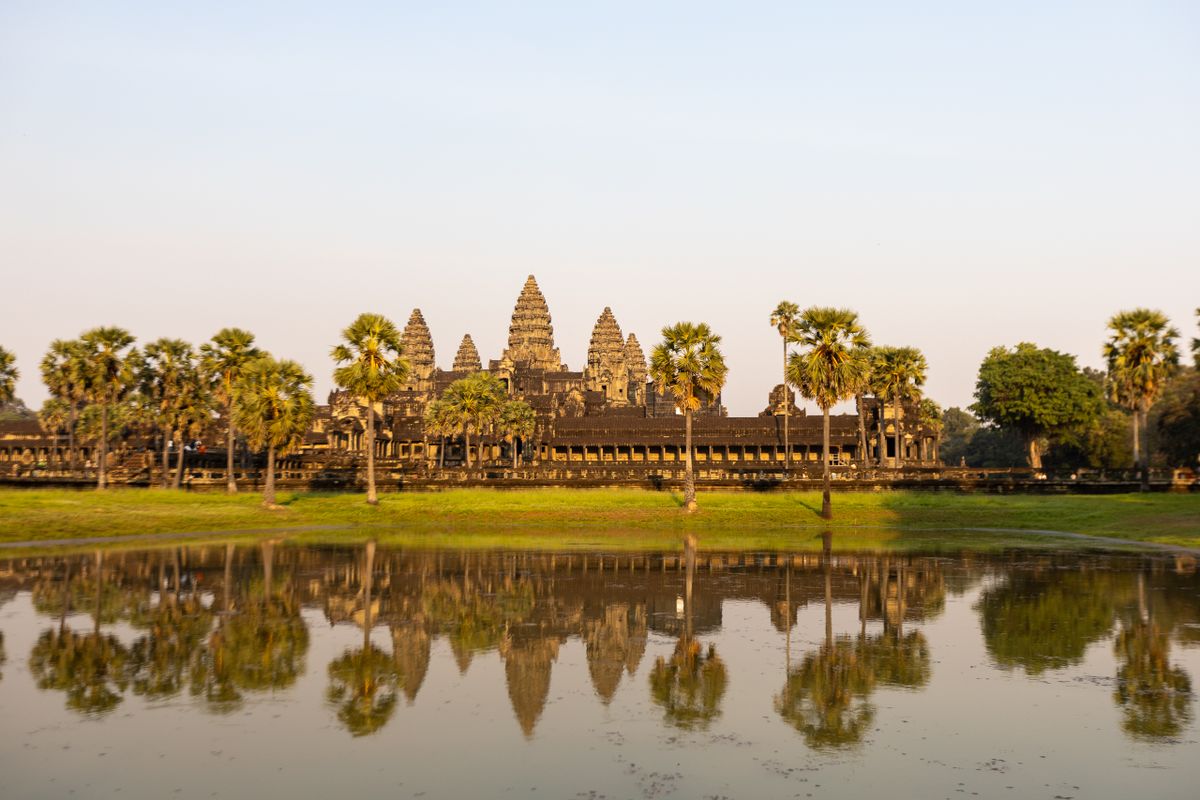
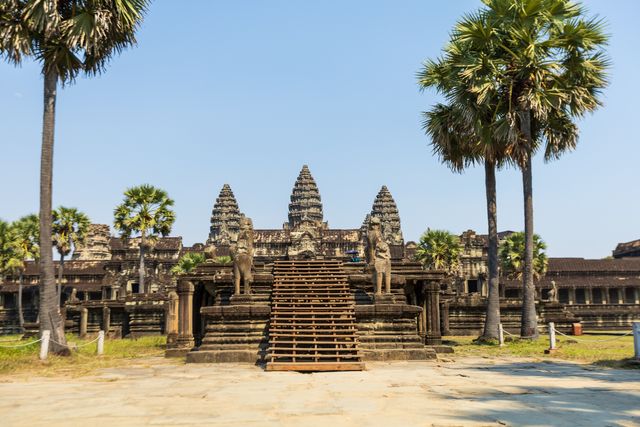
    The gateway to the legendary Angkor Wat temple complex — the greatest Khmer architectural wonder on earth — paired with vibrant street life, Pub Street, and rich Cambodian cuisine.
    At a glanceSiem Reap · City guide
    Country
    Cambodia
    Region
    Northwestern Cambodia
    Recommended stay
    3-4 days
    Daily cost
    ≈ $35 / day
    Best time to visit
    Nov - Mar
    siem-reap · Guide
    Good to know

    Before you go to Siem Reap

    When to go

    Climate through the year

    Rainfall mm/inchesTemperature °C/°F0/0.015/59100/3.920/68200/7.925/77300/11.830/86400/15.735/95500/19.740/104JFMAMJJASOND
    Monthly temperature and rainfall
    MonthMin °CMax °CRainfall mm
    J213010
    F223210
    M243540
    A263670
    M2734135
    J2632190
    J2631195
    A2531215
    S2530260
    O2429240
    N232890
    D212830

    Cool & Dry Season (November – February)

    Best time to visit — comfortable temperatures for exploring Angkor Wat complex, clear skies for photography, active festival season

    Comfortable 20–30°C, low humidity, dry conditions ideal for cycling and walking between temples, beautiful sunrises and sunsets at Angkor, Cambodian New Year and Buddhist festivals
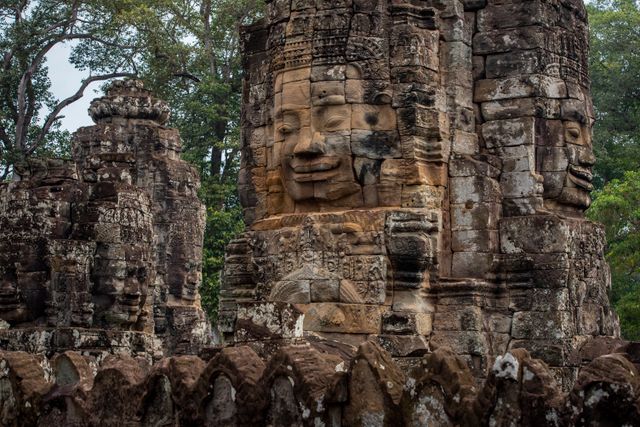
    Peak tourist season — Angkor Wat can be very crowded (especially sunrise at Angkor Wat main temple and at Bayon), higher accommodation prices. December–January especially busy.

    Ideal for: First-time visitors, history and archaeology enthusiasts, photographers, families, couples, temple explorers

    Pack: Light breathable clothing, sunscreen, comfortable walking shoes (extensive walking on uneven temple surfaces), sunhat, light layer for cool evenings

    Hot Season (March – May)

    Khmer New Year (mid-April) is Cambodia's biggest festival with water celebrations, family gatherings, and traditional games

    Khmer New Year (April 13–16) is an authentic and enthusiastic local festival. Fewer international tourists in March–early April. Lower accommodation prices outside the Khmer New Year period.
    Very hot 33–40°C. Temple exploration requires very early starts (sunrise) and long midday breaks. Dusty conditions. April is the hottest and most challenging month.

    Ideal for: Budget travelers, those wanting to experience Khmer New Year authentically, travelers who prefer fewer crowds at temples

    Pack: Ultra-light clothing, SPF 50+ sunscreen, hat, large water bottle, cooling towel. Start temple visits at 5:30am for sunrise.

    Wet Season (June – October)

    Lush green jungle surroundings transform the temple complex; Tonle Sap Lake reaches its maximum size, moats fill; fewer tourists

    Fewest crowds at Angkor (temples nearly empty on weekday mornings), lowest prices (30–50% cheaper), lush green jungle canopy over temples creates beautiful photography, moats and water features are full and reflective
    Heavy afternoon rains (usually 2–6pm) — plan morning temple visits; some jungle paths can be muddy; minor flooding possible in the town area; high humidity

    Ideal for: Budget travelers, photographers, repeat visitors, those wanting near-solitary temple experiences

    Pack: Lightweight rain poncho, waterproof bag for camera, quick-dry clothing, waterproof sandals

    Daily budget

    Low season / day
    Budget: $20–35/day (hostel dorm $5–12, tuk-tuk day hire $15–25, Angkor 1-day pass $37, meals $2–5). Siem Reap is very affordable — a 3-day Angkor pass ($62) is the main expense for most tourists.
    Peak season / day
    Budget: $30–50/day. Mid-range: $60–100/day. Luxury resorts: $150–500+/night. Prices rise 20–40% in December–January peak season.
    Cash
    US Dollars are the dominant currency in Siem Reap — widely accepted for all tourist transactions. Cambodian Riel (KHR) is used for small change (1 USD = ~4,000 KHR). Always carry USD for Angkor pass, accommodation, tuk-tuks, and restaurants.
    Exchange
    USD is universally accepted — no need to exchange to Riel for most transactions. Bring USD from home or withdraw from ATMs. ATMs in Siem Reap dispense USD directly. Canada (CBC), ABA Bank, and Acleda Bank ATMs are reliable.
    ATMs
    ATMs available throughout Siem Reap town center (Pub Street area, near Old Market). Most dispense USD. Standard fee: $2–5 per withdrawal depending on bank and card. ABA Bank ATMs widely available and reliable.
    Cards
    Cards accepted at upscale restaurants, hotels, and some guesthouses. Most day-to-day tourist spending (tuk-tuks, street food, local restaurants, market shopping) requires cash USD.

    Events & festivals

    • Angkor Wat International Half MarathonDecember (annually)

      Annual charity race through the Angkor Archaeological Park at dawn, allowing runners to experience the temple complex in a unique way. Raises funds for local landmine clearance organizations.

      Tip: Register well in advance at the official website — this event is popular and combines running with experiencing sunrise at Angkor

    • Khmer New Year (Chaul Chnam Thmey)April 13–16 (approximately, Khmer lunar calendar)

      Cambodia's most important national holiday. 3-day celebration with water blessings at temples, traditional games, family gatherings, and merit-making ceremonies. The streets come alive with celebrations.

      Tip: Many businesses close during Khmer New Year. Book accommodation in advance as Cambodians travel domestically during this period, filling up guesthouses. Experience the temple ceremonies on the morning of April 13.

    • Water Festival (Bon Om Touk)October–November (3 days around the full moon)

      Cambodia's largest festival celebrating the reversal of the Tonle Sap River flow. Traditional boat races on the Siem Reap River with massive crowds, illuminated boats at night, and fireworks.

      Tip: Extremely crowded festival — book accommodation months in advance. A remarkable cultural experience but logistics require careful planning.

    Getting there

    Getting to Siem Reap

    Arriving internationally

    • Siem Reap International Airport (REP) has direct connections from Bangkok (BKK/DMK), Singapore (SIN), Kuala Lumpur (KUL), Ho Chi Minh City (SGN), Hanoi (HAN), Hong Kong, Seoul, Tokyo, and several Chinese cities.
    • New Siem Reap Angkor International Airport (SAI) opened in late 2023 — located 50km outside town. Check which airport your flight uses before booking.
    • Vietnamese and Thai airlines, AirAsia, Scoot, and Cambodia Angkor Air all offer direct international connections to Siem Reap.

    From within the country

    • By plane from Phnom Penh: Multiple daily flights by Cambodia Angkor Air (~45 minutes, $40–100). Fastest domestic connection.
    • By bus from Phnom Penh: Air-conditioned buses depart Phnom Penh's central bus station (Capitol Transport, Mekong Express, Giant Ibis). Journey ~5–6 hours, $7–15. Giant Ibis is the premium option with most reliable service.
    • By bus from Bangkok (Thailand): Several bus companies (Nattakan, Asia Van Transfer) operate direct Siem Reap–Bangkok routes crossing the Aranyaprathet–Poipet border. Total journey ~9–12 hours, $15–25 including border crossing.
    • By bus from Ho Chi Minh City: Via Phnom Penh or direct overland routes. Journey ~10–12 hours total via Phnom Penh.
    • By shared taxi: Available from Phnom Penh (~$12–18 per person, 4–5 hours). Faster than bus but less comfortable for longer journeys.

    Booking & arrival tips

    • Book flights via Siem Reap's old REP airport where possible — the new SAI airport is 50km from town and taxi transfers cost $25–40 compared to $8–12 from REP; check which airport is used when booking
    • Giant Ibis is the recommended bus company from Phnom Penh to Siem Reap — reliable, air-conditioned, with charging ports and assigned seats; worth the slight premium over cheaper alternatives
    • Arrange airport or bus terminal pickup with your guesthouse or via tuk-tuk apps — most guesthouses offer free or cheap airport pickup if you ask in advance

    Getting around

    Tuk-tuk (main tourist transport)

    $2–5 per short trip; $15–25 for full-day hire to Angkor temples

    The primary tourist transport in Siem Reap. Open-air rickshaw towed by motorbike. Perfect for exploring Angkor Archaeological Park — drivers wait at temple entrances while you explore and move to the next site. Negotiate full-day rate before departing.

    Grab / PassApp

    $2–8 per ride

    Grab operates in Siem Reap (as of 2024). PassApp is Cambodia's local ride-hailing alternative — widely used and reliable for getting around town. More transparent pricing than negotiated tuk-tuks.

    E-bike / Bicycle rental

    E-bike: $5–10/day. Bicycle: $2–5/day

    Excellent for cycling around Angkor Archaeological Park — the distances between temples are manageable by bicycle (main circuit ~17km). E-bikes make the longer outer circuit much more manageable. Widely available from guesthouses and rental shops.

    Motorbike rental

    $8–15/day

    Available but note: foreigners technically need a Cambodian motorbike license to ride in Cambodia; police checkpoints near Angkor occasionally check licenses. Most tourists ride without issue but the risk exists. E-bikes are a safer alternative.

    Private car / minivan with driver

    $30–60 per day

    Air-conditioned car hire with driver — most comfortable option for families, groups, or travelers visiting in hot season. Driver waits at temples. Book through your guesthouse or hotel.

    Good to know. For Angkor temple exploration, the most popular options are: hired tuk-tuk (best for hot weather — open air, flexible pacing), bicycle (best for active travelers in cool/dry season), or e-bike (best compromise between flexibility and physical effort). A 3-day pass gives the most flexibility.

    Handy apps

    GGrab

    Ride-hailing in Siem Reap. Available and reliable for trips within town.

    Use Grab for transparent pricing when negotiating tuk-tuks seems daunting. Also useful for late-night returns from Pub Street.

    PPassApp

    Cambodia's local ride-hailing app. Often more available than Grab in smaller areas of Siem Reap.

    Download before arriving — works well throughout Siem Reap and Phnom Penh.

    MMaps.me

    Offline maps for navigating the Angkor Archaeological Park — better temple detail than Google Maps in the park complex.

    Download Siem Reap and Angkor maps offline — mobile signal within the temple complex can be unreliable.

    Backup. Buy a Cambodian SIM card at the airport on arrival (Cellcard, Smart, or Metfone). Tourist SIMs with 5–10GB data for $3–6 USD. Mobile coverage is good throughout Siem Reap town. WiFi is widely available at guesthouses, cafes, and restaurants. Mobile signal drops in the outer Angkor temples and jungle areas — download offline maps before heading out.

    Where to stay

    Nightly rates: Hostel dorm: $5–12/night. Budget guesthouse: $12–25/night. Mid-range hotel: $30–70/night. Boutique hotel with pool: $50–150/night. Luxury resort: $150–500+/night. Siem Reap has excellent value accommodation across all price points.

    Pub Street / Old Market area

    Backpackerssocial travelersbudget-mid range stayscentral location

    The tourist heart of Siem Reap. Walking distance to tuk-tuk rental, restaurant clusters, night life, and Old Market (Psar Chas). Busy and social atmosphere. Wide range of budget guesthouses, hostels, and mid-range hotels within 2–3 blocks. Tuk-tuks available 24/7.

    Wat Bo / Kandal Village area (east bank of Siem Reap River)

    Couplesboutique hotel seekersquieter atmosphere

    A quieter, more residential neighborhood east of the river with an increasing number of boutique hotels, galleries, and upscale restaurants. A 15-20 minute walk or 5 minute tuk-tuk from Pub Street. More authentic neighborhood feel.

    Airport / National Road 6 corridor

    Mid-range and upscale resortsfamiliesthose wanting resort-style accommodation

    International-standard resorts (Raffles Grand Hotel d'Angkor, Sofitel, Shinta Mani) are located on or near National Road 6 between town and the airport. More space, pools, gardens. Requires tuk-tuk for all trips into town.

    Booking tip: Book Angkor passes at the official ticket office (about 4km from town center, open from 5am). Passes are per person: 1-day $37, 3-day $62 (valid for 10 days), 7-day $72 (valid for 1 month). Photo taken at the ticket office — arrive by 5am for a sunrise entry with your fresh pass.

    Health & safety

    Emergency numbers

    Police Emergency
    117
    Fire Department
    118
    Ambulance / Medical Emergency
    119
    Tourist Police Siem Reap
    +855 63 723 444
    Royal Angkor International Hospital Emergency
    +855 63 761 888
    Naga Clinic
    +855 12 598 907

    Medical facilities

    • Royal Angkor International Hospital+855 63 761 888

      National Road No. 6 (Airport Road), Siem Reap

      Best international-standard hospital in Siem Reap. English-speaking staff, modern equipment, 24/7 emergency service. Affiliated with Bumrungrad International Hospital (Bangkok). The recommended hospital for tourists requiring serious care. Serious cases may still be transferred to Bangkok.

    • Siem Reap Provincial Referral Hospital+855 63 963 909

      Achamean Street, Siem Reap

      Main public hospital in Siem Reap. Handles emergencies and general care. Limited English-speaking staff and less modern facilities than Royal Angkor International. Significant cost difference from private hospitals — local option in emergencies.

    • Naga Clinic+855 12 598 907

      Sivatha Street, central Siem Reap (near Old Market area)

      Small international medical clinic popular with tourists for non-emergency consultations, minor injuries, travel medicine, and prescription medications. English-speaking staff. Convenient central location. Not a full hospital — refers serious cases to Royal Angkor.

    • Local pharmaciesN/A

      Throughout Siem Reap town center and Pub Street area

      Well-stocked pharmacies throughout the tourist area dispensing OTC medications, antibiotics (available OTC in Cambodia), and basic medical supplies. Check expiry dates when buying.

    Staying safe

    General safety
    Moderate safety — Siem Reap is generally safe for tourists; main risks are petty theft, tuk-tuk scams, and health issues rather than violent crime
    Notes
    Siem Reap is relatively safe for tourists. Violent crime against foreigners is uncommon. Main risks are: bag snatching by motorbike in poorly lit areas (most common crime against tourists), tuk-tuk driver overcharging and detours to commission shops, pickpocketing in Pub Street crowds, drink spiking in bars, and health risks (dengue, food-borne illness, heat). Landmines remain a risk in rural areas well outside the main tourist zones — never walk off established paths in jungle or rice field areas.
    What to carry
    Crossbody bag worn in front in crowds (secure against bag snatching), mosquito repellent for evenings, sunscreen and hat for temple visits, closed-toe shoes for temple walks (uneven stone surfaces)
    Lost items
    Report theft to the Tourist Police station in Siem Reap for an official police report required for insurance claims. The Siem Reap Tourist Police are located near the Old Market and have some English-speaking officers. For lost passports, contact your country's embassy in Phnom Penh — most major countries have embassies there with emergency services; some may have honorary consuls in Siem Reap. Your guesthouse can provide assistance with translation and the reporting process.
    • Carry your bag across your body (not over one shoulder) and hold it in front of you when walking in busy areas or in tuk-tuks — bag snatching by passing motorbikes is the most common crime against tourists in Siem Reap
    • Use Grab or PassApp to book tuk-tuks for transparent, pre-agreed pricing — avoids overcharging for rides and eliminates the negotiation process
    • Angkor Wat at sunrise is extremely crowded — keep bags secure and be aware of your surroundings in large crowds around the main reflection pool
    • Drink spiking has been reported in Pub Street bars — never leave your drink unattended and don't accept drinks from strangers; stick to sealed bottles and drinks you've watched being poured
    • Never walk off established paths in jungle or rural areas outside the main Angkor complex — landmines from Cambodia's decades of civil conflict remain in some remote areas; always follow your guide's instructions and established trails
    • The begging situation in Siem Reap involves many children working for adults — do not buy from child vendors (this keeps them out of school) but consider donating to reputable local NGOs instead
    • Avoid accepting 'free' bracelets or flowers at temple entrances — these are followed by persistent requests for large donations; politely but firmly decline from the start
    • Get comprehensive travel insurance covering medical evacuation to Bangkok — Royal Angkor Hospital is good but very serious cases require Bangkok's Bumrungrad or other Thai hospitals
    • Cambodia has a risk of malaria in rural jungle areas (outside the main temple complex and tourist areas of Siem Reap) — consult a travel health clinic before visiting about antimalarial medication if planning to trek in remote areas
    • Dengue fever is common throughout Cambodia — apply DEET-based repellent especially at dawn and dusk; seek medical attention immediately for high fever with joint pain after mosquito exposure
    • Drink only bottled water (widely available, $0.25–0.50 per 500ml bottle) — tap water is not safe in Siem Reap; also avoid ice from unclear sources (most tourist restaurants use commercial ice bags which are safe)
    • Heat exhaustion and dehydration are common risks for travelers spending long days at the Angkor temples — drink 2–3 liters of water per day, take midday breaks in shade or air conditioning, and avoid alcohol during afternoon temple visits
    • Beware of counterfeit medications in Cambodia — purchase medications from established pharmacies near the main tourist area and check packaging carefully; avoid street vendors selling medicine
    • Save Royal Angkor Hospital (+855 63 761 888) and the Tourist Police numbers in your phone before leaving for the temples each day
    • For serious medical emergencies, Royal Angkor Hospital is equipped for initial stabilization; extremely serious cases will be transferred to Bangkok; ensure your travel insurance covers air evacuation
    • In a bag snatching incident, do not chase the motorbike thief on foot or by tuk-tuk — this can escalate dangerously; report to Tourist Police and focus on canceling cards and securing passport replacements
    • Keep a digital copy of your passport, Cambodia visa, travel insurance policy, and emergency contacts in cloud storage — accessible even if your phone is stolen

    Local customs

    Etiquette & local habits

    • Dress modestly at all Angkor temples — shoulders and knees must be covered; this is strictly enforced at Angkor Wat main temple and Banteay Srei; sarongs can be purchased or rented near entrances
    • Remove shoes before entering active temple shrine areas and prayer halls within the Angkor complex
    • Never climb on temple structures or touch bas-reliefs — Angkor is a UNESCO World Heritage Site and many structures are fragile; climbing damage has led to closures at some sites
    • Ask permission before photographing local people, monks, or ceremony participants at the temples — most will agree but the courtesy of asking is important
    • Tipping is not mandatory in Cambodia but deeply appreciated — $1–2 tip for tuk-tuk drivers, $2–5 for guides, round up restaurant bills for good service
    • Cambodia is a country still recovering from the Khmer Rouge genocide (1975–1979) which killed 2 million+ people (25% of the population) — this context is important when visiting Angkor and speaking with older Cambodians; many families lost members during this period
    • Avoid 'voluntourism' orphanages in Siem Reap — many are fraudulent operations using children for profit; reputable organizations recommend visiting schools and community projects instead
    • Landmines remain a risk in rural areas outside the main tourist zones — never walk off established paths in rice fields or jungle areas; always follow your guide's direction

    When the city is open

    Angkor Archaeological Park temples open 5am–6pm daily (some outer temples have different hours). Angkor Wat sunrise entry at 5am is the most popular experience. Ticket office opens 5am (buy previous day if arriving very early). Pub Street restaurants and bars open daily from 7am to midnight or later. Old Market open daily 6am–6pm. Night market open 5pm–midnight.