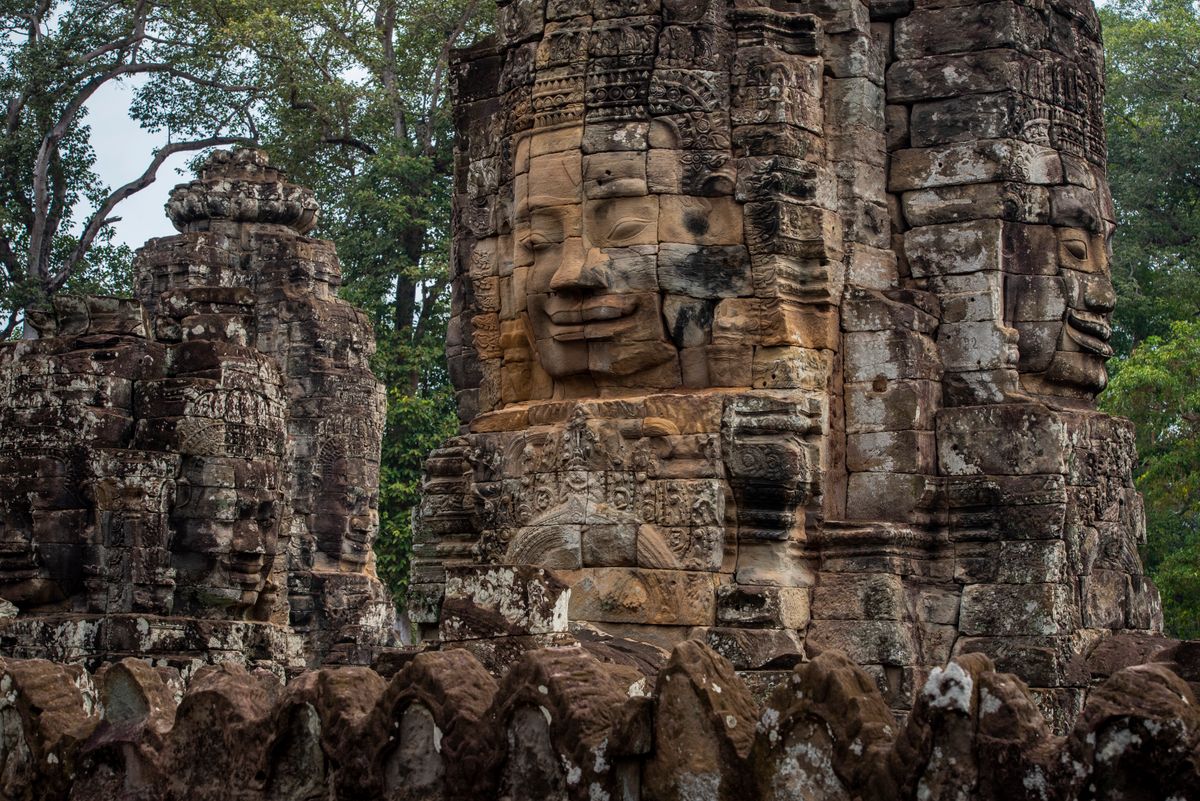
The massive, fortified final capital of the Khmer Empire.
Photos
What to know before you go
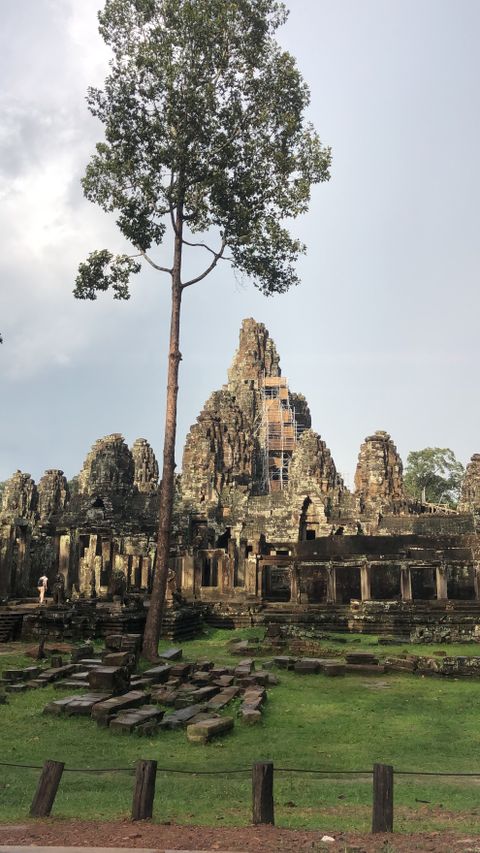
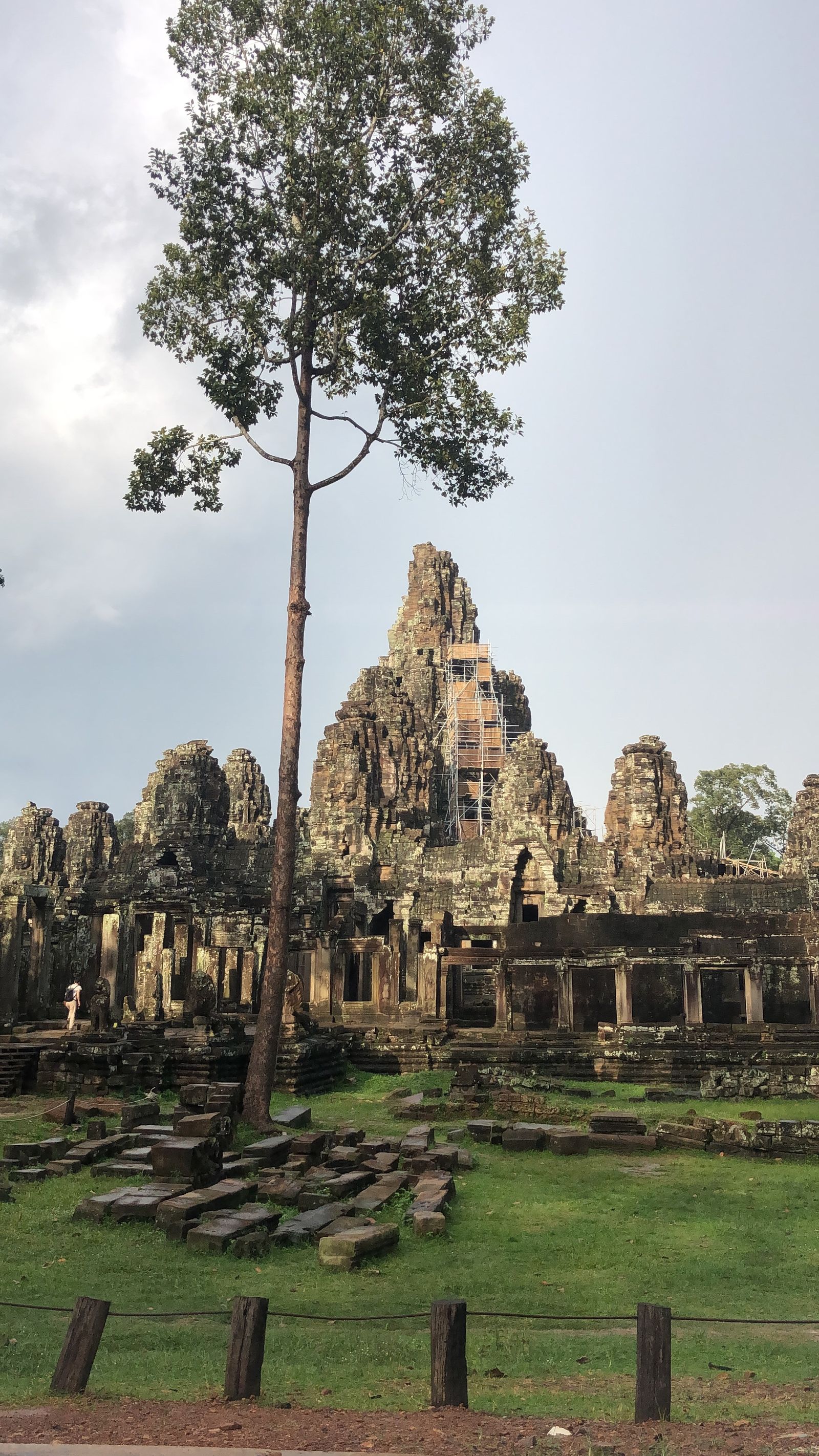
- King Jayavarman VII constructed this site in the late 12th century after reclaiming the territory from invaders. It was designed as a perfect microcosm of the Hindu universe, protected by a wide moat and high walls that effectively shielded the royal city from the outside world.
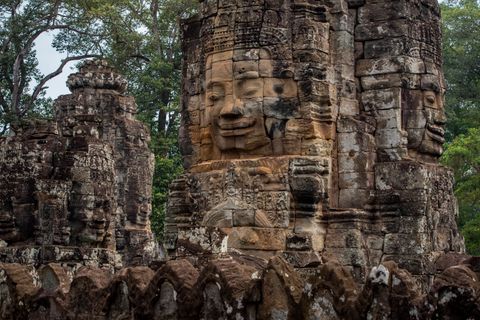
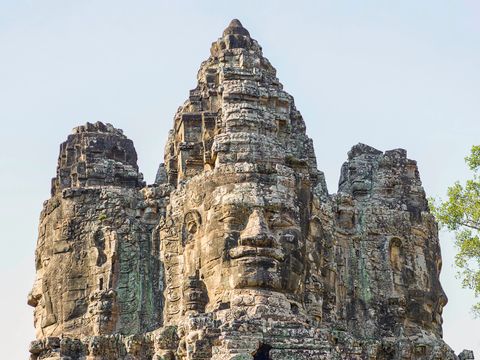
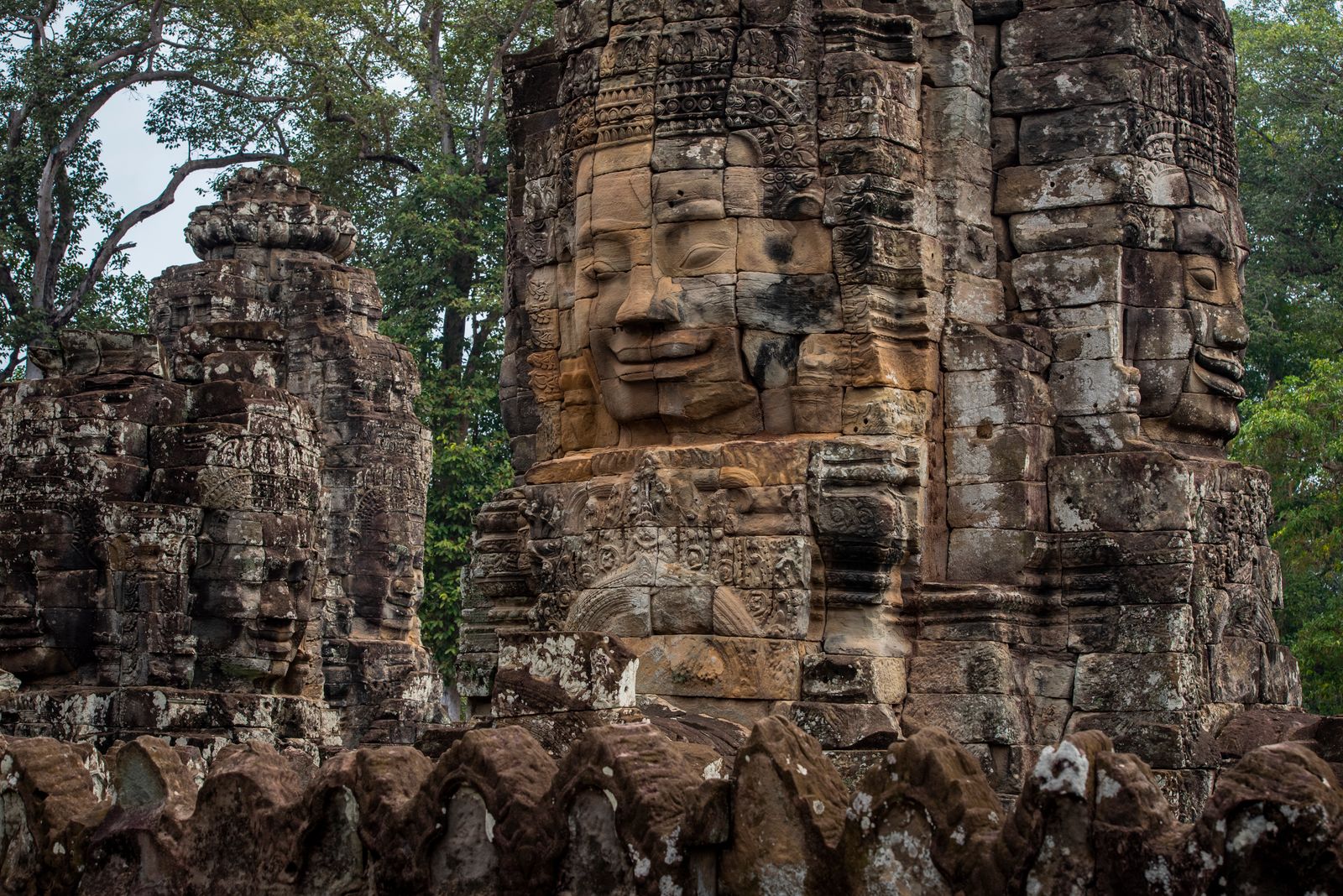
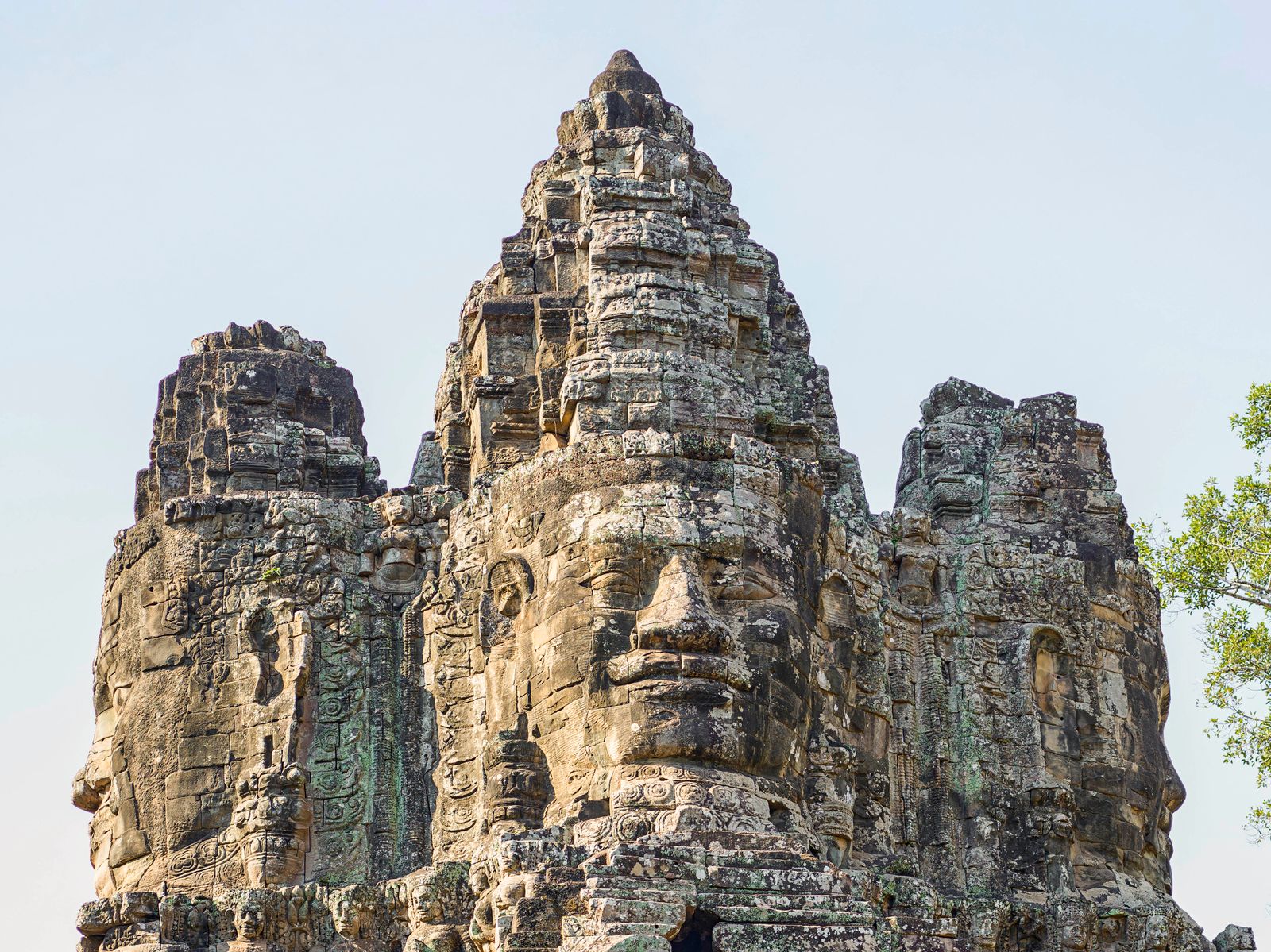
- The main highlight is entering through the South Gate, where giant stone heads look out over the road, flanked by rows of statues depicting demons and gods. Once inside, you can explore the Terrace of the Elephants and the Terrace of the Leper King, which offer unique, detailed wall carvings you won't find anywhere else.
Culture, safety & access
Culture & etiquette
You are walking through a sacred archaeological site; keep your voice down, treat the stone ruins with care, and avoid climbing on fragile wall sections.
Safety & health
Generally safe; stick to the marked paths, as some of the surrounding forest areas can be dense, and watch out for the resident monkeys near the gates.
Weather
The site is exposed and dusty; bring plenty of water and a hat, as there is very little shade while walking between the major monuments.
Dress Code
Strictly enforced; shoulders and knees must be fully covered at all times when entering any of the temple structures within the city.
Best Time to Visit
08:00 or 15:30 — arriving early lets you beat the main heat, while late afternoon offers a peaceful, golden light for photography.
Accessibility
Difficult; the city is vast and features rugged, uneven terrain, sand, and steep temple steps that are not suitable for wheelchairs.
Public Transport
Tuk-tuk hire from Siem Reap is standard (roughly ៛60k to ៛100k for a full-day city loop).