City guide

    Ayutthaya

    Explore Ayutthaya, Thailand

    Overview

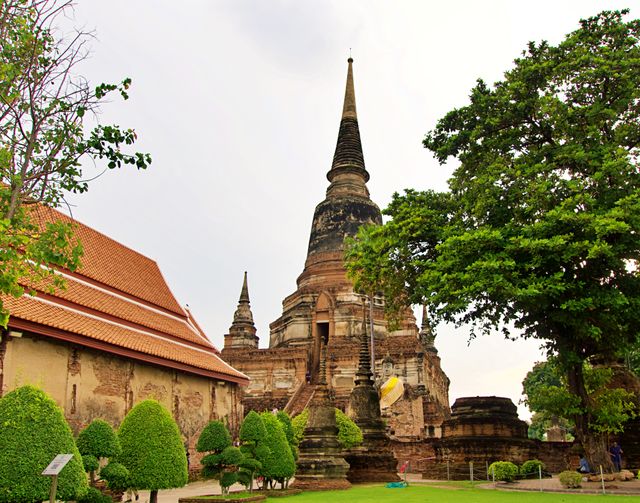
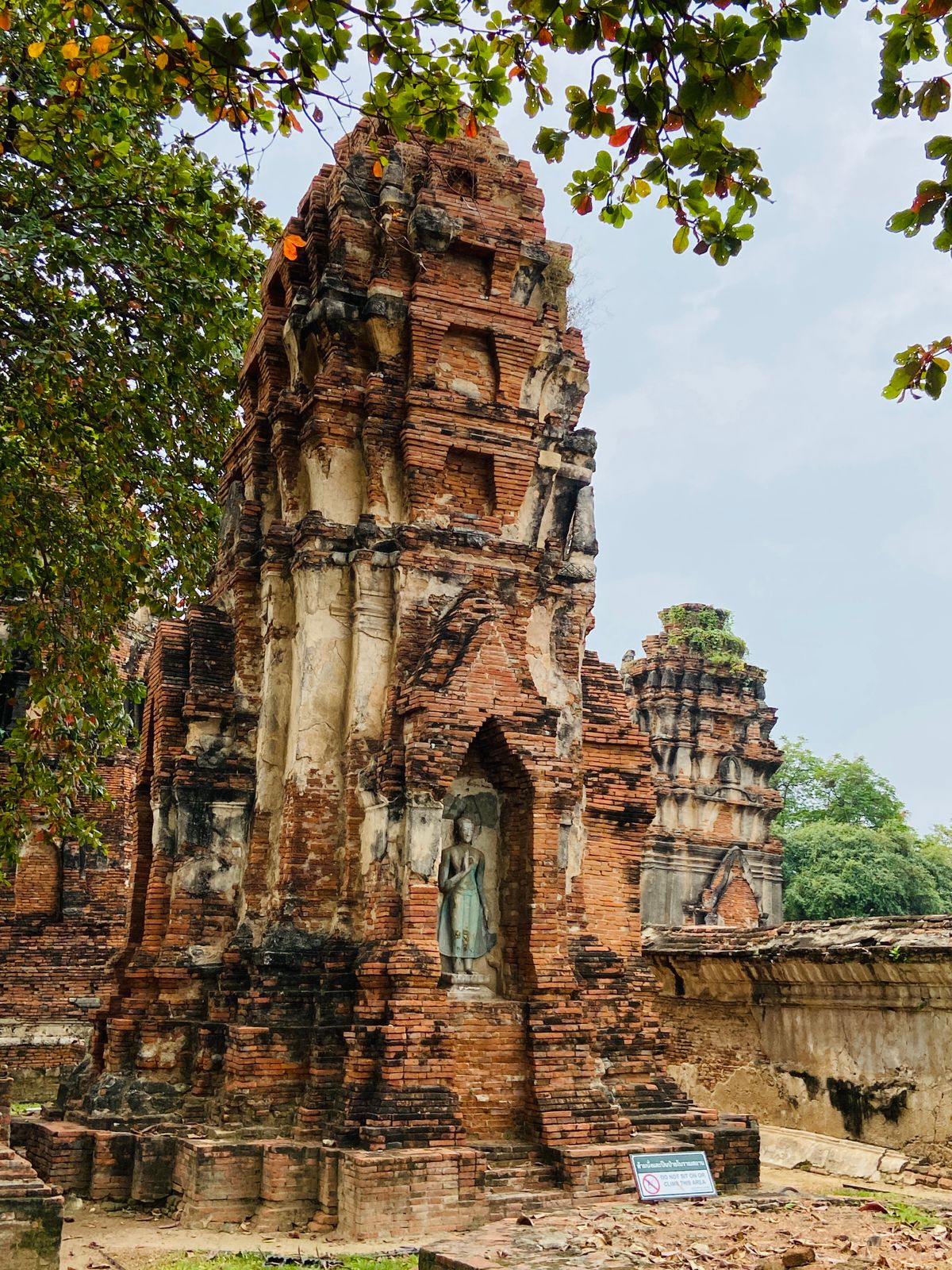
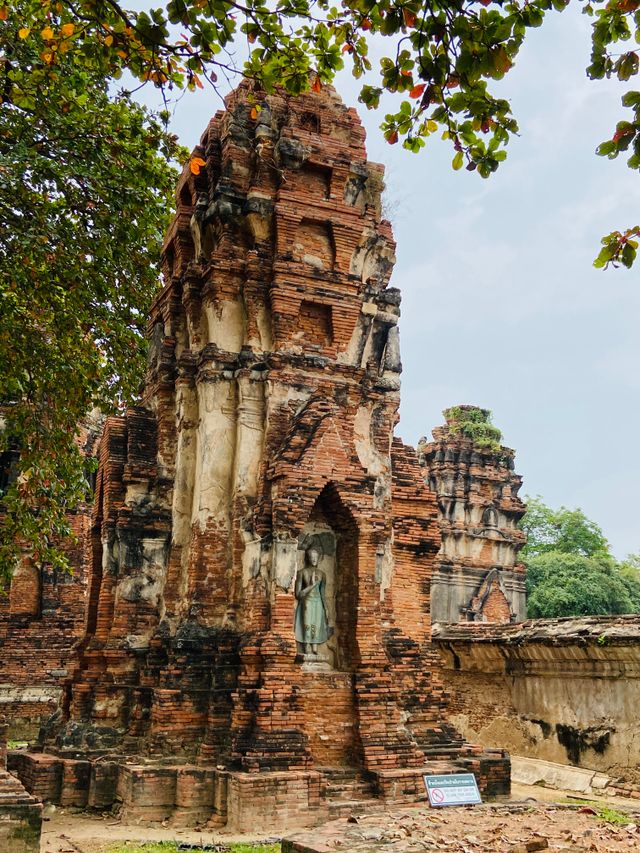
    Thailand's ancient capital and UNESCO World Heritage site, where mysterious temple ruins, headless Buddha statues entwined in tree roots, and centuries of royal history await.
    At a glanceAyutthaya · City guide
    Country
    Thailand
    Region
    Central Thailand
    Recommended stay
    1-2 days
    Daily cost
    ≈ $30 / day
    Best time to visit
    Nov - Feb
    ayutthaya · Guide
    Good to know

    Before you go to Ayutthaya

    When to go

    Climate through the year

    Rainfall mm/inchesTemperature °C/°F0/0.015/59100/3.920/68200/7.925/77300/11.830/86400/15.735/95500/19.740/104JFMAMJJASOND
    Monthly temperature and rainfall
    MonthMin °CMax °CRainfall mm
    J203210
    F223420
    M253630
    A273865
    M2635175
    J2633145
    J2532145
    A2532175
    S2432280
    O2431205
    N223055
    D203010

    Cool & Dry Season (November – February)

    Best time to visit — comfortable temperatures ideal for cycling between temple ruins, outdoor photography, and exploring on foot

    Comfortable 20–32°C, low humidity, clear skies, ideal for all-day outdoor temple exploration. Peak tourist season means festivals and cultural events.
    Peak season means higher guesthouse prices and larger tour groups from Bangkok. Book accommodation in advance, especially for December–January.

    Ideal for: First-time visitors, temple explorers, cyclists, history enthusiasts, photography

    Pack: Light breathable clothing, comfortable walking or cycling shoes, sunscreen, sunhat, a light layer for evenings

    Hot Season (March – May)

    Songkran Thai New Year water festival in mid-April is celebrated enthusiastically in Ayutthaya — temple merit-making ceremonies and local celebrations

    Songkran celebrations with traditional Buddhist ceremonies at Ayutthaya's historic temples. Lower guesthouse prices than peak season.
    Very hot 33–40°C. Temple exploration requires early starts (before 10am) and afternoon breaks. April is the most challenging month heat-wise.

    Ideal for: Travelers interested in traditional Songkran celebrations in a historic setting, budget travelers willing to manage the heat

    Pack: Ultra-light clothing, SPF 50+ sunscreen, hat, cooling towel, water bottle, electrolytes. Start sightseeing by 7–8am.

    Wet Season (June – October)

    Lush green surroundings, dramatic storm light for temple photography. Flooding can be spectacular (or disruptive) in September–October.

    Fewest tourists, lowest prices, lush greenery around ruins, beautiful atmospheric photography conditions
    Heavy rain (usually afternoons), and in bad years (2011 floods were catastrophic) some temple sites can partially flood. October–November flooding possible in low-lying temple areas. High heat and humidity.

    Ideal for: Budget travelers, photographers willing to work around rain, repeat visitors

    Pack: Lightweight rain poncho, quick-dry clothing, waterproof sandals, waterproof bags for camera equipment

    Daily budget

    Low season / day
    Budget: $20–35/day (guesthouse $10–20, bicycle rental $2–3/day, temple tickets 50–500 THB each, street food meals $2–4). Ayutthaya is very affordable — cheaper than Bangkok for accommodation and food.
    Peak season / day
    Budget: $25–45/day. Prices rise slightly in December–January but Ayutthaya remains very affordable compared to Bangkok or Chiang Mai.
    Cash
    Thai Baht (THB). Ayutthaya is a cash-based town — most guesthouses, restaurants, and bicycle rental shops only accept cash. Stock up at ATMs before exploring the island.
    Exchange
    Exchange money in Bangkok before visiting — exchange options in Ayutthaya are limited. ATMs available near the train station and central market area but with Bangkok's 220 THB withdrawal fee.
    ATMs
    Limited ATMs available in central Ayutthaya (near train station and main market). Bangkok Bank, Kasikorn Bank branches on the main island. Withdraw sufficient cash before exploring remote temple sites.
    Cards
    Very limited card acceptance — larger hotels and some restaurants may accept cards but most of Ayutthaya's economy runs on cash. Bring sufficient Baht from Bangkok.

    Events & festivals

    • Songkran FestivalApril 13–15

      Traditional Songkran celebrations at Ayutthaya's historic temples with Buddhist merit-making ceremonies, sand stupa building, and local water festival activities. More traditional than Bangkok's large-scale water fights.

      Tip: Witness traditional Songkran in a historic setting by attending early morning temple ceremonies before the water festivities begin.

    • Loy KrathongNovember full moon

      One of the most beautiful Loy Krathong celebrations in Thailand — krathong (floating offerings) released on the Chao Phraya River around the illuminated temple ruins creating a magical spectacle. The Ayutthaya World Heritage Festival also takes place around this time.

      Tip: Book accommodation weeks in advance — Loy Krathong at Ayutthaya is extremely popular and guesthouses fill up completely.

    • Ayutthaya World Heritage FestivalDecember (usually mid-December, dates vary by year)

      Annual cultural festival at Ayutthaya Historical Park with traditional performance arts, light shows illuminating the temple ruins, cultural exhibitions, and local food market

      Tip: Check the Tourism Authority of Thailand (TAT) website for exact dates — the light and sound shows at Wat Chaiwatthanaram during this festival are extraordinary

    Getting there

    Getting to Ayutthaya

    Arriving internationally

    • Fly into Bangkok Suvarnabhumi (BKK) or Don Mueang (DMK), then connect to Ayutthaya by train or minivan. From Suvarnabhumi, take the Airport Rail Link to Phaya Thai or Makkasan, then BTS/taxi to Hua Lamphong for the train. From Don Mueang, minivans to Ayutthaya depart directly from the airport.
    • No direct international connections to Ayutthaya — all visitors arrive via Bangkok.

    From within the country

    • By train from Bangkok (most scenic option): Regular trains depart from Bangkok's Hua Lamphong Station and Bang Sue Grand Station to Ayutthaya Station. Journey: 1.5–2 hours. 3rd class: 15–20 THB; 2nd class: 30–60 THB. Check schedules at seat61.com or trainofthais.com. The train station is on the east bank — take a short boat cross ($0.30) to the main island.
    • By minivan/tourist bus from Bangkok: Minivan services depart from Mo Chit Bus Terminal and Victory Monument (Bangkok) to Ayutthaya. 1.5–2 hours, ~60–100 THB. Faster than the train and drops you closer to the guesthouse area. Shared minivans also depart from Don Mueang Airport.
    • By road (private car or taxi from Bangkok): ~80km north of Bangkok on Highway 32. Taxi from Bangkok ~600–1,000 THB (~1.5–2 hours depending on traffic). Grab can be booked from Bangkok to Ayutthaya though prices can be high.
    • From Chiang Mai: Take the overnight train or morning express to Bangkok (8–13 hours), then change for Ayutthaya. Or fly Bangkok–Don Mueang then take minivan to Ayutthaya.

    Booking & arrival tips

    • The train from Bangkok to Ayutthaya is a highlight in itself — cheap, scenic, and a great way to experience Thai rail travel. Take 3rd class for the local experience.
    • From Ayutthaya train station, take the ferry boat across the river to the main island (3 THB, runs constantly) — the station is on the wrong side of the river for most accommodation
    • Minivans are faster than trains and drop you near the guesthouse area but the train is more comfortable and enjoyable for the journey itself

    Getting around

    Bicycle rental

    60–80 THB ($2–3 USD) per day

    The best and most popular way to explore Ayutthaya. Most guesthouses have bikes for rent. The island is flat and compact (about 4km across) making cycling very manageable. Allows you to visit multiple temple sites at your own pace.

    Tuk-tuk (hired by day or trip)

    400–600 THB for half-day guided tuk-tuk tour; 60–120 THB per short trip

    Good option for those who don't want to cycle, especially in hot weather. Negotiate a half-day or full-day rate to cover multiple temple sites. Drivers usually follow standard routes — tell them which sites you want to prioritize.

    Songthaew (shared red truck)

    20–40 THB per trip

    Shared pickup trucks serving as local buses. Good for getting between the main island and outer temple sites like Wat Yai Chai Mongkhon and Bang Pa-In Palace which are outside the main island.

    River ferry (cross-river)

    3–5 THB per crossing

    Short boat crossings between the main island and the east bank (train station) and to floating restaurants across the river. Runs constantly during daylight hours.

    Longtail boat tour

    500–1,000 THB for 1–2 hour river tour

    Scenic tour of Ayutthaya from the river, passing the outer temple ruins and floating market areas. Bookable through guesthouses. Different perspective on the ruins compared to cycling.

    Good to know. Rent a bicycle and start early (7–8am) to visit the main temple ruins before the tour groups arrive and before the midday heat. A good cycling route covers Wat Phra Si Sanphet, Wat Mahathat, Wat Ratchaburana, and Wat Chaiwatthanaram in half a day.

    Handy apps

    GGrab

    Ride-hailing and food delivery. Works in Ayutthaya for local transport between sites. Less busy than Bangkok — wait times can be longer.

    Use Grab to book a ride from the train/bus drop-off to your guesthouse on arrival, especially with heavy luggage.

    GGoogle Maps

    Navigate between temple sites on bicycle, find restaurants and guesthouses, check ferry crossing points.

    Download the Ayutthaya area offline before arriving. Google Maps accurately shows the cycling routes between main temple ruins.

    Backup. Mobile coverage is generally good throughout Ayutthaya with AIS, True Move H, and DTAC. WiFi available at most guesthouses. Use the same Thai SIM card you get in Bangkok — it will work fine in Ayutthaya. No need for separate connectivity setup.

    Where to stay

    Nightly rates: Budget guesthouse/hostel: $8–20/night. Mid-range guesthouse/hotel: $25–55/night. Boutique hotel: $50–120/night. Ayutthaya is significantly cheaper than Bangkok for accommodation. Most budget stays are on the main Ayutthaya island.

    Ayutthaya Island (main historic island)

    All visitor types — the most convenient base for temple exploration

    The historic Ayutthaya island is surrounded by rivers and contains most of the UNESCO World Heritage temple ruins. Staying on or near the island puts you within cycling or walking distance of major ruins like Wat Mahathat, Wat Phra Si Sanphet, and Wat Ratchaburana. Most guesthouses, bicycle rentals, and restaurants are concentrated here.

    U Thong Road / riverside area

    Travelers wanting guesthouse clusters and local restaurants

    The stretch along U Thong Road (the road circling the island) has a concentration of guesthouses, small hotels, and local restaurants. Good morning market food nearby. Easy bicycle access to all major temple sites.

    Bang Ian area (near Night Market)

    Evening atmospherefood market access

    The area near the Ayutthaya Night Market on Chikun Road has guesthouses popular with backpackers. Walking distance to the evening market for cheap local food and the Chao Phraya river crossing to floating restaurants.

    Booking tip: Rent a bicycle on your first morning — at $2–3/day it's the best and most enjoyable way to explore Ayutthaya's temple ruins spread across the island. Tuk-tuks are also available for day hire (400–600 THB) if you prefer not to cycle in the heat.

    Health & safety

    Emergency numbers

    Police / Emergency
    191
    Tourist Police
    1155
    Ambulance / Medical
    1669
    Fire Department
    199
    Phra Nakhon Si Ayutthaya Hospital
    +66 35 245 000

    Medical facilities

    • Phra Nakhon Si Ayutthaya Hospital+66 35 245 000

      49/1 U-Thong Road, Phra Nakhon Si Ayutthaya

      Main provincial public hospital in Ayutthaya. Handles emergencies and general care. Limited English-speaking staff — have your guesthouse help with communication for non-emergency situations. For serious medical cases, transfer to Bangkok (80km south) is typically recommended.

    • Banphaeo Ayutthaya Hospital+66 35 232 888

      Central Ayutthaya town area

      Private hospital option in Ayutthaya town with generally shorter wait times than the public hospital. Some English-speaking staff. Better equipped for tourist-common issues.

    • Local pharmacies (Raan Khai Ya)N/A

      Throughout Ayutthaya town center and near the main market

      Well-stocked pharmacies in the town center with common OTC medications, sunscreen, and first aid supplies. Staff may have limited English — have the medication name written in Thai if possible.

    Staying safe

    General safety
    Very safe for tourists — Ayutthaya is a quiet historic town with very low crime; main risks are cycling accidents and heat-related illness
    Notes
    Ayutthaya is one of Thailand's safest tourist destinations. Violent crime against tourists is extremely rare. The main risks are: cycling accidents on the busy roads crossing the island (cars and motorcycles share the roads), heat stroke and dehydration (especially hot season), slipping in wet temple areas during rainy season, and minor scams (occasional overcharging by tuk-tuk drivers, unofficial 'tour guide' approaches at temple entrances). Pickpocketing is minimal compared to major cities.
    What to carry
    Helmet for bicycle rental (ask your guesthouse — some provide them), comfortable closed-toe shoes or sandals for temple cycling, strong sunscreen, hat, large water bottle
    Lost items
    Report theft to the local police station or Tourist Police (1155, English available) for an official report required for insurance claims. The Ayutthaya tourist police are based in the town center and are familiar with tourist issues. For lost passports, contact your embassy in Bangkok — most have emergency services and can issue emergency travel documents; Bangkok is only 1.5–2 hours away. Your guesthouse in Ayutthaya can provide assistance with translation and local navigation.
    • Be careful cycling on the roads of Ayutthaya island — cars, motorcycles, and tuk-tuks share the roads; cycle on the left, follow traffic rules, and don't cycle on your phone
    • Start temple visits very early (7–8am) to beat both the heat and day-trip crowds from Bangkok who typically arrive mid-morning
    • At temple entrances, ignore men who approach offering to be your guide for a 'small fee' — official guides are available through guesthouses; unofficial guides often provide inaccurate information and pressure for large tips
    • The famous Buddha head in tree roots at Wat Mahathat: do NOT pose with your head next to it for photos — this is explicitly prohibited, disrespectful, and can result in being asked to leave or fined
    • Keep valuables in your guesthouse safe or locked room when cycling — carrying a camera, phone, and cash is fine but don't bring a full day bag of valuables on bicycle rides
    • Watch for slippery temple floors after rain — ancient stone surfaces become dangerously slick when wet; appropriate footwear is important
    • Get travel insurance covering medical evacuation to Bangkok — Ayutthaya has adequate facilities for minor emergencies but serious cases will be transferred to Bangkok's superior hospitals
    • Carry basic first aid: antiseptic, blister treatment (essential if cycling all day), anti-diarrheal medication, antihistamine, and strong sunscreen
    • Heat stroke and dehydration are real risks when cycling between temples in the hot season — drink 1–2 liters of water per hour when cycling in heat above 35°C; rest in shade during 11am–3pm peak heat
    • Mosquito-borne illnesses (dengue, malaria) occur in rural Thailand — apply DEET-based repellent in the evenings and early mornings; seek medical attention immediately for high fever with joint pain
    • Food safety: stick to busy food stalls with high turnover — the night market food and riverside restaurant area are generally safe; avoid pre-prepared food sitting out in the heat for extended periods
    • Save the Tourist Police number (1155) in your phone — they speak English and can assist with scams, theft, and medical referrals
    • In case of a cycling accident on Ayutthaya's roads, call 1669 (ambulance) and the Tourist Police (1155); the main hospital is within the town so response times are reasonable
    • For any medical emergency beyond minor first aid, consider requesting transfer to Bangkok hospitals which have significantly more advanced facilities

    Local customs

    Etiquette & local habits

    • Always remove shoes before entering temple halls and shrine rooms — follow signs and other visitors' example
    • Never sit with your back to a Buddha image or point your feet toward one — a sign of profound disrespect
    • The famous Buddha head entwined in tree roots at Wat Mahathat is a sacred and UNESCO-protected site — do NOT put your head next to the Buddha head for selfies (deeply offensive to Thai Buddhists and officially prohibited); photograph respectfully from a distance
    • Dress modestly at all temple sites — shoulders and knees covered; modest dress shows respect for a still-active sacred site and is required at many temples
    • Elephants at Ayutthaya: avoid riding elephants at elephant camps in the area — most use poorly treated working elephants; instead visit Elephant Nature Park in Chiang Mai for an ethical elephant experience
    • Ayutthaya is still an active religious and residential town, not just a tourist site — be respectful of local residents going about their daily lives around the ruins
    • The banana offerings, flower garlands, and incense at temple shrines are for Buddhist merit-making by locals — do not touch or disturb offerings at active shrines

    When the city is open

    Major temple ruins (Ayutthaya Historical Park sites) open 8am–6pm. Ticket prices vary: 50 THB for individual sites, combined passes available. Wat Phra Si Sanphet: 50 THB. Wat Mahathat: 50 THB. Some free-to-enter sites (Wat Yai Chai Mongkhon, Wat Chai Watthanaram: 50 THB each). Night Market on Chikun Road open daily 5pm–10pm. Local restaurants close between lunch and dinner (2–5pm).