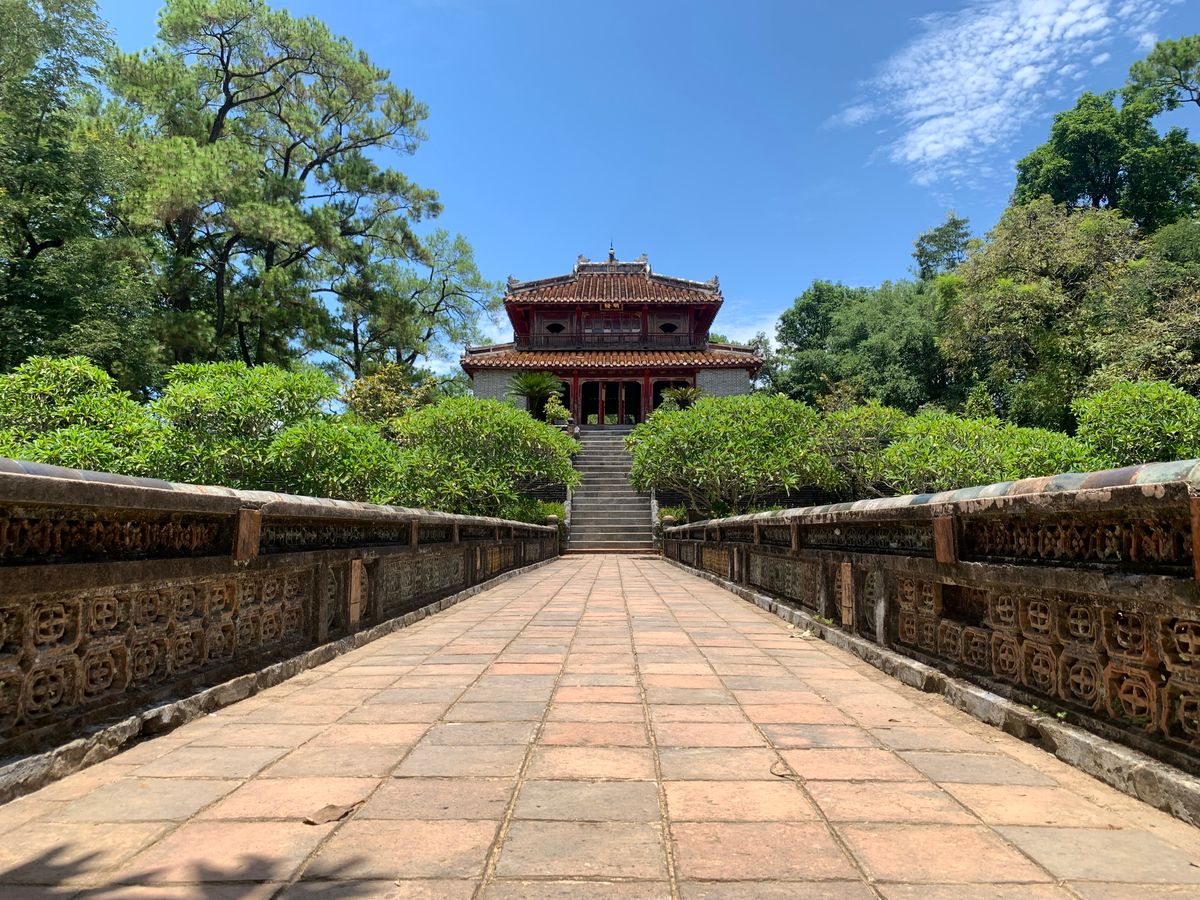
Minh Mang Tomb
Lăng Minh Mạng
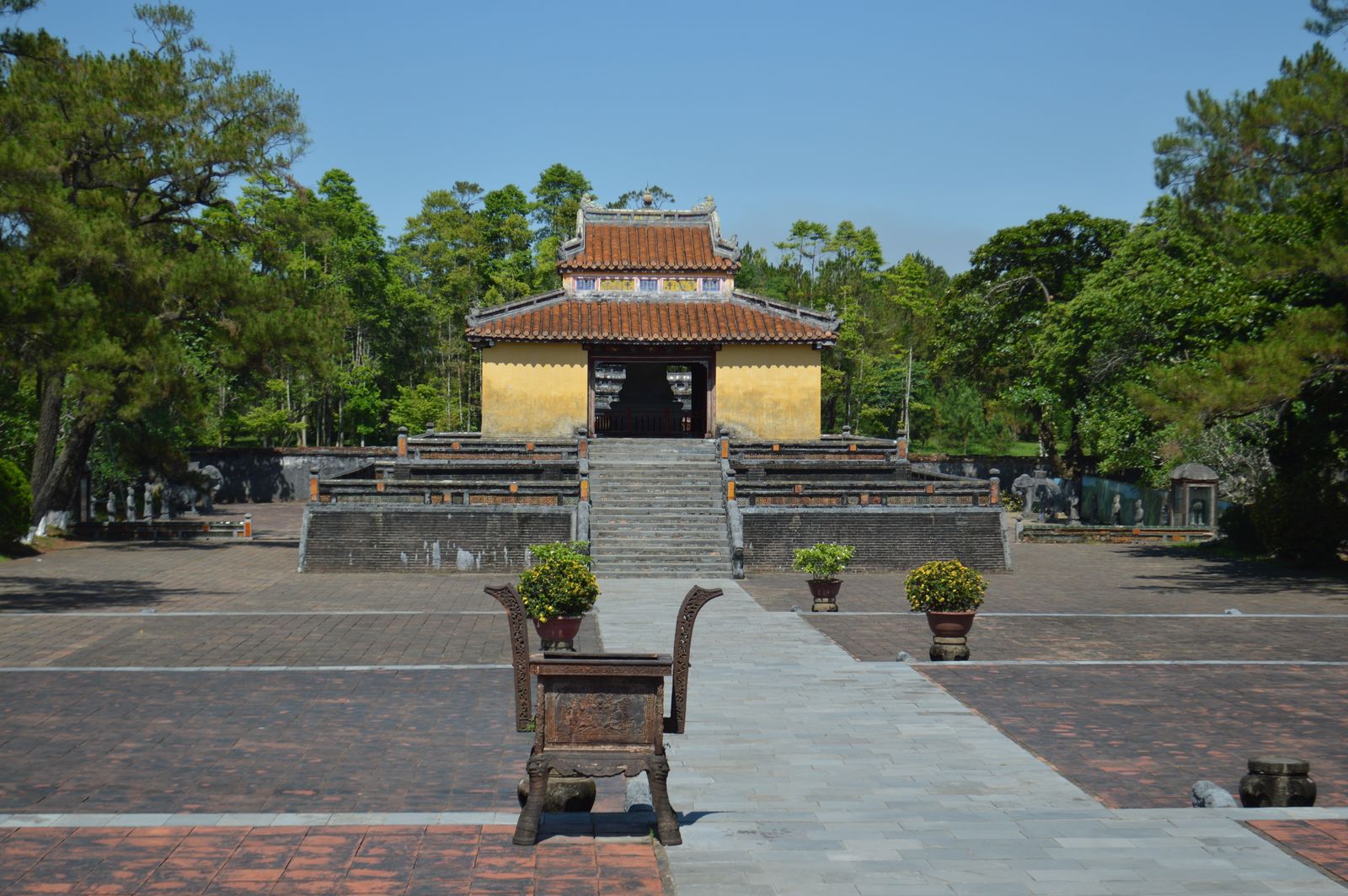
One of the most architecturally refined royal tombs in Hue, built by Emperor Minh Mang with strict geometric symmetry across 40+ temples and pavilions in a serene pine forest setting.
Photos
What to know before you go
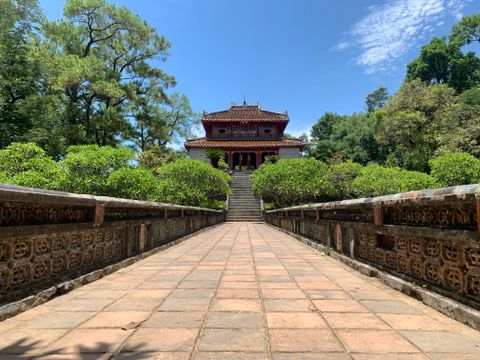
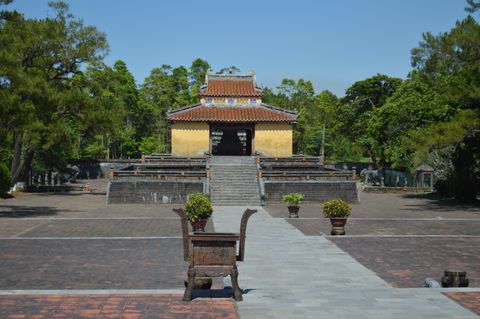
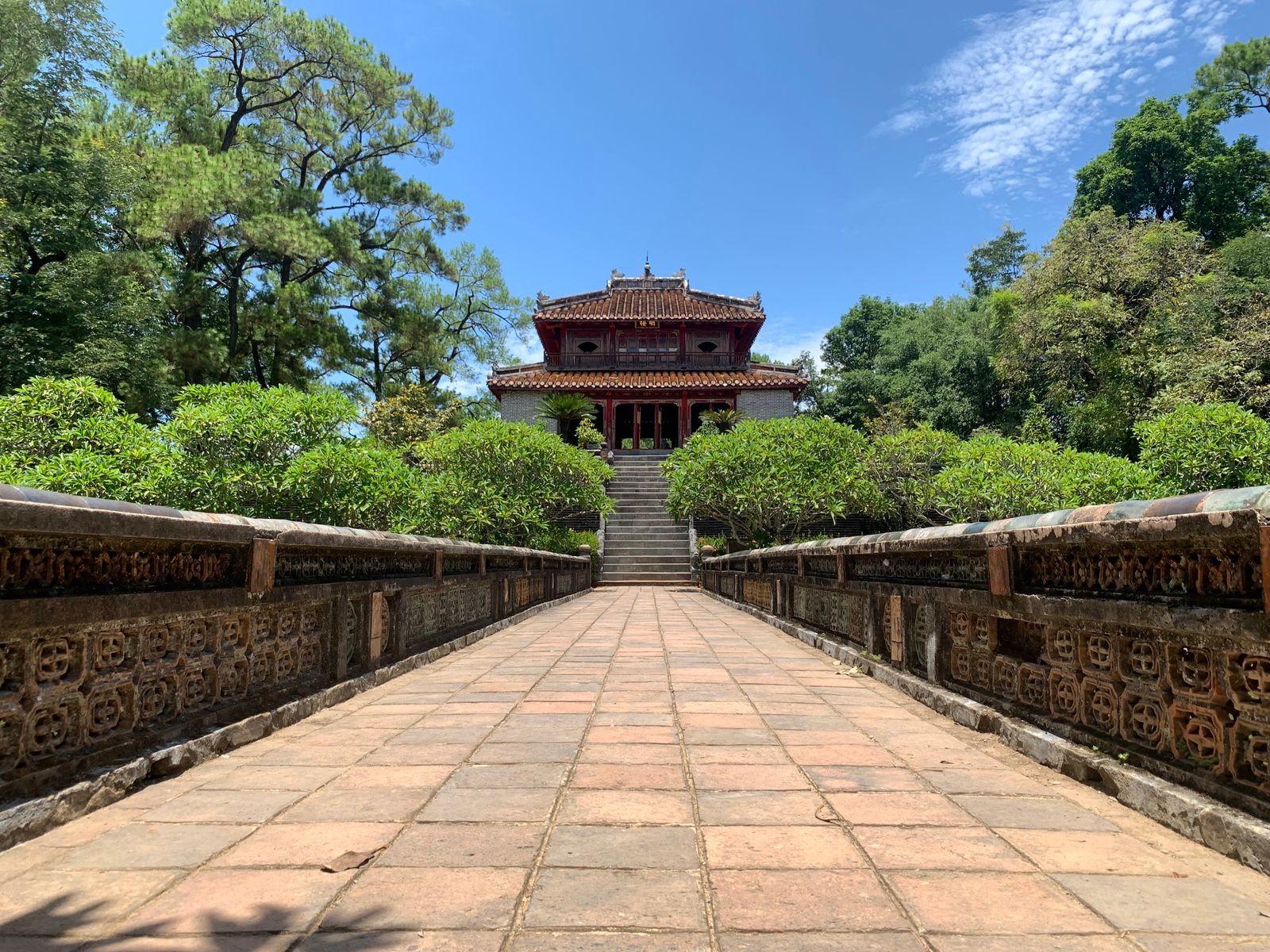
- Minh Mang Tomb is regarded as one of the most beautiful royal tombs in Hue, admired for its harmonious blend of Vietnamese and Chinese architectural principles. The complex is laid out along a strict central axis with absolute symmetry, featuring 40 major structures including the Sung An Temple (where the emperor's spirit tablet is kept), Minh Lau Pavilion, and several ornamental lakes.
- Construction began in 1840 under Emperor Thieu Tri, who completed the project his father had designed. The site covers around 18 hectares of landscaped grounds, framed by pine forests and lotus ponds that create a tranquil, contemplative atmosphere.
- The tomb is part of the larger Complex of Hue Monuments, inscribed as a UNESCO World Heritage Site in 1993. Compared to the more romantic Tu Duc Tomb or the more elaborate Khai Dinh Tomb, Minh Mang's is the most formal and majestic of the Nguyen royal mausoleums.
Culture, safety & access
Culture & etiquette
Remove hats when entering temples. Do not touch or climb on structures.
Safety & health
Paths can be slippery after rain. Wear comfortable walking shoes.
Weather
The complex is beautiful in all seasons but summer afternoons can be very hot — bring sun protection.
Terrain
The complex is largely flat and walkable, though some pathways have steps. Not fully wheelchair accessible.
Combo Ticket
A combo ticket covers multiple Hue monuments including the Imperial Citadel, Minh Mang Tomb, Tu Duc Tomb, and Khai Dinh Tomb.
Dress Code
Dress modestly and respectfully when visiting temples and shrines within the complex.