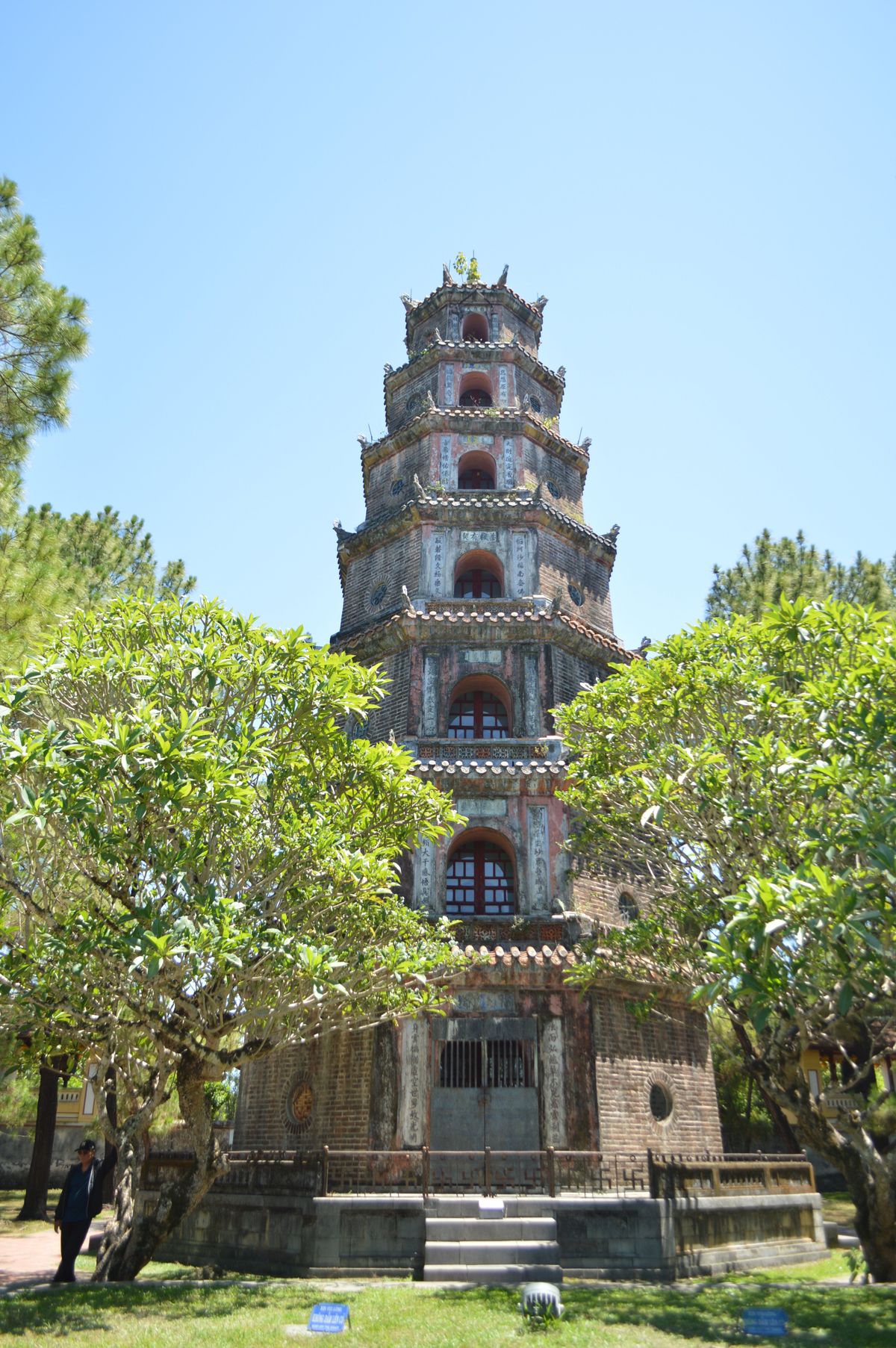
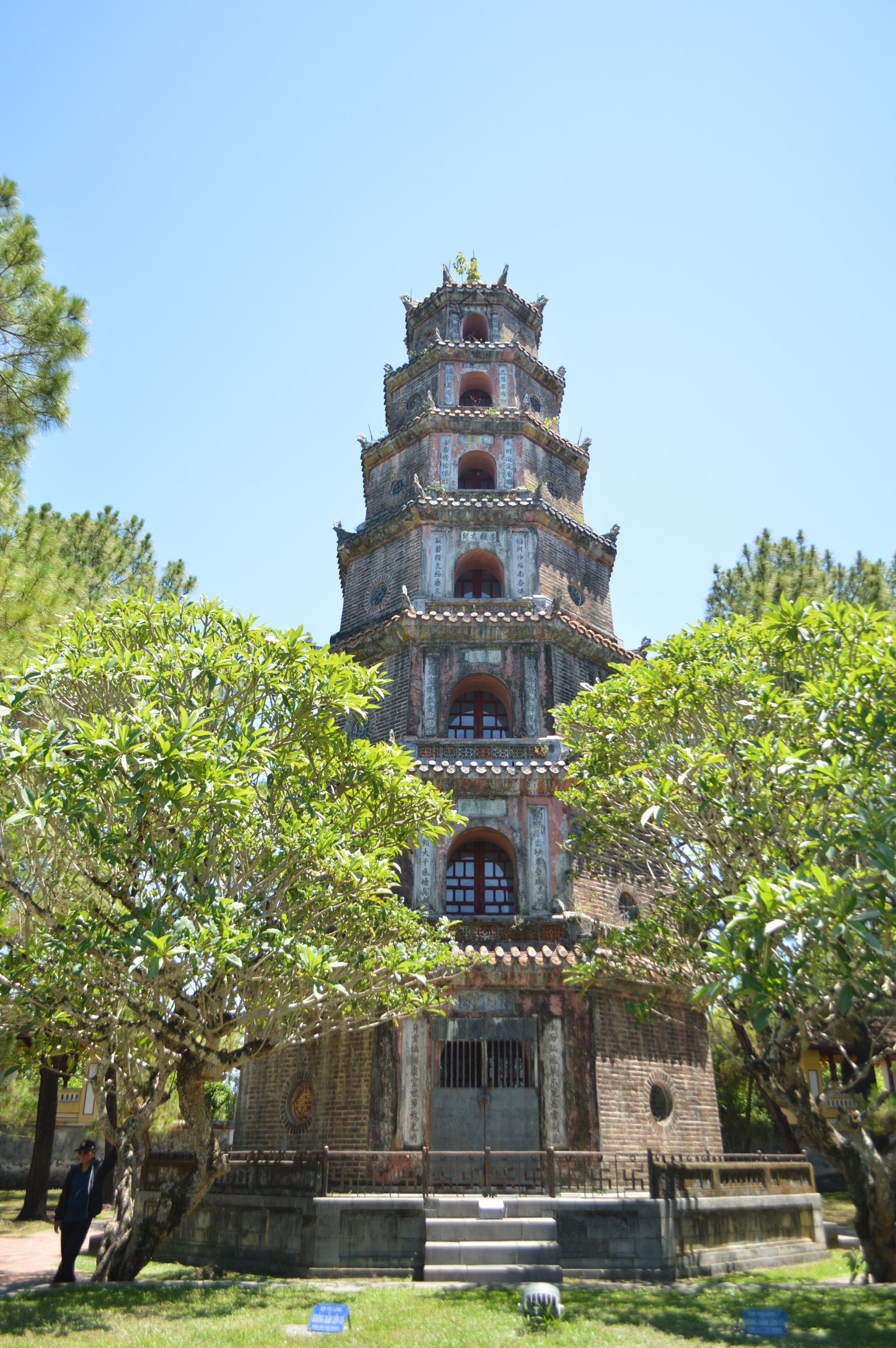
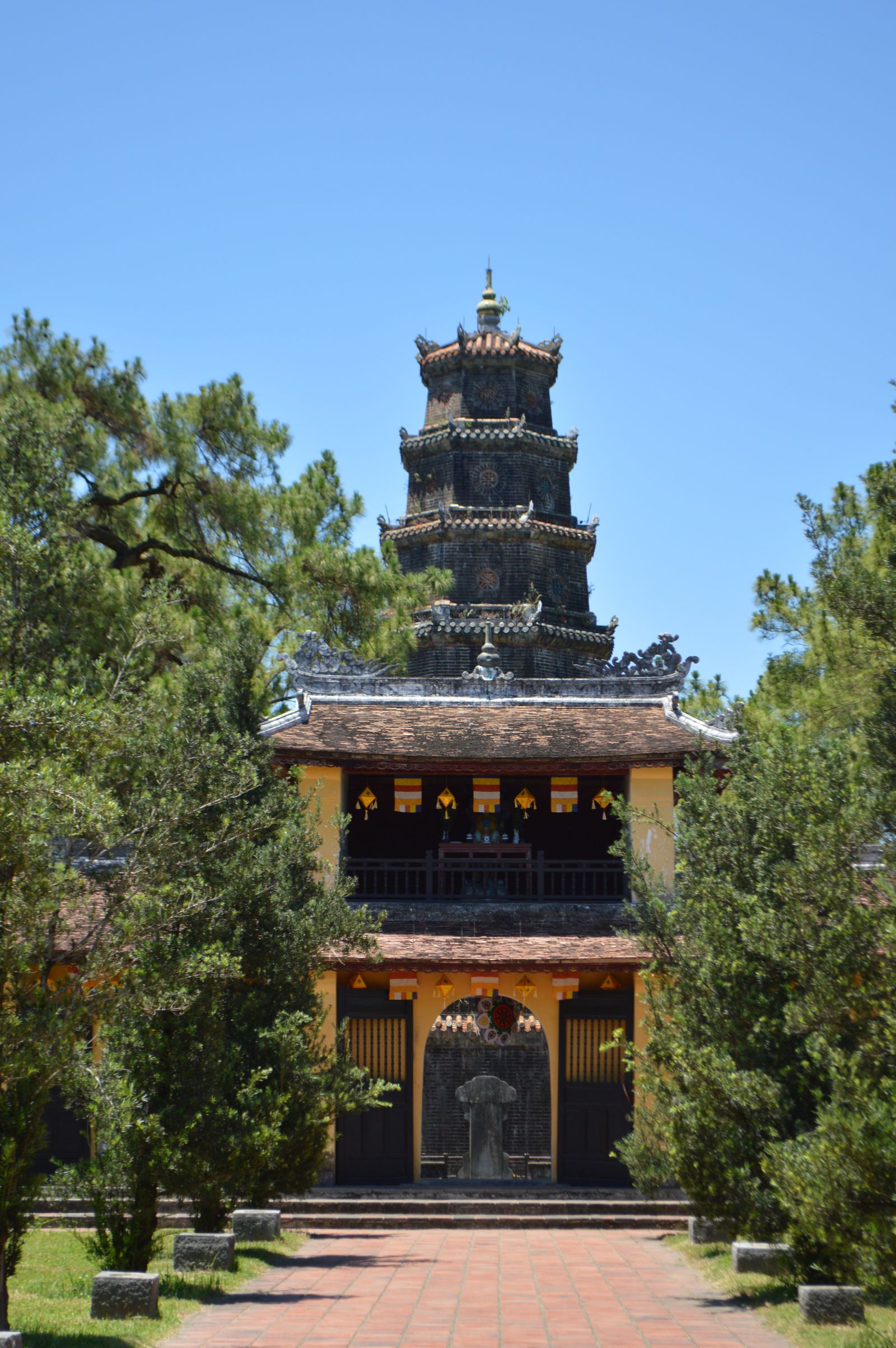
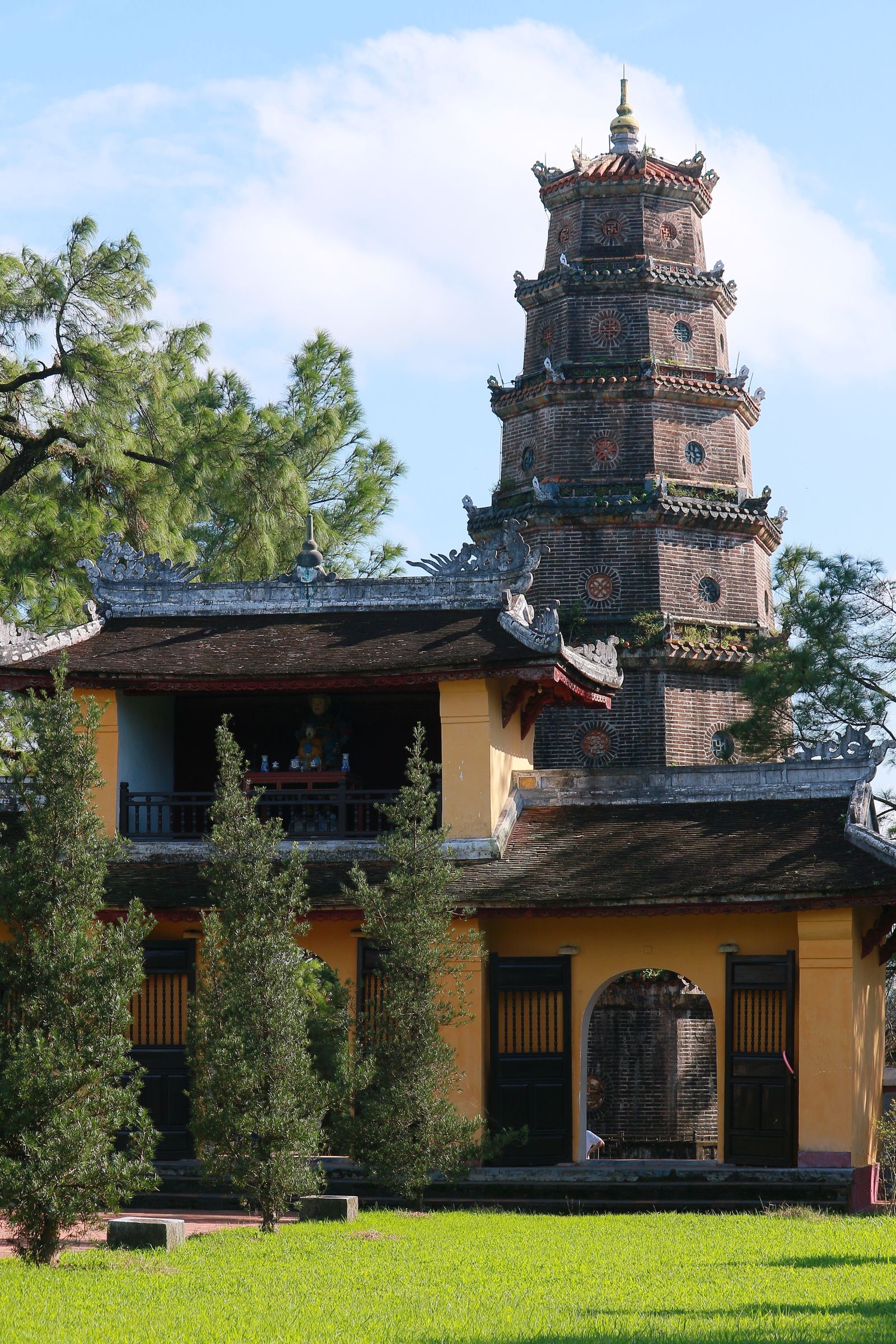
Hue's iconic seven-story pagoda on the Perfume River, known for its spiritual atmosphere, historic bell tower, and scenic river views.
Photos
What to know before you go
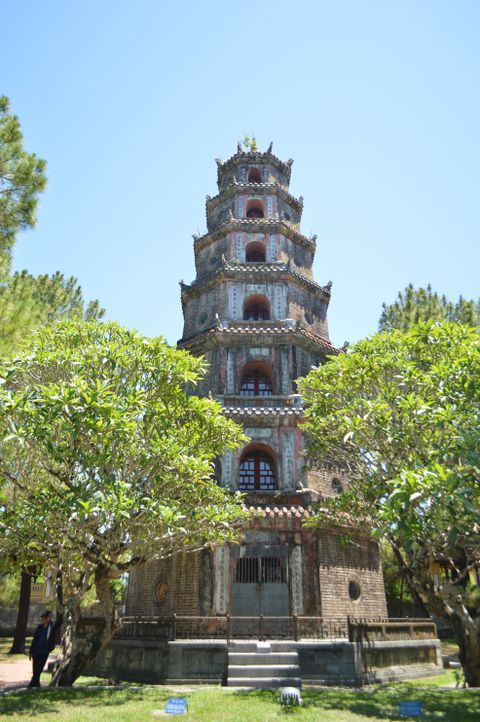
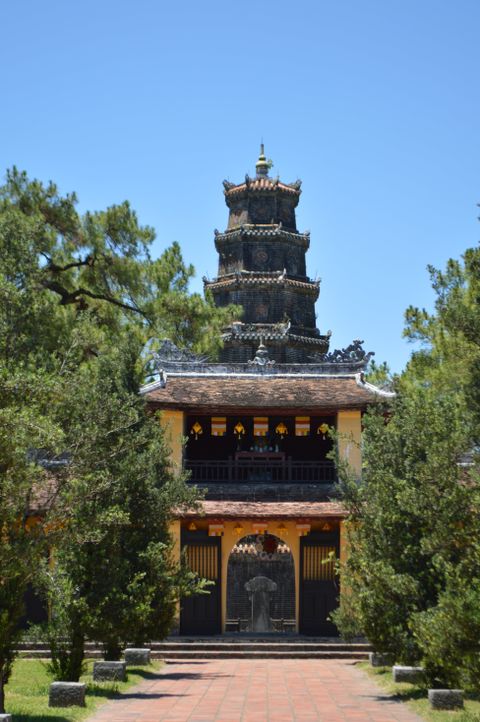
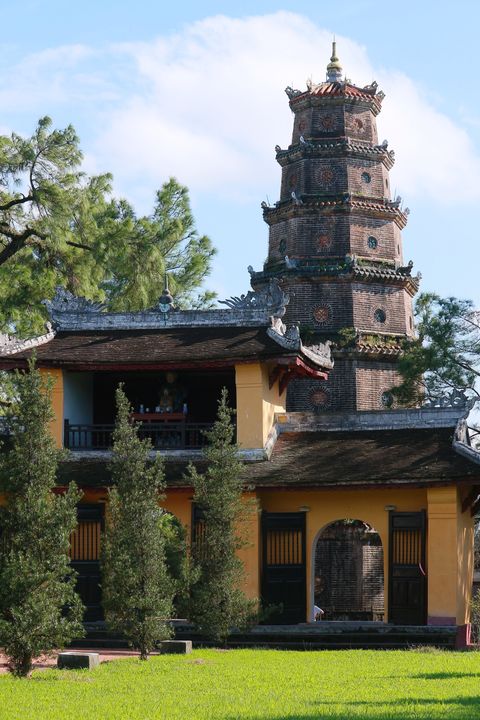
- Thien Mu Pagoda was first founded in 1601 by Lord Nguyen Hoang, making it one of the oldest and most important pagodas in central Vietnam. Its name means 'Heavenly Lady Pagoda,' referring to a local legend tied to the site.
- The complex is best known for the seven-story Phuoc Duyen Tower, the iconic symbol of Hue, and the large bronze bell that can be heard across the grounds. The riverside setting makes it especially rewarding for solo travelers who want a quiet cultural stop with easy sightseeing and photography.
Events & festivals here
- 29/1/Tet Prayer Ceremonies
- 15/8/Vu Lan Festival Observances
Culture, safety & access
Culture & etiquette
Wear clothing that covers shoulders and knees, remove hats in prayer areas, and keep your voice low
Safety & health
Safe and calm overall; watch steps, use slip-resistant shoes, and avoid isolated areas after dark
Weather
Rain can make paths slippery and river views hazy; sunny dry mornings are best for photos and walking
Walking Access
The main grounds are reachable by paved paths, but some areas have steps and uneven surfaces that may be difficult for wheelchairs
Visitor Etiquette
Dress modestly, speak quietly, and avoid entering prayer areas during worship or touching religious objects
Safety Measures
Generally safe for solo travelers during daylight hours; keep valuables secure and be cautious on the riverfront and stairs
Parking Info
Motorbike and car parking is available near the entrance for a small fee; carry small cash for parking attendants
Public Transport
Easy to reach by taxi, Grab, bicycle, or boat from central Hue; local riverboats often combine with pagoda visits