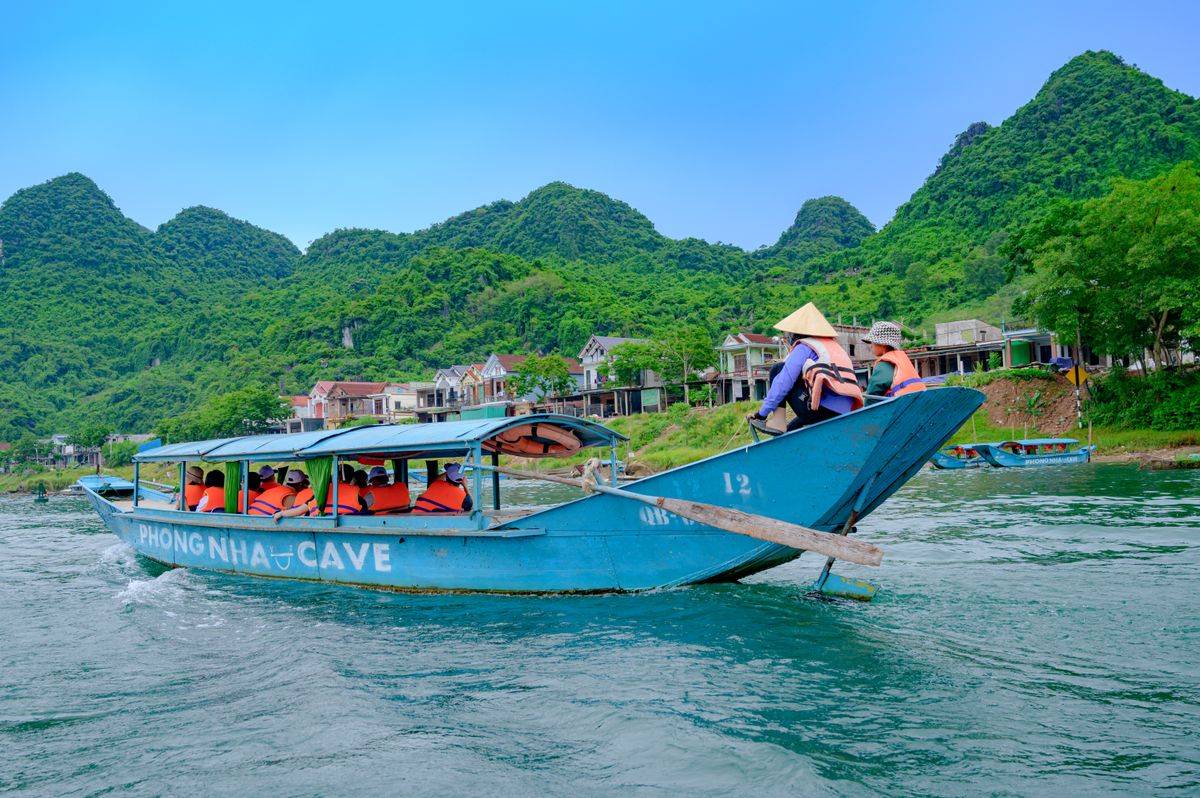
City guide

    Phong Nha

    Explore Phong Nha, Vietnam

    Overview

    A small gateway town to Phong Nha-Ke Bang National Park, famous for caves, river scenery, and budget-friendly adventure travel.
    At a glancePhong Nha · City guide
    Country
    Vietnam
    Region
    Quang Binh Province, Central Vietnam
    Recommended stay
    2-4 days
    Daily cost
    ≈ $35 / day
    Best time to visit
    Mar - Aug, Sep - Nov
    phong-nha · Guide
    Good to know

    Before you go to Phong Nha

    When to go

    Climate through the year

    Rainfall mm/inchesTemperature °C/°F0/0.010/50200/7.916/61400/15.722/72600/23.628/82800/31.534/931000/39.440/104JFMAMJJASOND
    Monthly temperature and rainfall
    MonthMin °CMax °CRainfall mm
    J162290
    F172445
    M192840
    A223165
    M2433140
    J2534180
    J2535170
    A2534190
    S2432320
    O2229520
    N1926420
    D1723180

    Spring (Feb-Apr)

    Mild to warm weather, with the dry season starting to improve cave access; March and April are especially good for outdoor activities.

    Comfortable for trekking, cave visits, and river activities; fewer weather disruptions than later in the year.
    Can still be cool in February; occasional showers may begin toward April.

    Ideal for: Cave exploration, motorbike loops, and national park sightseeing.

    Pack: Light layers, breathable clothes, sturdy walking shoes, sun protection, and a light rain jacket.

    Summer (May-Aug)

    Hot, humid, and generally the best window for dry-weather cave trips before the late-year rains.

    Best conditions for swimming, trekking, and full access to many caves; strong season for adventure travel.
    Can be very hot and humid; midday heat can be intense.

    Ideal for: Son River activities, cave expeditions, and early-morning hikes.

    Pack: Breathable clothing, hat, sunscreen, insect repellent, refillable water bottle, and quick-dry gear.

    Autumn (Sep-Nov)

    Rainy season arrives, with higher flood risk and cave closures possible, especially in October and November.

    Lush scenery and fewer visitors; some accommodation rates may be lower.
    Heavy rain can disrupt transport and close cave access; not ideal for a first-time visit.

    Ideal for: Flexible travelers who can adjust plans around weather.

    Pack: Waterproof shoes, rain jacket, dry bag, and extra time in your itinerary.

    Winter (Dec-Jan)

    Cooler weather with occasional drizzle; conditions are quieter but less reliable for outdoor adventure.

    Lower crowds and a calmer atmosphere.
    Can feel chilly and damp; some activities are less enjoyable in overcast weather.

    Ideal for: Relaxed stays, village visits, and low-key sightseeing.

    Pack: Light jacket, long pants, closed shoes, and a compact umbrella.

    Daily budget

    Low season / day
    20-35 USD (rainy season, excl. accommodation)
    Peak season / day
    30-50 USD (dry season, excl. accommodation)
    Cash
    Carry 500,000-1,000,000 VND (~20-40 USD) in small bills.
    Exchange
    1 USD ~ 25,000 VND; use banks, official exchange counters, or reputable hotel exchange services.
    ATMs
    Available in Phong Nha and nearby Đồng Hới; expect standard bank fees and possible withdrawal limits.
    Cards
    Moderate - accepted at many hotels, tour operators, and some restaurants, but cash is preferred for small shops, local eateries, and transport.

    Events & festivals

    • Tet (Lunar New Year)Late Jan or Feb (varies by lunar calendar)

      Family gatherings, flower displays, festive food, and holiday travel atmosphere across Vietnam.

      Tip: Book transport and accommodation early; many businesses may close for several days, so bring enough cash and plan meals in advance.

    • Mid-Autumn FestivalSep or Oct (15th day of the 8th lunar month)

      Lanterns, mooncakes, children’s activities, and evening celebrations in towns and cities.

      Tip: Best experienced in nearby urban areas such as Đồng Hới or larger Vietnamese cities rather than in Phong Nha village itself.

    Getting there

    How to reach Phong Nha from abroad or within Vietnam.

    Arriving internationally

    • Phong Nha does not have its own commercial airport; the usual air gateway is Đồng Hới Airport (VDH), which has domestic flights from Hanoi and Ho Chi Minh City, and some seasonal/international connections may be available depending on the airline and schedule.
    • From Đồng Hới Airport or Đồng Hới Railway Station, continue to Phong Nha by taxi, motorbike taxi, or local bus; a taxi is the fastest and most convenient option for solo travelers with luggage.
    • If arriving from abroad, fly into a major Vietnamese hub such as Hanoi (HAN) or Ho Chi Minh City (SGN), then connect to Đồng Hới by domestic flight or overnight train/bus.

    From within the country

    • Phong Nha is well connected to the rest of Vietnam via Đồng Hới, which sits on the north-south Reunification Express rail line.
    • Daily domestic flights connect Hanoi and Ho Chi Minh City to Đồng Hới, making air travel the quickest option for long-distance domestic access.
    • Overnight sleeper buses run from Hanoi to Phong Nha, and open buses also operate from nearby destinations such as Huế and Đà Nẵng.
    • Trains to Đồng Hới are a practical choice for travelers coming from Hanoi, Huế, Đà Nẵng, or southern cities along the main railway corridor.
    • For budget travelers, the bus from Đồng Hới to Phong Nha is inexpensive and runs regularly during the day.

    Booking & arrival tips

    • Book flights, trains, or sleeper buses in advance during Tet, summer holidays, and weekends.
    • For the last leg from Đồng Hới to Phong Nha, compare taxi fares before leaving the station or airport; shared taxis can reduce the cost for solo travelers.
    • Download ride-hailing apps before arrival, since coverage and pickup availability can be limited outside Đồng Hới.
    • Carry small cash in Vietnamese dong for buses, local taxis, and village-level purchases.
    • If you arrive late, pre-arrange a transfer with your accommodation because public transport options become limited after dark.
    • For cave tours and park visits, ask your hotel or guesthouse about shuttle pickups, which can be cheaper than private transport.

    Getting around

    Grab / Xanh SM

    3-10 USD/trip

    App-based car or motorbike rides for short hops and transfers in Đồng Hới and nearby areas.

    Taxi

    10-20 USD/trip

    Best for Đồng Hới Airport or station transfers to Phong Nha; use reputable metered taxis.

    Local bus

    1-2 USD/trip

    Cheapest way to travel between Đồng Hới and Phong Nha during daytime.

    Motorbike rental

    5-10 USD/day

    Flexible option for confident riders exploring caves, viewpoints, and the national park.

    Good to know. For solo travelers, the safest and most efficient combo is train or flight to Đồng Hới, then a pre-booked taxi or app ride to Phong Nha. Walking is fine inside the village, but roads outside the center can be dark and scooter-heavy after sunset.

    Handy apps

    GGoogle Maps

    Navigation and offline route planning.

    Download offline maps for Phong Nha, Đồng Hới, and the cave area before arrival.

    GGrab

    Transportation and food delivery in Vietnam.

    Useful for airport/station transfers and short rides in Đồng Hới; motorbike rides can be faster in traffic.

    GGreen SM

    Electric ride-hailing for cars and some two-wheeler services.

    Good backup when you want a cleaner, app-based ride option in Vietnam.

    BBusMap

    Public transport route lookup where available.

    Helpful for checking bus routes in larger nearby cities, though Phong Nha itself is mostly taxi/bus based.

    KKlook

    Tours, transfers, and attraction bookings.

    Useful for booking cave tours and airport transfers in one place.

    Backup. Keep the hotel’s address in Vietnamese, a screenshot of your booking, and a paper note with your destination in case mobile data is weak.

    Where to stay

    Nightly rates: 10-25 USD/night for hostels and basic guesthouses, 25-60 USD for mid-range homestays/hotels, 80+ USD for upscale stays

    Phong Nha Town Center

    Solo travelersCave explorersBudget travelers

    Best base for cave tours, river views, restaurants, and easy access to boat departures and tour operators. Stay here if you want to minimize transport time and book activities on arrival.

    Son Trach Commune Riverside

    Nature loversCouplesSlow travelers

    Quiet riverside area near the main tourist strip and Phong Nha Cave access points. Good for guesthouses, homestays, and early-morning departures.

    Phong Nha-Ke Bang National Park Gateway

    Adventure travelersHikersTour joiners

    Stay near the park entrance for the shortest transfer times to cave tours and adventure activities. Practical if you are joining early departures or multi-day trekking trips.

    Tien Son Cave Area

    SightseersPhotographersPeace seekers

    A quieter pocket close to one of the area’s main attractions, with scenic limestone surroundings and easy access to boat and cave excursions.

    Dong Hoi City

    Transit travelersComfort seekersLonger stays

    Useful if you want more hotel choice, train access, and a bigger food scene, while still being within day-trip distance of Phong Nha.

    Phong Nha Boat Pier Area

    Short staysEarly risersBudget explorers

    Convenient for travelers prioritizing the river cave experience and sunrise departures. Expect simple stays, local eateries, and quick access to the main tourist flow.

    Booking tip: Book early for peak cave-tour months and Vietnamese holidays; for solo travelers, homestays often include easier tour booking, shared transport, and cheaper meals.

    Health & safety

    Emergency numbers

    ambulance
    115
    fire
    114
    police
    113
    national emergency hotline
    112

    Medical facilities

    • TTH Quang Binh Hospital096-726-0115

      99 Dien Bien Phu, Dong Hoi, Quang Binh

      Private hospital option in Dong Hoi; useful for faster access and some English support.

    Staying safe

    General safety
    Use caution with motorbike rentals and boat trips; wear a helmet and life jacket where provided. Keep valuables secure in crowded tourist areas and at night. Mosquitoes can be active near jungle and river areas, so use repellent and cover exposed skin.
    Notes
    Avoid tap water; use sealed bottled water or boiled/filtered water. Traffic can be unpredictable on narrow roads and when crossing streets, so look both ways and move steadily. In rainy season, watch for slippery paths and flash flooding near caves and streams.
    What to carry
    Comfy shoes, water bottle, basic meds (painkillers, antidiarrheal, mosquito repellent), sunscreen, hat, and a small flashlight for rural roads.
    Lost items
    Nearest local police station in Bo Trach District or the police station in Son Trach/Phong Nha area
    • Carry hand sanitizer for street food and wash hands before eating.
    • Use sunscreen and a hat in hot months; Phong Nha can be very sunny and humid.
    • Rest immediately if you feel dizzy, overheated, or unwell; seek shade and hydration.
    • Keep your passport copy and travel insurance details accessible in case of emergency.
    • Carry your insurance card and passport copy for faster registration.
    • For serious emergencies, call 115 first and then notify your hotel or homestay to help with transport.
    • If you need English-speaking help, ask your accommodation to call ahead and arrange a doctor in Dong Hoi.
    • Bring any prescription medicines you need, as local pharmacies in Phong Nha may have limited stock.
    • If you lose a passport or wallet, report it to local police as soon as possible and ask your hotel for help translating.
    • For medical emergencies, 115 is the standard ambulance number in Vietnam; 112 is also used nationally for emergency reporting.
    • Keep a charged phone and offline map, especially if traveling to caves, rural homestays, or remote river areas.

    Local customs

    Etiquette & local habits

    • Dress modestly when visiting temples, pagodas, or local family homes; cover shoulders and knees.
    • Use both hands when giving or receiving items from older locals as a sign of respect.
    • Bargaining is normal at markets and with some transport services, but keep it polite and avoid haggling over small amounts.
    • For cave and river activities, follow guide instructions closely; local operators take safety seriously, especially during rainy season and flood periods.

    When the city is open

    Many attractions and boat services wind down by late afternoon; cave tours often start early, and nightlife is limited compared with big cities.