City guide

    Phnom Penh

    Explore Phnom Penh, Cambodia

    Overview

    Cambodia's capital on the Mekong and Tonle Sap rivers, known for its royal landmarks, riverfront, and French colonial-era streets.
    At a glancePhnom Penh · City guide
    Country
    Cambodia
    Region
    Central Cambodia
    Recommended stay
    2-4 days
    Daily cost
    ≈ $45 / day
    Best time to visit
    Nov - Feb, Mar - Apr
    phnom-penh · Guide
    Good to know

    Before you go to Phnom Penh

    When to go

    Climate through the year

    Rainfall mm/inchesTemperature °C/°F0/0.020/68100/3.924/75200/7.928/82300/11.832/90400/15.736/97500/19.740/104JFMAMJJASOND
    Monthly temperature and rainfall
    MonthMin °CMax °CRainfall mm
    J223110
    F233310
    M253540
    A273675
    M2734135
    J2632180
    J2631185
    A2531205
    S2530265
    O2429245
    N232885
    D222830

    Cool & Dry Season (November – February)

    Best time to visit — comfortable temperatures, low humidity, excellent conditions for exploring the Royal Palace, Tuol Sleng, and the riverside

    Comfortable 22–30°C, low humidity, pleasant evening riverside walks, clear skies, peak season for tours and cultural events
    Peak tourist season — higher accommodation prices, more crowded major sites (Royal Palace, Tuol Sleng). Book accommodation in advance for December–January.

    Ideal for: First-time visitors, history and culture seekers, families, couples, travelers combining with Siem Reap

    Pack: Light breathable clothing, sunscreen, comfortable walking shoes, a light cardigan for air-conditioned restaurants and museums

    Hot Season (March – May)

    Khmer New Year (mid-April) is Cambodia's biggest holiday — the city empties as locals return to their home provinces, creating a quieter-than-usual Phnom Penh, then fills again with celebrations

    Khmer New Year (April 13–16) celebrations, lower prices outside the holiday period, fewer international tourists. The Water Festival in October–November is a better time for celebrations.
    Very hot 33–40°C. During Khmer New Year many restaurants and businesses close as staff return to their provinces — plan accordingly.

    Ideal for: Budget travelers, those wanting to experience Khmer New Year, cultural exploration

    Pack: Light breathable clothing, SPF 50+ sunscreen, hat, large water bottle. Start outdoor sightseeing by 8am.

    Wet Season (June – October)

    Phnom Penh functions year-round as a capital city — wet season brings fewer tourists, lower prices, and lush greenery; Water Festival in October–November is extraordinary

    Lowest prices (20–40% cheaper), fewer tourists at major sites, Water Festival (Bon Om Touk) in October–November with boat races on the Tonle Sap, pleasant green city parks
    Heavy afternoon rains, occasional minor flooding in low-lying neighborhoods, high humidity. Some streets flood temporarily during heavy rains.

    Ideal for: Budget travelers, NGO workers and long-term visitors, Water Festival experience

    Pack: Lightweight rain poncho, waterproof bag for electronics, quick-dry clothing

    Daily budget

    Low season / day
    Budget: $20–35/day (hostel dorm $6–12, guesthouse $15–25, meals $2–6, tuk-tuk per trip $2–5). Mid-range: $50–100/day. Phnom Penh is significantly cheaper than Bangkok for equivalent accommodation.
    Peak season / day
    Budget: $25–45/day. Prices increase modestly in peak season (Nov–Feb). Mid-range: $60–120/day. Luxury boutique hotels: $100–300+/night.
    Cash
    US Dollars and Cambodian Riel both accepted. USD is the dominant currency for tourist transactions — accommodation, restaurants, tuk-tuks. Riel given as change for sub-dollar amounts (4,000 KHR = $1). Carry small denomination USD bills ($1, $5, $10).
    Exchange
    USD is directly usable everywhere — no need to exchange to Riel for most tourist transactions. Withdraw USD from ABA Bank, ACLEDA, or Canadia Bank ATMs (most reliable; fees $3–5 per withdrawal). Currency exchange shops on Monivong Boulevard offer competitive rates if exchanging other currencies.
    ATMs
    ATMs widely available throughout Phnom Penh dispensing USD directly. ABA Bank, ACLEDA Bank, and Canadia Bank are the most reliable. Standard fee $3–5 per withdrawal. Withdraw larger amounts to minimize fees.
    Cards
    Accepted at upscale hotels, restaurants, and supermarkets (Lucky, Aeon Mall). Most local restaurants, markets, tuk-tuks, and street food stalls are cash only. Visa and Mastercard most widely accepted.

    Events & festivals

    • Water Festival (Bon Om Touk)October–November (3 days around the Cambodian full moon)

      Cambodia's largest annual festival. Traditional boat races on the Tonle Sap River in front of the Royal Palace with hundreds of long wooden dragon boats and massive crowds. Illuminated boat processions at night and fireworks. Over 2 million people attend each year.

      Tip: Book accommodation 2–3 months in advance — Phnom Penh is packed. Arrive at riverside 2–3 hours before race times for a good viewing position. Take precautions in large crowds.

    • Khmer New Year (Chaul Chnam Thmey)April 13–16

      National 3-day holiday. Traditional games and ceremonies in public spaces. Many Phnom Penh residents return to home provinces making the city quieter. Wat Phnom and riverside areas have festivities.

      Tip: Some restaurants and attractions close during Khmer New Year week — plan meals in advance or stay in hotels with restaurant service.

    • Pchum Ben (Ancestors Day)September–October (15 days of the Khmer lunar month)

      Important Buddhist and ancestral remembrance holiday. Cambodians visit temples at dawn to offer food to ancestral spirits. Wat Phnom and major temples in Phnom Penh have early morning ceremonies.

      Tip: Witness early morning Pchum Ben ceremonies at Wat Phnom or local neighborhood temples — one of Cambodia's most spiritually significant and visually compelling cultural practices.

    Getting there

    Getting to Phnom Penh

    Arriving internationally

    • Phnom Penh International Airport (PNH) has direct connections to Bangkok (BKK), Ho Chi Minh City (SGN), Singapore (SIN), Kuala Lumpur (KUL), Guangzhou, Kunming, and other Asian cities.
    • Long-haul connections via Bangkok (Suvarnabhumi or Don Mueang), Singapore, or Kuala Lumpur for most international origins.
    • Taxi from PNH airport to city center: Fixed-rate taxis available at the official desk ($12–15). Grab also available from the pickup zone. Journey 20–30 minutes.

    From within the country

    • By plane from Siem Reap: Multiple daily flights (~45 minutes, $30–100). Cambodia Angkor Air and other carriers. Most convenient connection between the two major Cambodian tourist cities.
    • By bus from Siem Reap: Air-conditioned buses (Giant Ibis, Mekong Express, Capitol Transport). Journey ~5–6 hours, $7–15. Giant Ibis recommended for reliability and comfort.
    • By bus from Kampot / Sihanoukville: Regular bus services from southern coast (~3.5–4 hours from Kampot, $5–8).
    • By bus or shared taxi from Bangkok: Via Poipet–Aranyaprathet border crossing, then bus/taxi to Phnom Penh (~9–12 hours total). Several companies offer direct Bangkok–Phnom Penh services.
    • By bus from Ho Chi Minh City: Multiple direct bus services (Mekong Express, Phnom Penh Sorya, Kumho Samco) via the Moc Bai–Bavet border crossing. Journey ~6–7 hours, $12–20.
    • By boat from Siem Reap (seasonal): High-speed boat service on the Tonle Sap Lake between Siem Reap and Phnom Penh (~5–6 hours, $25–35). Seasonal — available August–March when water levels are sufficient.

    Booking & arrival tips

    • Giant Ibis is the premium bus operator in Cambodia — air-conditioned, reliable, assigned seats, and USB charging; worth the $2–3 premium over cheaper buses for the Phnom Penh–Siem Reap route
    • The Ho Chi Minh City–Phnom Penh bus route is one of Southeast Asia's classic overland routes — convenient border crossing and good bus connections make it a popular choice for Vietnam–Cambodia travelers
    • Arrange airport pickup with your guesthouse in advance — they can often arrange a tuk-tuk or car cheaper than the fixed-rate airport taxis

    Getting around

    Tuk-tuk

    $2–5 per trip; $15–25 for half-day hire

    Most popular tourist transport in Phnom Penh. Open-air and atmospheric. Negotiate a daily or half-day rate for temple and museum visits. Most tuk-tuk drivers speak basic English and know all major attractions.

    PassApp

    $2–5 per ride

    Cambodia's most popular ride-hailing app. More reliable and transparent pricing than negotiating with street tuk-tuks. Also has PassApp Tuk-tuk option for the authentic experience with app pricing.

    Grab

    $2–6 per ride

    Available in Phnom Penh for GrabCar and GrabBike. Good for late-night transport and when PassApp has no nearby drivers.

    Motorbike (motodop)

    $1–3 per short trip (motorbike taxi)

    Motorbike taxis (motodops) for quick solo trips. Negotiate price before getting on. Faster than tuk-tuks in traffic but less comfortable and less safe.

    Bicycle rental

    $3–5/day

    Good for exploring the riverside area, the palace district, and local neighborhood streets. The city is relatively flat but traffic can be challenging for cyclists unfamiliar with Phnom Penh's traffic patterns.

    Private car with driver

    $35–60 per day

    Air-conditioned comfort for day trips to the Killing Fields (Choeung Ek, 15km), Silver Pagoda area, and for groups. Book through your guesthouse.

    Good to know. PassApp is the most useful app for getting around Phnom Penh — download and register before arriving. Use it for airport transfers and late-night journeys. For sightseeing during the day, negotiate a half-day or full-day tuk-tuk rate with a driver you trust — $20–30 for a day covering Royal Palace, S-21, and the Killing Fields is a fair rate.

    Handy apps

    PPassApp

    Cambodia's primary ride-hailing app. Covers tuk-tuk, car, and express delivery. Best local transport option.

    Download and register before arriving. Faster to use than Grab in Phnom Penh.

    GGrab

    Ride-hailing and food delivery. Available but less prevalent than in Bangkok. GrabCar useful for airport transfers.

    Use as a backup to PassApp. GrabFood delivery is popular with expats and travelers.

    GGoogle Maps

    Navigation throughout Phnom Penh. Works well for walking directions, finding restaurants, and checking opening hours.

    Download Phnom Penh map offline. Useful for showing tuk-tuk drivers your exact destination on the map screen.

    Backup. Buy a Cambodian SIM card at Phnom Penh Airport on arrival (Cellcard, Smart, or Metfone). Tourist SIMs with 5–10GB data for $3–6 USD. Mobile coverage is excellent throughout Phnom Penh. Free WiFi available at most guesthouses, cafes, and restaurants. ABA Bank has reliable ATMs throughout the city for USD withdrawal.

    Where to stay

    Nightly rates: Hostel dorm: $6–12/night. Budget guesthouse: $15–25/night. Mid-range hotel: $30–70/night. Boutique hotel: $60–150/night. Luxury: $120–400+/night. Great value across all price points.

    Riverside / BKK1 (Boeng Keng Kang 1)

    Most visitor types — central location with excellent restaurant access

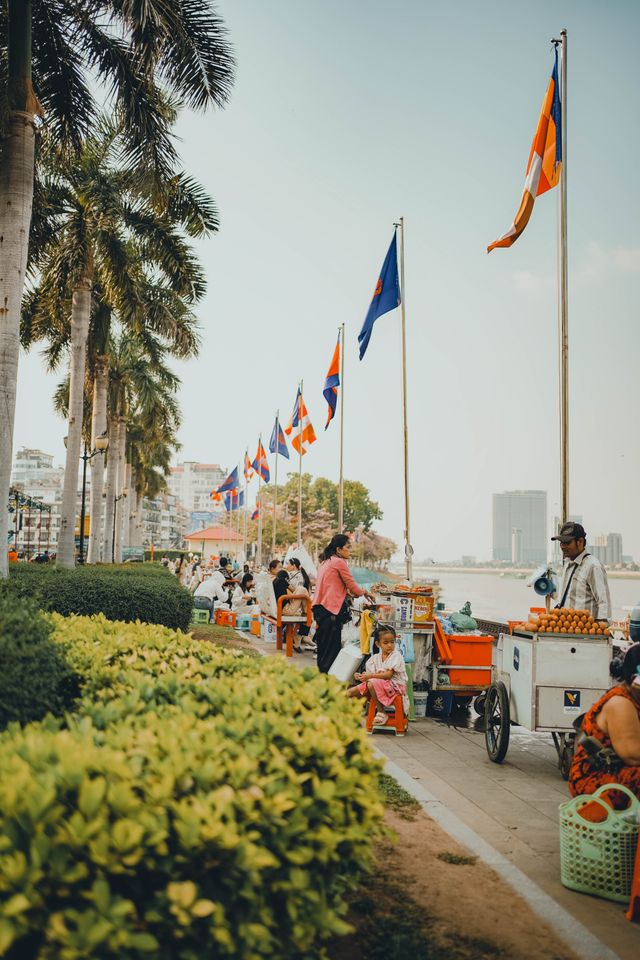
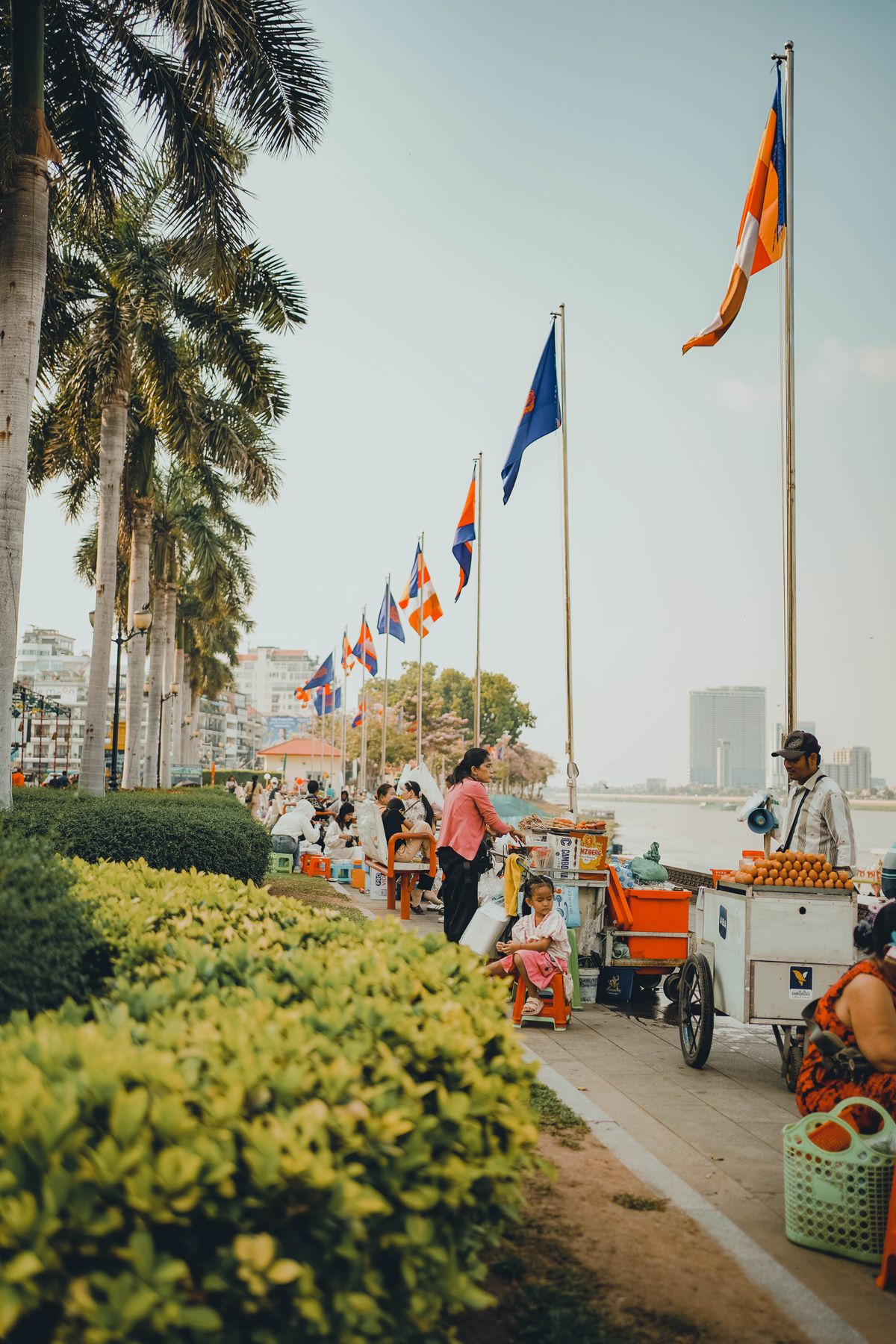
    The riverside area (Boulevard Sisowath Quay) is the heart of Phnom Penh's tourist district with restaurants, cafes, and bars overlooking the Tonle Sap River. BKK1 (10 minutes south by tuk-tuk) is the city's premier expat and boutique restaurant neighborhood with excellent mid-range accommodation options and tree-lined streets.

    Tonle Bassac / Street 308 area

    Mid-range to upscale travelersfoodiescocktail bars

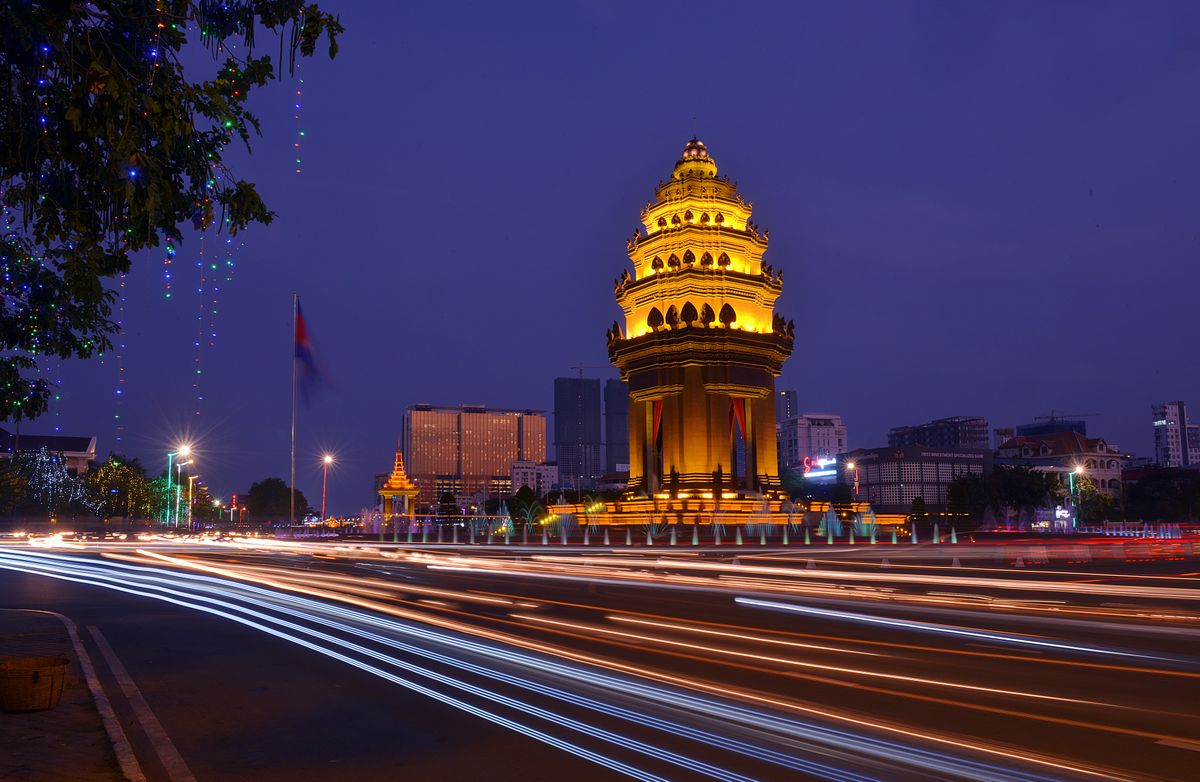
    The Tonle Bassac neighborhood and surrounding streets (308, 282) house many of Phnom Penh's best restaurants, rooftop bars, and mid-range boutique hotels. A bit quieter than the riverside but excellent dining scene. Walking distance to the Independence Monument and riverside.

    Central / Russian Market (Toul Tom Poung) area

    Budget travelersbackpackersshopping

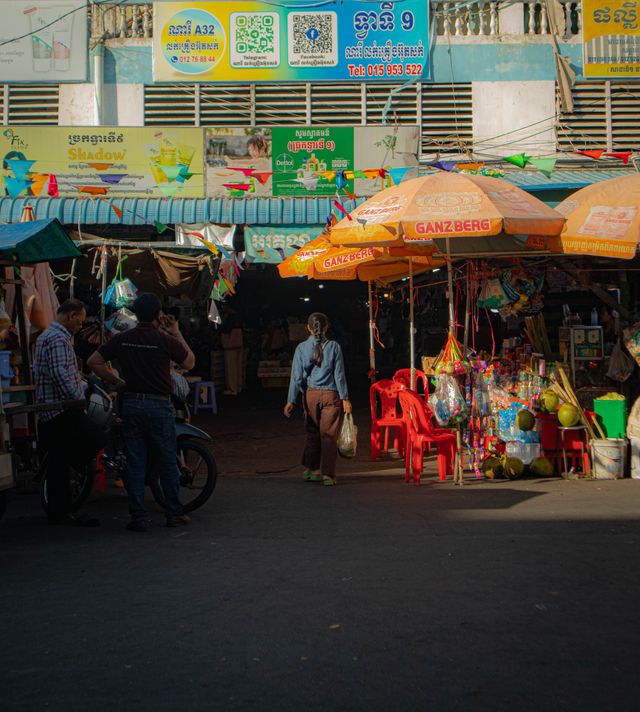
    The area around the Russian Market (Toul Tom Poung) has the city's highest concentration of budget guesthouses, cheap local restaurants, and the famous Russian Market for handicrafts, gems, and souvenirs. A 10–15 minute tuk-tuk ride from the Royal Palace and riverside attractions.

    Booking tip: Phnom Penh is very navigable by tuk-tuk or PassApp/Grab at $2–5 per trip — staying near the riverside or BKK1 puts you within easy reach of all major attractions. Most first-time visitors need 2–3 days minimum: Royal Palace + Silver Pagoda, Tuol Sleng Genocide Museum, Killing Fields, and the riverside walking street area.

    Health & safety

    Emergency numbers

    Police Emergency
    117
    Ambulance / Medical Emergency
    119
    Fire Department
    118
    Tourist Police Phnom Penh
    +855 12 942 484
    Royal Phnom Penh Hospital Emergency
    +855 23 991 000
    International SOS Medical Centre
    +855 23 216 911

    Medical facilities

    • Royal Phnom Penh Hospital+855 23 991 000

      Samdach Techo Hun Sen Boulevard, Phnom Penh

      Premier private international hospital in Phnom Penh. English-speaking staff, modern equipment, 24/7 emergency service. Affiliated with Bangkok Hospital group (BDMS). Recommended first choice for tourists requiring hospital care in Phnom Penh.

    • Calmette Hospital+855 23 426 948

      3 Monivong Boulevard, Phnom Penh

      French-funded public hospital with better facilities and English capability than most government hospitals. Has French medical staff in some departments. Good option for budget-conscious travelers for non-emergency care.

    • SOS International Medical Centre Phnom Penh+855 23 216 911

      161 St 51, Phnom Penh

      International medical clinic (part of AXA / International SOS network) providing GP consultations, travel medicine, vaccinations, and emergency referrals. English-speaking expat doctors. For non-emergency consultations and pre-travel health advice.

    • PharmaciesN/A

      Throughout Phnom Penh city center and BKK1 area

      Well-stocked pharmacies throughout Phnom Penh dispensing OTC medications, antibiotics (available without prescription in Cambodia), and medical supplies. Lucky Pharmacy chain is one of the most reliable. Check expiry dates carefully.

    Staying safe

    General safety
    Moderate safety — Phnom Penh has improved significantly but requires vigilance; bag snatching by motorbike is the most common serious crime against tourists
    Notes
    Phnom Penh has become considerably safer over the past decade but remains more dangerous than Bangkok or Hanoi for tourists. Main risks are: bag snatching by motorbike (the most serious and common crime against tourists — phone and bag theft by passing motorbike is frequent), pickpocketing in crowded areas (Russian Market, riverside), armed robbery at night in poorly lit streets (uncommon but occurs), and scams. The riverside area is generally safe during the day and early evening. Avoid isolated streets after midnight. The area around the Night Market and Sisowath Quay is well-lit and patrolled. The Daun Penh and BKK1 areas are the safest for tourists.
    What to carry
    Crossbody bag worn in front of you (not over one shoulder swinging to the side), hidden money belt for large amounts of cash, no flashy jewelry, keep phones out of sight when in open tuk-tuks
    Lost items
    Report theft to the Tourist Police station in Phnom Penh (tourist-focused officers with some English capability) for an official police report required for insurance claims. The Tourist Police office is near Wat Phnom. For lost passports, contact your country's embassy in Phnom Penh immediately — all major nations maintain embassies here. Keep a digital copy of your passport, visa, and travel insurance accessible in your email or cloud storage. Your guesthouse or hotel can assist with translation and navigating the reporting process.
    • Never carry your phone or camera visible in an open tuk-tuk — bag and phone snatching by motorbike while you ride in a tuk-tuk is Phnom Penh's most notorious tourist crime; keep valuables in your lap or bag, never dangling or on display
    • Walk parallel to traffic flow if carrying a visible bag or phone — snatchers on motorbikes attack from behind; facing traffic (against the flow) makes you harder to target
    • After dark, use PassApp or Grab for all transport rather than walking in poorly lit streets — the cost is minimal ($2–3) and eliminates the primary risk
    • Be aware of common scams: fake cyclo tour quotes, gem scams near the riverside, 'helpful' strangers offering to guide you to a restaurant or show (usually earning commission)
    • The Tuol Sleng and Killing Fields visits are emotionally intense — allocate mental energy accordingly and take breaks; these are among the most important historical sites in Southeast Asia but are deeply affecting
    • Phnom Penh's traffic is chaotic by any standard — exercise extreme caution when crossing roads; use pedestrian crossings when available and wait for a gap; do not assume vehicles will stop for pedestrians
    • Be vigilant in large crowd events (Water Festival, Khmer New Year) — the 2010 stampede on Diamond Island during Water Festival killed 347 people; in very dense crowds, stay near the edges and have a clear exit plan
    • Get comprehensive travel insurance covering medical evacuation to Bangkok — even Phnom Penh's best hospitals transfer very serious cases to Thailand; evacuation insurance is especially important here
    • Dengue fever is endemic in Cambodia and Phnom Penh is no exception — apply DEET-based repellent especially during wet season (June–October); seek medical attention immediately for fever with joint pain and rash following mosquito exposure
    • Rabies risk from stray dogs and cats: avoid contact with stray animals; if bitten or scratched, wash the wound immediately with soap and water for 15 minutes and go to Royal Phnom Penh Hospital for post-exposure prophylaxis (PEP)
    • Drink only bottled or filtered water — tap water is unsafe throughout Cambodia; bottled water widely available for $0.25–0.50. Avoid ice at street food stalls from unclear sources (commercial ice bags at restaurants are generally safe)
    • Stomach illness from food is common — carry rehydration salts and anti-diarrheal medication. If symptoms are severe (bloody diarrhea, prolonged high fever), seek medical attention rather than self-treating
    • Antimalarial medication may be required if visiting rural jungle areas outside Phnom Penh — within the city itself malaria risk is very low; consult a travel health clinic 4–6 weeks before departure
    • Save Royal Phnom Penh Hospital (+855 23 991 000) and Tourist Police (+855 12 942 484) in your phone before heading out
    • If your bag or phone is snatched from a tuk-tuk, call your bank immediately to freeze cards and notify your travel insurance — physical recovery of items is unlikely but insurance can cover losses
    • For serious medical emergencies requiring surgery or specialist care, Royal Phnom Penh Hospital will stabilize you; if transfer to Bangkok is needed, ensure your insurance company is contacted immediately to authorize and arrange the evacuation
    • Keep a written list of your emergency contacts, insurance policy number, and embassy phone number separate from your phone — invaluable if your phone is stolen

    Local customs

    Etiquette & local habits

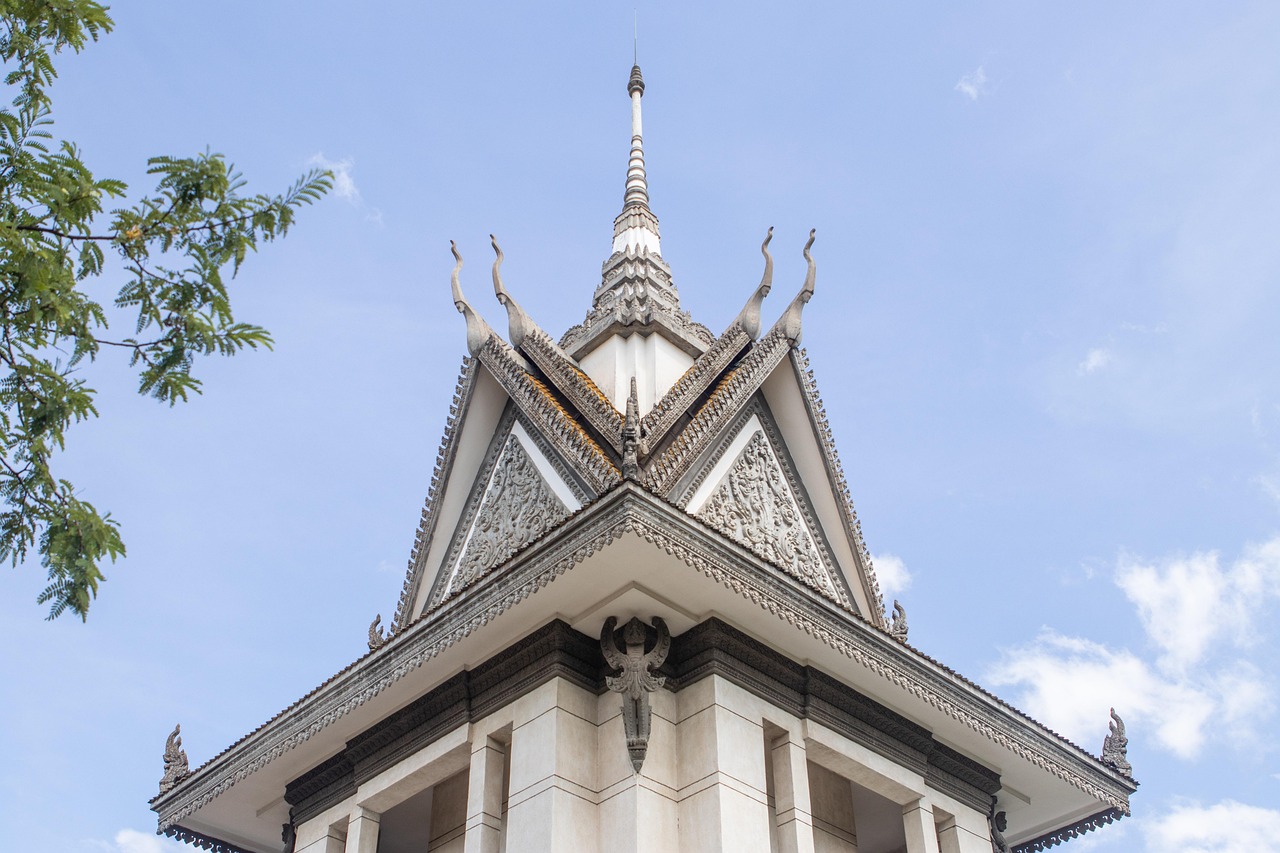
    • Visiting Tuol Sleng (S-21 prison) and the Killing Fields are emotionally heavy experiences — allocate at least 2–3 hours for each and bring a bottle of water; audio guides are available and add important context to the history
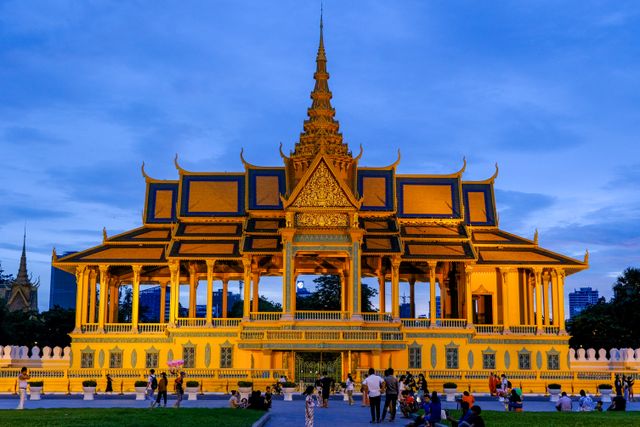
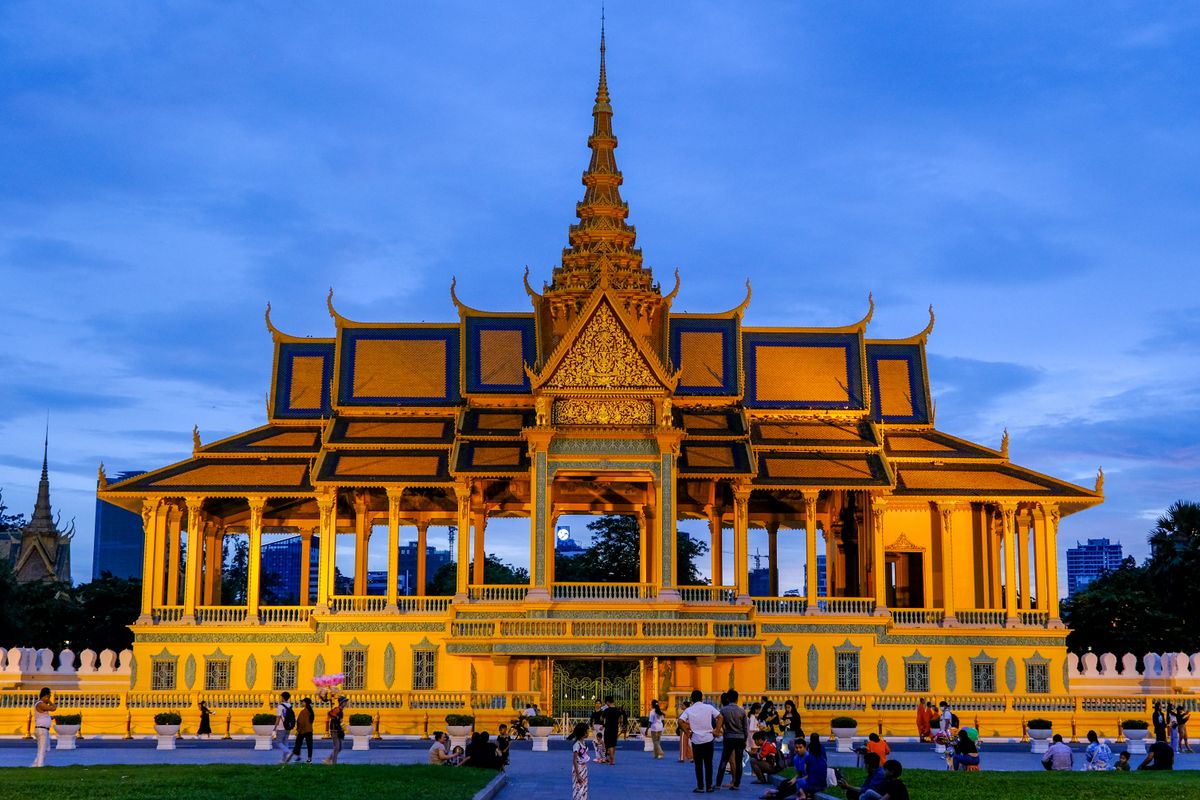
    • Dress respectfully at the Royal Palace and Silver Pagoda — strict dress code enforced: no shorts, no sleeveless tops, no bare feet inside; temple-appropriate clothing is available to borrow at the entrance
    • The Khmer Rouge genocide is very recent history for many Cambodians — some of your tuk-tuk drivers, guesthouse owners, and guides may be survivors or children of victims; discuss this history with sensitivity and listen more than you speak
    • Buddhist traditions: remove shoes before entering temple buildings; never point feet toward Buddha images; women should not touch monks
    • Bargaining is appropriate at markets (Russian Market, Central Market) but not at restaurants, guesthouses, or fixed-price shops; start at 60–70% of the asking price
    • Phnom Penh has a large NGO and development organization community — many social enterprises employ Khmer Rouge survivors, disabled workers, or vulnerable communities; choosing these restaurants and shops (like Friends restaurant, Daughters of Cambodia) is a meaningful way to support local communities
    • Photography at Tuol Sleng: photos are permitted throughout the museum but treat the experience with extreme respect; never pose smiling with the exhibits or prison apparatus — this is considered deeply offensive

    When the city is open

    Royal Palace and Silver Pagoda: 7:30am–5pm (closed midday 11am–12pm). Tuol Sleng Genocide Museum (S-21): 8am–5pm daily. Killing Fields (Choeung Ek): 7am–6pm. National Museum: 8am–5pm. Russian Market: 6am–5pm. Central Market: 6am–5:30pm. Most restaurants open 7am–10pm. Riverside bars open from noon to late night.